Whether you’re curious about health, sustainability, or cutting-edge research, exploring microbiology can open doors to endless possibilities.
Microbiology and Its Role in Understanding Microbial Life
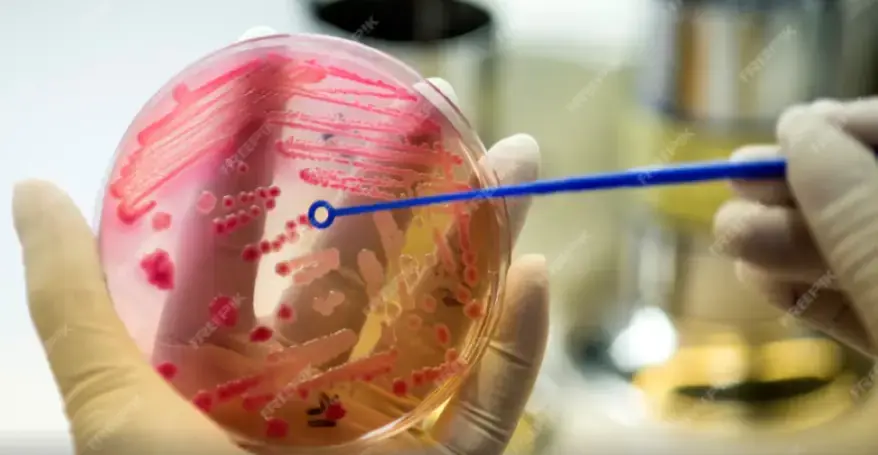
Imagine a world where the smallest forms of life influence the health of our entire planet. When we think about nature, we often focus on large animals, forests, and oceans. However, many important biological processes take place at a microscopic level. In fact, microbiology reveals a hidden universe of microorganisms that supports ecosystems and connects different forms of life. Furthermore, a recent perspective from the American Society for Microbiology highlights new directions for understanding ecology, evolution, and biodiversity. According to this perspective, scientists increasingly recognise that microbes are not simply passive participants in ecosystems. Instead, they can actively influence nutrient cycles, environmental processes, host health, and broader ecological change.
Key Takeaways
- Microbes drive planetary health: They regulate climate cycles and nutrient flow in every environment.
- Collaboration is critical: The 2024 Council on Microbial Sciences report stresses teamwork across all scientific fields.
- Global health depends on microbes: The WHO’s GLASS report highlights the urgent need to combat antibiotic resistance.
- Technology shapes the future: New tools allow us to see and model microbial communities in real tim
The Expanding Role of Microbial Science in Modern Ecology
Why Ecology Needs a Microbial Focus
Traditionally, ecology focused mainly on plants and animals. However, this perspective is now changing as scientists recognise the importance of microorganisms. In particular, a 2024 perspective from the ASM Council on Microbial Sciences emphasises that microbial biology is essential for understanding modern ecology. Furthermore, microbes support many of the processes that keep ecosystems functioning. For example, they form the foundation of numerous food webs, recycle nutrients, break down organic matter, and contribute to oxygen production. Without these activities, many larger organisms would struggle to survive.
Evolution Happens at the Microscopic Level
Evolution is not limited to dinosaurs, finches, or other large organisms. Instead, much of the evolutionary process also occurs in the microscopic world. For example, bacteria can exchange genetic material directly with one another through a process called horizontal gene transfer (HGT). As a result, bacteria can acquire new traits and adapt to changing environments more rapidly than organisms that rely only on reproduction for genetic variation. To illustrate, a bacterium may acquire genes that provide antibiotic resistance through horizontal gene transfer. Consequently, resistance traits can spread through bacterial populations relatively quickly under suitable conditions. In contrast, evolutionary changes in many animals generally occur over multiple generations and may take much longer to become common within a population.
Combating Antimicrobial Resistance Through Global Surveillance
The Threat of Superbugs
Antimicrobial resistance (AMR) has become a major global health challenge. According to the WHO GLASS report published in 2022, antimicrobial resistance affects the ability to treat many bacterial infections effectively. As a result, some commonly used antibiotics are becoming less effective against certain bacteria, making particular infections more difficult to manage. Furthermore, the problem is influenced by the use and misuse of antibiotics in humans, animals, and agriculture. For example, when antibiotics are used, they create selective pressure within bacterial populations. As a consequence, susceptible bacteria may be eliminated, while bacteria with resistance traits can survive and reproduce. Over time, these resistant bacteria and their resistance genes can become more common.
Biodiversity and the Invisible Majority
The Unseen Web of Life
Biodiversity includes every form of life, from elephants to viruses. However, people often overlook the vast microbial world because they cannot see most microorganisms with the naked eye. In fact, microorganisms represent an enormous share of Earth’s biological diversity and play essential roles in ecosystems. Furthermore, a single gram of soil can contain billions of microbial cells, representing a remarkably diverse community. Importantly, this diversity does not exist by chance. Instead, different microorganisms perform specific functions that help ecosystems operate effectively. For example, some microbes fix nitrogen and make it available to plants, while others break down organic matter and help remove pollutants.
Frequently Asked Questions
What is microbiology?
Microbiology is the study of microorganisms, which are tiny living organisms that are too small to be seen with the naked eye. These include bacteria, viruses, fungi, and protozoa.
What are the basic principles of microbiology?
The basic principles of microbiology encompass a comprehensive study of microorganisms, including their structure, function, and interactions with other organisms as well as with the environment. Furthermore, this field also delves into microbial genetics, which focuses on the hereditary information and genetic variation of microorganisms. In addition, it examines microbial metabolism to understand the chemical processes that sustain microbial life.
What are the different types of microorganisms?
Microorganisms include several major groups, such as bacteria, viruses, fungi, and protozoa. First, bacteria consist of single cells and live in diverse environments, including soil, water, and the human body. Next, viruses act as tiny infectious agents that can replicate only inside living host cells. Furthermore, fungi include both single-celled and multicellular forms and grow in environments such as soil, water, and air. Similarly, protozoa consist mainly of single cells and commonly live in water and soil. Together, these microorganisms interact with their environments and play important roles in ecosystems, human health, and disease.
References
- Akob, D. M., Oates, A. E., Girguis, P. R., Badgley, B. D., Cooper, V. S., Poretsky, R. S., Tierney, B. T., Litchman, E., Whitaker, R. J., Whiteson, K. L., Metcalf, C. J. E., Akter, S., Baltrus, D., Behringer, M., Shittu, O. B., Bose, A., Chowdhury, M., Criss, A., Gempeler, C. C., . . . Zerbini, F. M. (2024). Perspectives on the future of ecology, evolution, and biodiversity from the Council on Microbial Sciences of the American Society for Microbiology. mSphere, 9(11). https://doi.org/10.1128/msphere.00307-24
- Division, A. R. (2022, December 9). Global antimicrobial resistance and use surveillance system (GLASS) report: 2022. https://www.who.int/publications/i/item/9789240062702
Disclaimer: We do not intend this article/blog post to provide professional, technical, or medical advice. Therefore, please consult a healthcare professional before making any changes to your diet or lifestyle. In fact, we only use AI-generated images for illustration and decoration. Their accuracy, quality, and appropriateness can differ. So, users should avoid making decisions or assumptions based only on the text and images.
- Author
- Latest Posts

Neha Adikane holds a Master’s degree in Environmental Science from Pune University, bringing a unique blend of scientific expertise and creative writing skills to her craft. She specializes in creating engaging, insightful, and impactful content across various niches. With a passion for translating complex ideas into simple, relatable narratives, she excels at crafting blogs, articles, website content, and social media posts that captivate readers and drive engagement. Neha’s background in environmental science adds depth to her writing, allowing her to effectively cover topics related to sustainability, eco-awareness, and scientific innovations.
- Author
- Latest Posts

I completed my Master of Science from the University of Allahabad in 2017 with a strong academic background in life sciences and chemistry. My specialization included Molecular Biology, Microbiology, Genetics, Plant Breeding, Phycology, Paleobotany, and Bioinformatics, along with Organic Chemistry, Inorganic Chemistry, and Physical Chemistry. This multidisciplinary training provided me with a comprehensive understanding of biological systems and analytical scientific approaches.
After completing my postgraduate studies, I gained valuable professional experience in both the education and social development sectors. I worked at A.M. Oxford Public School, where I was actively involved in guiding students toward academic excellence. In this role, I focused on creating an engaging learning environment, encouraging critical thinking, and nurturing students’ curiosity for scientific learning. My experience as an educator strengthened my communication, mentoring, and classroom management skills.
In addition to my teaching experience, I worked with Jeevan Jagriti Foundation, where I contributed to community-based initiatives aimed at improving educational access and awareness among underprivileged sections of society. Through this work, I participated in programs designed to support social development and promote the value of education in marginalized communities.
These professional experiences helped me develop strong interpersonal, leadership, and organizational skills while reinforcing my commitment to education and community service.




Ossume
Thanks for your comment!
Keep visiting entechonline.com to read the latest news and articles on Science, Technology, Engineering and Mathematics STEM. ENTECH Online is more than just a magazine; it’s a gateway to a world of possibilities for teenagers passionate about Science, Technology, Engineering, and Mathematics (STEM).
Nice article
Thanks for your comment! ENTECH Online is more than just a magazine; it’s a gateway to a world of possibilities for teenagers passionate about Science, Technology, Engineering, and Mathematics (STEM).
Keep visiting entechonline.com to read the latest news and articles on Science, Technology, Engineering and Mathematics STEM.
I want to become pathologist. This article helps me.
Thanks for your comment, keep visiting entechonline.com for more articles related to your interests.
Microbiology is my favourite subject and want to do career in it
Thanks for your comment, keep visiting entechonline.com for more articles related to your interests.
I like this article.
Thanks for your comment, keep visiting entechonline.com for more articles related to your interests.