Scientists at Rice University have made a groundbreaking discovery: bacteria that generate electricity instead of relying on oxygen to breathe!
E. coli Bacteria Use Extracellular Respiration for Survival
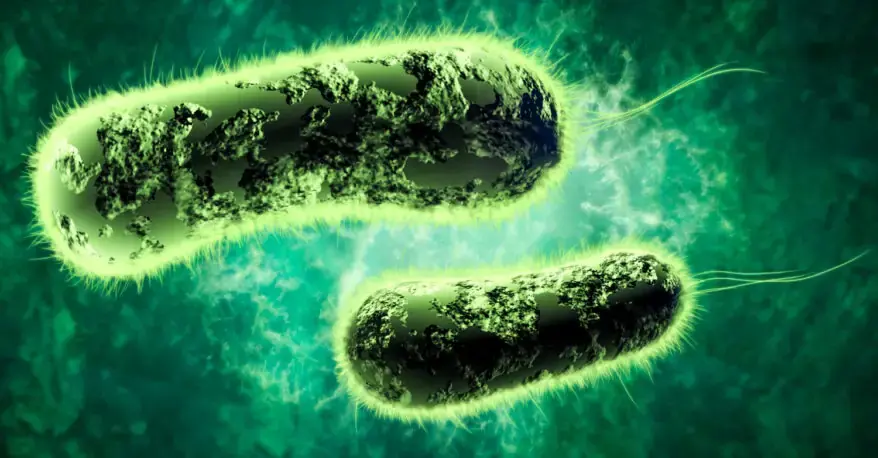
Think you know E. coli bacteria? Most people see this microbe as a simple gut dweller or a common lab workhorse. However, new research tells a different story. Scientists have found a hidden energy pathway inside this organism called extracellular respiration. First, E. coli can use this pathway to move energy through solid materials. In other words, the bacteria can use a hidden way to survive when normal energy sources become hard to use. Furthermore, this pathway can act like a backup energy system. As a result, E. coli may survive in places that seem difficult for bacteria.
Key Takeaways
- E. coli bacteria possess a dormant mechanism for extracellular respiration.
- This mechanism allows electron transfer to solid surfaces outside the cell.
- The process is a latent energy metabolism, activated under specific conditions.
- This discovery challenges the classic view of E. coli as a simple fermenter.
- Applications include biosensors, biofuels, and wastewater treatment.
What is extracellular respiration in E. coli bacteria?
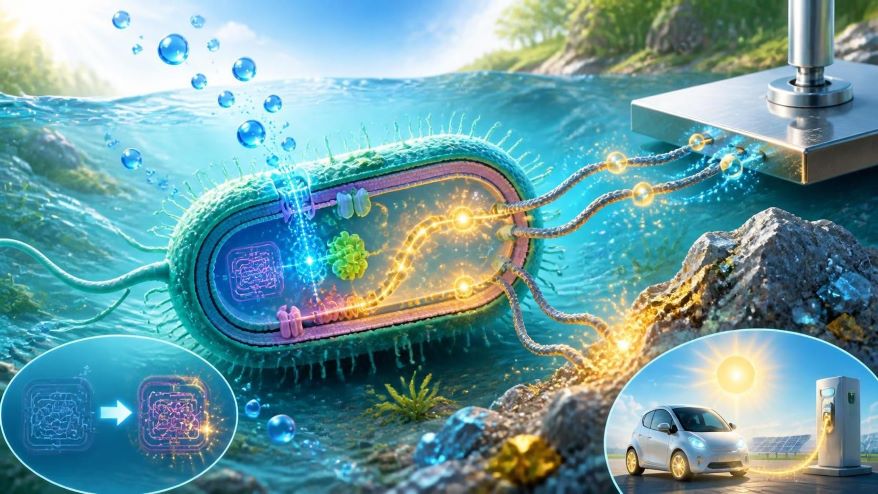
Extracellular respiration is a process where cells transfer electrons to an external acceptor. For E. coli bacteria, this is a new and surprising ability. Typical respiration uses oxygen inside the cell. This new pathway uses solid minerals or electrodes outside the cell. It is a form of anaerobic respiration. The cell essentially “breathes” through a rock or metal. This is not the primary energy mode for E. coli. It is a latent or sleeping metabolic pathway. Scientists observed it only when the usual routes failed. This fits the definition of a backup system. For the organism, it means survival in extreme, oxygen-poor places. To illustrate this, imagine a car that suddenly runs on solar power. That is the shift E. coli bacteria can now make.
The Discovery of a Dormant Pathway
The study, posted on bioRxiv, describes this hidden ability in E. coli. First, the researchers used special electrochemical tools to study how the bacteria move electrons. Next, they observed electron flow directly from E. coli colonies to electrodes. However, this electron flow did not occur under normal laboratory conditions. Instead, it appeared when the bacteria faced stressful conditions. More specifically, the stress occurred when the bacteria lacked soluble electron acceptors. As a result, the researchers observed a different way for the bacteria to transfer electrons outside their cells. The researchers called this process “latent extracellular electron transfer”. Furthermore, they identified the genes linked to this activity.
How Does This Differ from Standard Metabolism?
Standard E. coli bacteria metabolism uses substrate-level phosphorylation. It also uses oxidative phosphorylation with oxygen. This new pathway bypasses these internal steps. Electrons exit the cell membrane directly. They travel to an external anode or mineral. This is called direct electron transfer (DET). It requires special cell-surface proteins. These proteins form a bridge from the inside to the outside. In this case, the cell makes electricity. This is very different from fermentation. Fermentation produces waste like alcohol or acid. Extracellular respiration produces an electric current. It is cleaner and more efficient for energy capture. For industry, this difference is huge.
The Mechanism Behind E. coli Bacteria’s Latent Energy Metabolism
How exactly does this process work? The research points to a specific set of genes. These genes code for cytochromes and pili-like structures. Cytochromes are iron-containing proteins. They carry electrons. The pili act like nanowires. They connect the cell to the environment. E. coli bacteria rebuild their membrane to do this. They upregulate riboflavin production. Riboflavin acts as a soluble electron shuttle. To enumerate the steps:
- The cell senses a lack of internal electron acceptors.
- It activates the silent genes for extracellular electron transfer.
- It produces electron shuttles and surface proteins.
- Electrons flow from the menaquinone pool to the external surface.
This whole process is energy-intensive. That is why it stays latent until needed. The cell only pays this cost when things get tough.
Why This Discovery Matters for Biotechnology
This discovery changes how we view E. coli in the laboratory. First, researchers can explore ways to engineer this microbe for specific tasks. For example, they could study its use as a living battery or in bioremediation. Furthermore, E. coli grows easily and has been studied extensively for many years. Therefore, researchers already understand many of its genes and biological processes. In addition, combining E. coli with extracellular electron transfer could support new types of microbial technology. For instance, researchers could design systems in which bacteria help move electrons through an electrical circuit. Similarly, they could develop biofilm-based sensors that detect certain substances in water by producing changes in electrical current.
Key Differences Between E. coli and Other Exoelectrogens
E. coli does not transfer electrons as quickly as Geobacter. However, E. coli offers other useful advantages, such as fast growth and flexible genetic tools. To understand these differences, we can compare the two bacteria in several key areas.
- First, Current Density: E. coli produces a lower current at first. In contrast, Geobacter can produce a high current quickly.
- Second, Growth Speed: E. coli can double in about 20 minutes under suitable conditions. By comparison, Geobacter may take several hours to grow.
- Third, Genetic Tools: E. coli has a large and well-developed set of genetic tools. On the other hand, Geobacter has fewer commonly used genetic tools.
- Finally, Safety: Laboratory E. coli K-12 strains are non-pathogenic. Therefore, researchers can often handle these strains more easily in laboratory studies.
As a result, these differences matter when scientists consider large-scale applications. Geobacter offers strong electron transfer, while E. coli offers fast growth, flexible genetic tools, and well-studied laboratory strains. Overall, researchers must consider factors such as speed, safety, and ease of genetic engineering when developften beat raw power in industry.
Future Research Directions
The next steps in this research are already taking shape. First, scientists want to engineer the pathway to improve its efficiency. Next, they plan to overexpress the key genes so that the bacteria can produce more of the proteins involved in electron transfer. In addition, researchers may try to add genes from Geobacter to improve the pathway further. Furthermore, scientists want to optimise electron flow. For example, they may study how changes in the cell membrane affect the movement of electrons. Meanwhile, researchers also need to understand biofilm formation. A thick biofilm may help bacteria transfer electrons more effectively.
Frequently Asked Questions
What exactly is extracellular respiration?
Extracellular respiration is a process where bacteria transfer electrons to a solid material outside their cell instead of inside to oxygen. It is a form of anaerobic respiration.
This ability is common in E. coli bacteria?
No. The research shows it is a latent or dormant ability. It is not active under normal growth conditions. It only activates when the cell is stressed.
Where can I read the original research?
The original preprint is available on bioRxiv (see reference below). We provide an open-access APA citation at the end.
Reference
Kundu, B. B., Krishnan, J., Szubin, R., Patel, A., Palsson, B. O., Zielinski, D. C., & Ajo-Franklin, C. M. (2024). Extracellular Respiration is a Latent Energy Metabolism inEscherichia coli. bioRxiv (Cold Spring Harbor Laboratory). https://doi.org/10.1101/2024.05.30.596743
- Author
- Latest Posts

Neha Adikane holds a Master’s degree in Environmental Science from Pune University, bringing a unique blend of scientific expertise and creative writing skills to her craft. She specializes in creating engaging, insightful, and impactful content across various niches. With a passion for translating complex ideas into simple, relatable narratives, she excels at crafting blogs, articles, website content, and social media posts that captivate readers and drive engagement. Neha’s background in environmental science adds depth to her writing, allowing her to effectively cover topics related to sustainability, eco-awareness, and scientific innovations.
- Author
- Latest Posts

I completed my Master of Science from the University of Allahabad in 2017 with a strong academic background in life sciences and chemistry. My specialization included Molecular Biology, Microbiology, Genetics, Plant Breeding, Phycology, Paleobotany, and Bioinformatics, along with Organic Chemistry, Inorganic Chemistry, and Physical Chemistry. This multidisciplinary training provided me with a comprehensive understanding of biological systems and analytical scientific approaches.
After completing my postgraduate studies, I gained valuable professional experience in both the education and social development sectors. I worked at A.M. Oxford Public School, where I was actively involved in guiding students toward academic excellence. In this role, I focused on creating an engaging learning environment, encouraging critical thinking, and nurturing students’ curiosity for scientific learning. My experience as an educator strengthened my communication, mentoring, and classroom management skills.
In addition to my teaching experience, I worked with Jeevan Jagriti Foundation, where I contributed to community-based initiatives aimed at improving educational access and awareness among underprivileged sections of society. Through this work, I participated in programs designed to support social development and promote the value of education in marginalized communities.
These professional experiences helped me develop strong interpersonal, leadership, and organizational skills while reinforcing my commitment to education and community service.