Explore the types of pathogens: viruses, bacteria, fungi, protozoa, helminths, and prions, and their unique characteristics affecting health.
Types of Pathogens: Understanding Microbial Threats
Estimated reading time: 6 minutes
You get a scrape on your knee. Within hours, that small wound might swell, redden, and feel warm. This is not just an injury; it is a battle. A microscopic invader has crossed your skin’s border. This invader is a pathogen. Pathogens include viruses, bacteria, fungi, and parasites. They cause diseases ranging from the common cold to malaria. But this story has a twist. Pathogens are not just villains. They have shaped your immune system. They have even influenced your DNA. According to a 2017 review in BMC Biology, pathogens have forced evolutionary arms races that made modern humans stronger. This article will explain the types of pathogens that exist. It will also show you how these tiny threats have done vast good for our species. You will learn to see these microbial threats not just as enemies, but as unexpected architects of life.
Key Takeaways : Types of Pathogens
- Pathogens are microscopic organisms that cause disease in a host. They include bacteria, viruses, fungi, protozoa, helminths, and prions.
- The human body carries a microbiome that contains both helpful and harmful microbes. Pathogens are the harmful subset.
- Evolutionary biology shows that pathogens drove the development of complex immune systems.
- Some pathogen exposure in early life may reduce allergy risks, a concept known as the hygiene hypothesis.
- Climate change and global travel are increasing the spread of pathogen varieties to new regions.
Defining the Enemy: What Exactly is a Pathogen?
Pathogens include viruses, bacteria, fungi, and parasites. For example, they can cause many diseases, from the common cold to malaria. However, the story does not end there. Interestingly, pathogens have not only caused disease; they have also influenced how our immune system developed. Furthermore, pathogens have played a role in human evolution. Over time, repeated exposure to infectious organisms created strong evolutionary pressures. As a result, humans developed immune defences that helped them respond to many infections. In addition, pathogens have influenced changes in our genes and may have shaped parts of the human genome.
Types of Pathogens and Their Category
Bacteria
- First, bacteria are single-celled organisms that lack a nucleus. Therefore, scientists classify them as prokaryotes.
- Most bacteria are harmless. However, some bacteria cause diseases such as strep throat, tuberculosis, and urinary tract infections.
- Furthermore, bacteria can reproduce quickly, and some can produce harmful toxins.
- However, antibiotics can treat many bacterial infections. Unfortunately, some bacteria have developed antibiotic resistance, which makes treatment more difficult.
2. Viruses
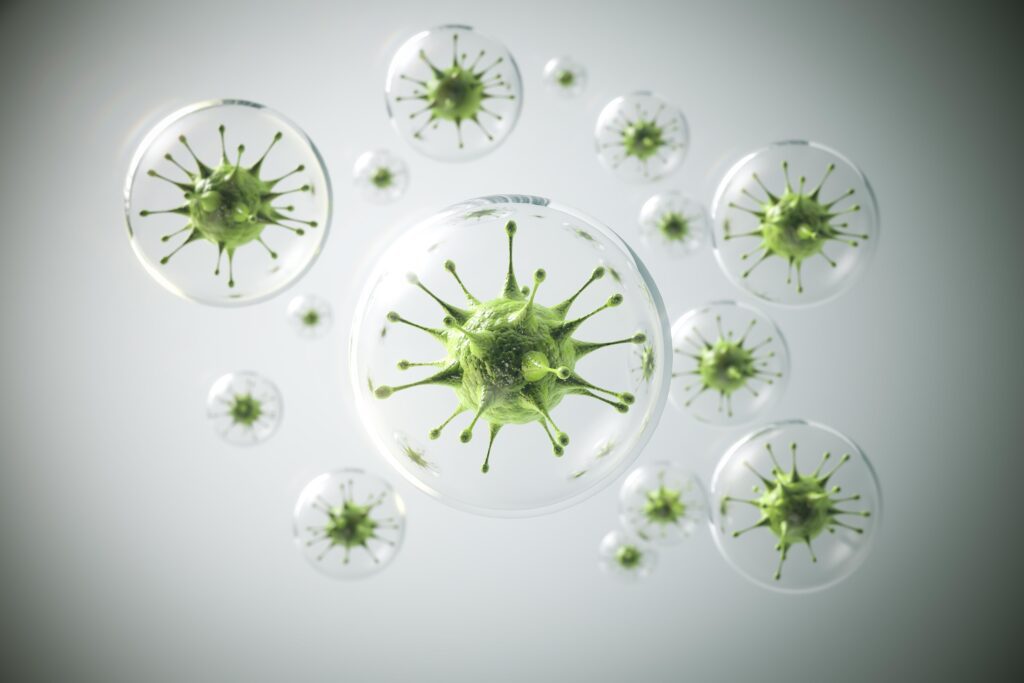
- Next, viruses are very different from bacteria. They do not have the cellular structures found in living cells and can reproduce only inside host cells.
- For example, viruses contain genetic material, either DNA or RNA, inside a protein coat.
- Some common examples include influenza viruses, HIV, and SARS-CoV-2.
- In addition, viral strains differ greatly from bacterial strains because viruses depend on host cells to reproduce.
- Therefore, antibiotics do not work against viruses. Instead, doctors may use antiviral drugs for some viral infections, while vaccines can help prevent many viral diseases.
3. Fungi
- Third, fungi are eukaryotes, which means their cells contain a nucleus.
- They include yeasts, moulds, and mushrooms.
- For example, some pathogenic fungi cause infections such as athlete’s foot and ringworm.
- Furthermore, fungi such as Candida can cause serious infections in people with weakened immune systems.
- As a result, some fungal infections can affect areas beyond the skin and become more serious.
4. Protozoa
- Next, protozoa are single-celled eukaryotic organisms. Unlike many bacteria, they have cells with a nucleus.
- Furthermore, many protozoa have complex life cycles and may live in different hosts during their development.
- For example, Plasmodium causes malaria.
- In addition, these parasitic organisms are common in many tropical and subtropical regions.
5. Helminths
- Fifth, helminths are multicellular parasitic worms.
- Unlike microscopic bacteria and protozoa, adult helminths can often be seen with the naked eye.
- For example, tapeworms and roundworms belong to this group.
- Furthermore, these parasites can live inside the host’s intestines or other tissues.
- As a result, they can interfere with normal body functions and cause disease.
6. Prions
- Finally, prions are very different from all the other pathogen groups listed above. They consist of misfolded proteins and contain no DNA or RNA.
- For example, prions cause serious brain diseases such as variant Creutzfeldt–Jakob disease and other transmissible spongiform encephalopathies.
- Moreover, prions are not living organisms. Instead, they cause disease by promoting abnormal protein folding.
- Therefore, prion diseases are especially difficult to treat, and no cure currently exists for these disorders.
- Overall, bacteria, viruses, fungi, protozoa, helminths, and prions differ greatly in their structure and behaviour. However, each group can cause disease through its own unique biological mechanisms.
The Good, The Bad, and The Ugly: What Pathogens Have Done For Us
It is easy to focus only on the harm caused by pathogens. For example, pathogens cause millions of deaths around the world each year. Malaria alone causes hundreds of thousands of deaths annually, while HIV has caused a major global pandemic. However, we can understand pathogens better when we look at a much longer timeline. Pathogens have existed for billions of years, and over time, they have influenced the evolution of many living organisms. In particular, pathogens created strong pressures on early humans and other hosts.
How Pathogens Drove Human Evolution
On studying types of pathogens, the long-term battle between humans and pathogens has left clear marks on our DNA. For example, consider the gene linked to the sickle cell trait. This genetic variant can provide some protection against severe malaria. However, it can also contribute to sickle cell disease when a person inherits certain forms of the gene from both parents. Therefore, this example shows a genetic trade-off: a variant can provide an advantage in one condition while creating a health risk in another. Furthermore, the sickle cell trait became more common in parts of Africa where malaria was widespread. As a result, natural selection helped maintain this variant in those populations.
Frequently Asked Questions: Types of Pathogens
What are pathogens, and why should you care?
Pathogens are tiny agents that cause diseases. They include bacteria, viruses, fungi, protozoa, helminths, and prions. Understanding them helps you protect your health. For instance, the 1918 influenza pandemic was one of the deadliest in history, highlighting the importance of awareness and prevention.
How do pathogens spread?
Pathogens spread through direct contact, airborne particles, contaminated surfaces, and vectors like mosquitoes. The Yellow Fever Outbreak in Philadelphia (1793) showed how quickly diseases can spread without proper control measures. Practising good hygiene and staying informed can help you reduce the risk.
Can you prevent diseases caused by types of pathogens?
Yes, you can! Vaccination, personal hygiene, and safe food practices are key. Vaccines have drastically reduced diseases like measles and polio. Regular handwashing and cooking food thoroughly also play a crucial role in prevention.
References
Balloux, F., & Van Dorp, L. (2017). Q&A: What are pathogens, and what have they done to and for us? BMC Biology, 15(1). https://doi.org/10.1186/s12915-017-0433-z
Alberts, B., Johnson, A., Lewis, J., Raff, M., Roberts, K., & Walter, P. (2002). Introduction to Pathogens. Molecular Biology of the Cell – NCBI Bookshelf. https://www.ncbi.nlm.nih.gov/books/NBK26917
Janik, E., Ceremuga, M., Niemcewicz, M., & Bijak, M. (2020). Dangerous Pathogens as a Potential Problem for Public Health. Medicina, 56(11), 591. https://doi.org/10.3390/medicina56110591
- Author
- Latest Posts

Neha Adikane holds a Master’s degree in Environmental Science from Pune University, bringing a unique blend of scientific expertise and creative writing skills to her craft. She specializes in creating engaging, insightful, and impactful content across various niches. With a passion for translating complex ideas into simple, relatable narratives, she excels at crafting blogs, articles, website content, and social media posts that captivate readers and drive engagement. Neha’s background in environmental science adds depth to her writing, allowing her to effectively cover topics related to sustainability, eco-awareness, and scientific innovations.
- Author
- Latest Posts

I completed my Master of Science from the University of Allahabad in 2017 with a strong academic background in life sciences and chemistry. My specialization included Molecular Biology, Microbiology, Genetics, Plant Breeding, Phycology, Paleobotany, and Bioinformatics, along with Organic Chemistry, Inorganic Chemistry, and Physical Chemistry. This multidisciplinary training provided me with a comprehensive understanding of biological systems and analytical scientific approaches.
After completing my postgraduate studies, I gained valuable professional experience in both the education and social development sectors. I worked at A.M. Oxford Public School, where I was actively involved in guiding students toward academic excellence. In this role, I focused on creating an engaging learning environment, encouraging critical thinking, and nurturing students’ curiosity for scientific learning. My experience as an educator strengthened my communication, mentoring, and classroom management skills.
In addition to my teaching experience, I worked with Jeevan Jagriti Foundation, where I contributed to community-based initiatives aimed at improving educational access and awareness among underprivileged sections of society. Through this work, I participated in programs designed to support social development and promote the value of education in marginalized communities.
These professional experiences helped me develop strong interpersonal, leadership, and organizational skills while reinforcing my commitment to education and community service.