Microorganisms can be beneficial as well as harmful. Some...
Introduction to Microorganisms: Understanding Their Roles in Life
Estimated reading time: 7 minutes
Microbes outnumber plants and animals across Earth. Above all, they play essential roles in the chemistry of life. In this introduction to microorganisms, you’ll learn that although we cannot see most microbes with our eyes, they exist almost everywhere. For example, they live in the human gut and on the skin. Similarly, they thrive in soil, water, air, and other environments. In fact, just one gram of soil can contain billions of microbial cells. Furthermore, these tiny organisms recycle nutrients and support important natural processes. For instance, some microbes produce oxygen and contribute to global environmental cycles. At the same time, microbial activity can influence processes that affect the atmosphere and climate. However, not all microbes benefit humans or the environment. In contrast, some microorganisms can cause serious diseases.
Key Takeaways: Introduction to Microorganisms
- Microorganisms cover five broad groups: bacteria, viruses, fungi, protozoa, and algae.
- They live almost everywhere, including hot springs, salt lakes, and deep ocean trenches.
- Bacteria and fungi drive nutrient cycling, decomposition, and soil fertility.
- Your personal microbiome supports digestion, immunity, and vitamin production.
- Viruses cannot reproduce alone and need a living host cell.
- Core lab tools include microscopy, culturing, PCR, sequencing, and ELISA
Why an Introduction to Microorganisms Matters Today
On studying Introduction to Microorganisms, microbes represent some of the oldest and most abundant forms of life on Earth. First, they helped create environmental conditions that allowed larger and more complex organisms to develop. For example, cyanobacteria released oxygen into the atmosphere billions of years ago. As a result, this major change transformed Earth’s atmosphere and supported the evolution of oxygen-dependent life. Today, bacteria and archaea remain major components of Earth’s microbial biomass. Furthermore, large-scale studies of prokaryotes have shown that these organisms contribute substantially to global carbon and nitrogen cycling. Consequently, almost every food web depends on microbial activity. For instance, microbes fix nitrogen in agricultural soils, break down dead leaves in forests, and cycle sulfur in deep ocean environments.
An Introduction to Microorganisms: The Core Groups
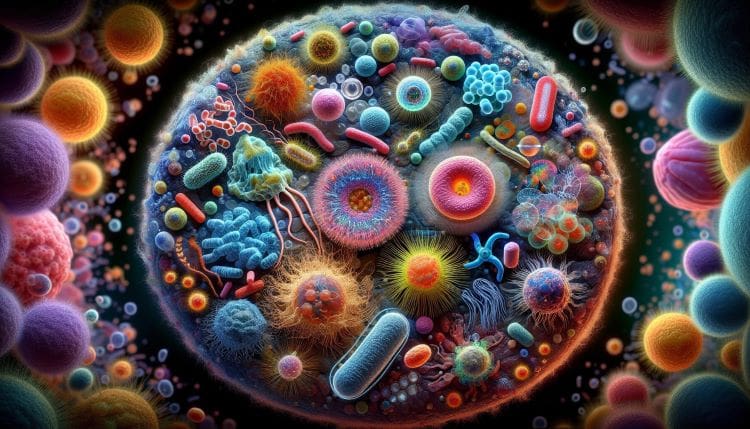
On studying Introduction to Microorganisms, scientists commonly group microorganisms into five broad categories. First, each group differs in size, cellular structure, and lifestyle. For example, bacteria are prokaryotic organisms that lack a nucleus and usually contain a single circular chromosome. In contrast, viruses are much smaller and do not have a cellular structure. Similarly, fungi can exist as single cells or grow as thread-like filaments. Meanwhile, protozoa are generally motile, single-celled eukaryotes. In addition, algae can perform photosynthesis, particularly in aquatic environments. Together, these groups represent a remarkably wide range of biological forms and lifestyles. By comparison, plants and animals represent only a smaller portion of life’s overall diversity.
Bacteria: The Versatile Majority
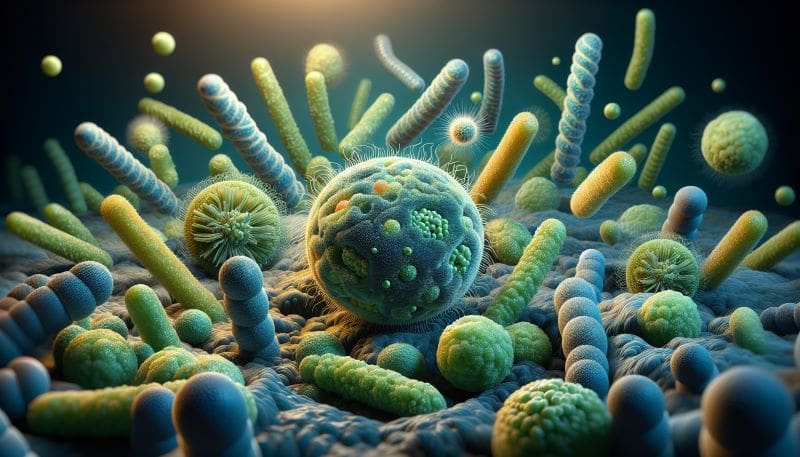
While studying Introduction to Microorganisms, bacteria are single-celled organisms with relatively simple internal structures. Nevertheless, they can survive in almost every environment on Earth. For example, some bacterial species tolerate extremely hot springs and highly salty lakes. Similarly, others can survive inside rocks and beneath polar ice. In addition, many bacteria form useful relationships with humans, animals, and plants. For instance, Escherichia coli contributes to normal processes in the human gut, while Rhizobium bacteria fix nitrogen within plant roots. Furthermore, Lactobacillus species help produce fermented foods such as yoghurt and cheese. In contrast, some bacteria can cause serious diseases. For example, Mycobacterium tuberculosis causes tuberculosis, a potentially severe lung infection. At the same time, Streptomyces species have provided scientists with important sources of antibiotics.
Fungi, Protozoa, and Algae Complete the Picture
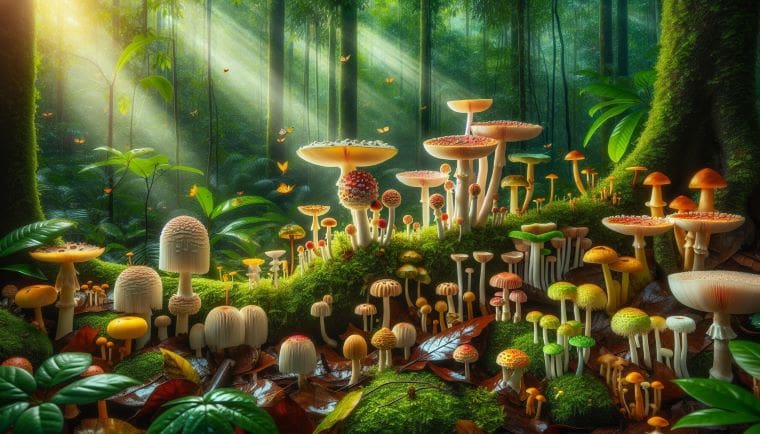
Fungi include yeasts, moulds, and mushrooms. First, they play an essential role as decomposers in ecosystems. In particular, they break down dead organic matter and recycle important nutrients back into the environment. Furthermore, some fungi support food production and are used to make products such as bread and beer. However, other fungi can cause infections in humans and diseases in crops. Next, protozoa are single-celled eukaryotic organisms that commonly live in aquatic environments. In addition, they may live freely in their habitats or survive as parasites inside other organisms. For example, some protozoan species cause serious diseases, including malaria and amoebic dysentery. Therefore, understanding protozoa is important for both environmental science and human health.
How Scientists Study These Tiny Organisms
Studying invisible life requires clever tools. Microbiologists combine direct observation with molecular analysis. Each method answers a different kind of question. Microscopy reveals shape and structure. Culturing reveals growth and behaviour. Molecular tools reveal genetic identity. Immunological assays reveal specific proteins and immune responses. Researchers often combine several methods for one project. Surveys of natural ecosystems and microbiomes now rely on sequencing as well. This toolkit keeps expanding each year. As a result, the field moves faster than most textbooks can print. Every technique adds a new layer of evidence.
Microbes at Work in Health, Industry, and the Environment
An Introduction to Microorganisms and the Human Microbiome
Your body hosts trillions of microbial cells. Skin, mouth, and gut each carry distinct communities. Researchers studying the human microbiome map these populations in detail. Gut microbes ferment fibre into useful compounds. They produce vitamins and short-chain fatty acids. They also educate immune cells early in life. A stable gut ecosystem resists harmful invaders. Yet antibiotics can disturb that balance. Probiotic foods, such as yoghurt, may support recovery. Emerging evidence links microbial shifts to allergies and metabolic disease. Above all, the field is young and moving quickly. Every new study sharpens the health picture.
Learning Path and Careers in Microbial Science
How to Start Studying These Organisms
You can first begin with school-level biology and chemistry. For example, botany students can explore microorganisms through topics related to soil and plant health. As you progress to university, core subjects such as cell biology and genetics provide a strong foundation. Next, microbiology, biochemistry, and immunology naturally build on this knowledge. In addition, laboratory skills are just as important as theoretical understanding. During practical training, students learn aseptic techniques and proper culture handling. Furthermore, they practise important methods such as PCR, microscopy, and accurate data recording. Meanwhile, bioinformatics has also become an essential part of modern microbiology. For instance, learning Python or R can help students analyse and interpret sequencing data. Similarly, statistics supports reliable experimental design and helps researchers understand their results.
Careers That Use Microbial Knowledge
Microbial training opens doors across many sectors. Each role applies the same core skills in different settings.
- Clinical microbiologist — identifies pathogens in hospitals and clinics.
- Industrial microbiologist — improves fermentation and product quality.
- Environmental scientist — designs bioremediation and monitoring programmes.
- Food safety analyst — tests products for spoilage and contamination.
- Biotechnology researcher — engineers strains for medicine and agriculture.
- Science communicator — explains microbial science to public audiences.
Salaries and job markets vary by country and sector. Even so, demand for microbial expertise keeps growing. Public health, agriculture, and green technology all need these skills. Entech Online regularly covers such science and technology careers for students
Frequently Asked Questions
Give an introduction to microorganisms?
Microorganisms, or microbes, are tiny living things. They are so small that you cannot see them without a microscope. They include bacteria, viruses, fungi, protozoa, and algae.
Why are microorganisms important?
Microorganisms help ecosystems because they break down dead plants and animals, reuse nutrients and help with digestion, and also help in making food and medicines. Additionally, few are also responsible for causing sickness.
How are microorganisms classified?
Microorganisms are classified based on their cellular structure, metabolism, genetic makeup, and other characteristics. The main groups include bacteria, archaea, viruses, fungi, protozoa, and algae
References
- McFall-Ngai, M., Hadfield, M. G., Bosch, T. C., Carey, H. V., Domazet-Lošo, T., Douglas, A. E., … & Zilber-Rosenberg, I. (2013). Animals in a bacterial world, a new imperative for the life sciences. Proceedings of the National Academy of Sciences, 110(9), 3229-3236. https://doi.org/10.1073/pnas.1218525110
- Marchesi, J. R., & Ravel, J. (2015). The vocabulary of microbiome research: a proposal. Microbiome, 3(1), 1-3. https://doi.org/10.1186/s40168-015-0094-5
- Janda, J. M., & Abbott, S. L. (2007). 16S rRNA gene sequencing for bacterial identification in the diagnostic laboratory: pluses, perils, and pitfalls. Journal of Clinical Microbiology, 45(9), 2761-2764. https://doi.org/10.1128/JCM.01228-07
- Lutzoni, F., Kauff, F., Cox, C. J., McLaughlin, D., Celio, G., Dentinger, B., … & Vilgalys, R. (2004). Assembling the fungal tree of life: progress, classification, and evolution of subcellular traits. American Journal of Botany, 91(10), 1446-1480. https://doi.org/10.3732/ajb.91.10.1446
- Author
- Latest Posts

I am a Master’s qualified in Science with focus on Zoology and Entomology and am a passionate, curiosity-driven science enthusiast aiming to transform complex scientific ideas in a manner that are easy to understand hence, educate, and inspire.
I have an experience of working on the projects in the field of Entomology which has provided me hands-on experience with various research techniques. Besides, I have also gained experience of lab work as well as developed communication skills during the course of my bachelors and masters.
With a strong foundation in life sciences and a growing interest in Medical and Biological research, I have cultivated a writing style that merges scientific facts with creativity.
My experience in teaching has also taught me to develop an understanding of what are the interests of people and how to communicate them effectively.
I am committed to lifelong learning, actively engaging in Interdisciplinary learning, so as to broaden my perspective.
- Author
- Latest Posts

I completed my Master of Science from the University of Allahabad in 2017 with a strong academic background in life sciences and chemistry. My specialization included Molecular Biology, Microbiology, Genetics, Plant Breeding, Phycology, Paleobotany, and Bioinformatics, along with Organic Chemistry, Inorganic Chemistry, and Physical Chemistry. This multidisciplinary training provided me with a comprehensive understanding of biological systems and analytical scientific approaches.
After completing my postgraduate studies, I gained valuable professional experience in both the education and social development sectors. I worked at A.M. Oxford Public School, where I was actively involved in guiding students toward academic excellence. In this role, I focused on creating an engaging learning environment, encouraging critical thinking, and nurturing students’ curiosity for scientific learning. My experience as an educator strengthened my communication, mentoring, and classroom management skills.
In addition to my teaching experience, I worked with Jeevan Jagriti Foundation, where I contributed to community-based initiatives aimed at improving educational access and awareness among underprivileged sections of society. Through this work, I participated in programs designed to support social development and promote the value of education in marginalized communities.
These professional experiences helped me develop strong interpersonal, leadership, and organizational skills while reinforcing my commitment to education and community service.