The introduction to AI Education should start gently, as early as in class 6.
Catch Them Young! A Roadmap to Raise Better STEM Researchers

Estimated reading time: 7 minutes
Children are natural explorers. They pull apart ideas to understand how things work. If we nurture this curiosity early enough, it becomes the seed of strong research behavior. This is especially important in the age of Artificial Intelligence, driving the need for a comprehensive AI Education Roadmap for Students. Skills like programming, algorithmic thinking, and understanding data are no longer reserved for scientists in white coats or students in advanced engineering programs. They are becoming everyday essentials. Whether a child wants to study biology, medicine, finance, space, or even art, an understanding of how data and machines learn will shape their future opportunities.
Artificial intelligence is now quietly embedded everywhere. From the apps that recommend what we watch, to the tools that doctors use for diagnosis, to the systems that help farmers predict crop health. To be comfortable in this new world, young learners must follow an AI Education Roadmap for Students that teaches them how to think logically, how to break down problems into small steps, and how to build solutions using the power of data. The journey to build these skills should begin much earlier than we once imagined.
AI Education Roadmap for Students: Why begin in School?
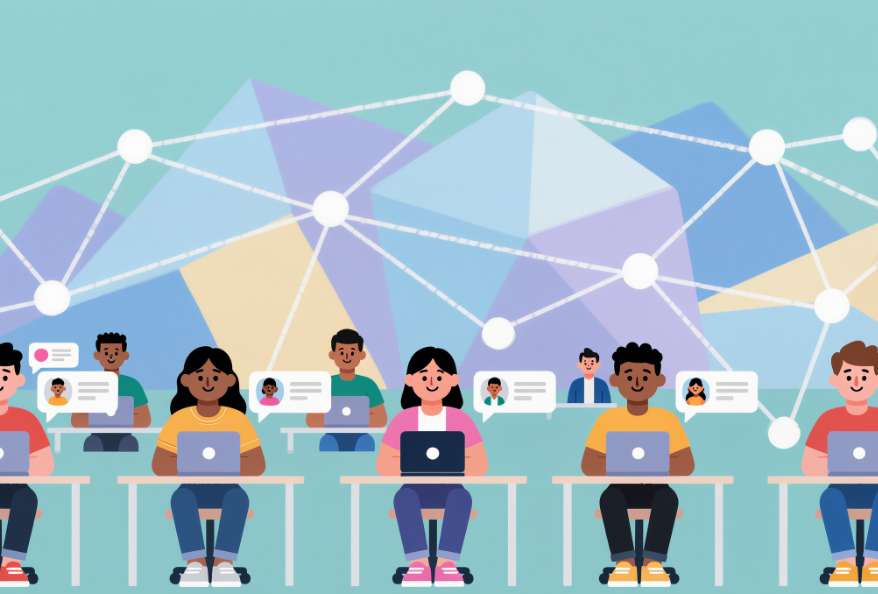
When children learn computational thinking at an early age, they naturally absorb habits that experienced researchers rely on. They learn to ask clear questions. They start thinking in steps. Also, they test assumptions, examine results, and adjust their ideas. These habits can shape a curious school student into a future innovator or researcher who can make sense of complex real world challenges.
Many education boards and governments are also recognizing this shift, pushing for a coherent AI Education Roadmap for Students. Curricula are slowly being redesigned so that digital literacy and problem solving through computing become mainstream. Yet schools and counselors still ask the same question. Where do we begin? How do we introduce such advanced ideas without overwhelming children?
The answer is to follow a learning pathway where each stage builds upon the previous one. A pathway that treats programming not as a separate burden but as a natural extension of how children think and play.
How the journey of AI Education can unfold from class 6 onward
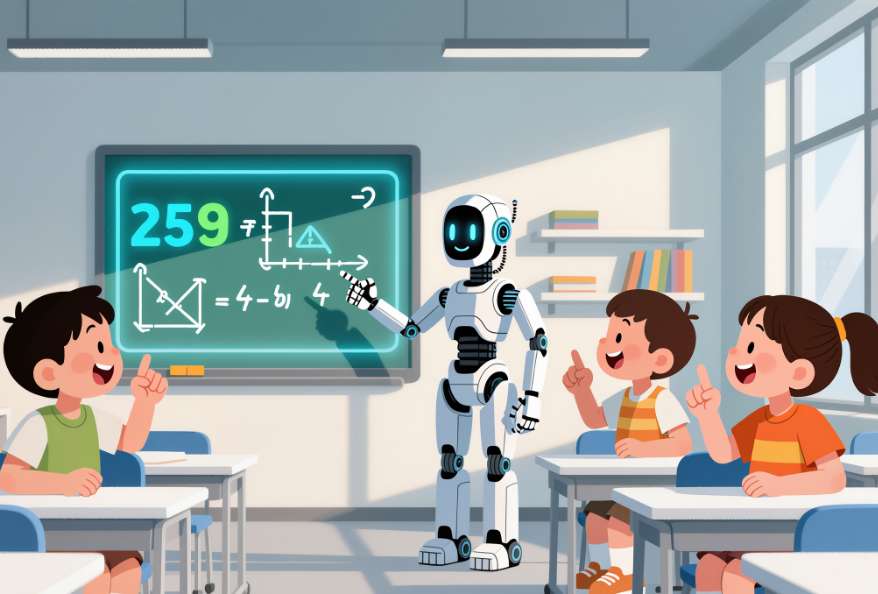
The introduction to AI Education should start gently. In class 6, children can understand flowcharts and simple algorithms through real world examples. How do you prepare a sandwich? How do you find the biggest number among the three? These exercises train them to break tasks into steps and see patterns in everyday life.
In class 7, visual programming tools like Scratch can turn imagination into motion on the screen. Children can tell stories, animate characters, and build simple games without writing a single line of text based code. The learning is playful but powerful. Concepts like loops, conditional checks, and events become familiar through direct experience.
By class 8, Python programming can be introduced. Python feels friendly and readable. A few lines can already solve interesting problems. Students can write quizzes, calculators, or a tiny chatbot. These modest creations boost confidence and curiosity.
Once in class 9, students are ready to make games using Python libraries such as Pygame.
Game building teaches them to manage user actions, track scores, detect collisions, and refine gameplay.
It also moves them from learning programming to thinking like engineers who fix bugs and improve performance.
Class 10 can expand into small applications that connect input, processing, and output. A basic expense tracker or fitness log can show how applications serve daily life. The focus now shifts to how data flows through a system and how calculations transform information into insights.
During classes 11 and 12, mathematics becomes the quiet superhero. Data science rests heavily on ideas like probability, statistics, and vectors. Students need to understand how models measure errors, why patterns matter, and how complex data structures work. This does not mean loading young minds with abstract equations. It means grounding concepts in stories and visualizations.
When a teenager predicts exam scores from past performance using a simple regression line, mathematics becomes alive.
At this point students are gaining comfort not only with coding but with thinking scientifically. They are learning how machines learn. They are on the path of AI Education Roadmap.
The next steps of AI Education Roadmap during the bachelor years
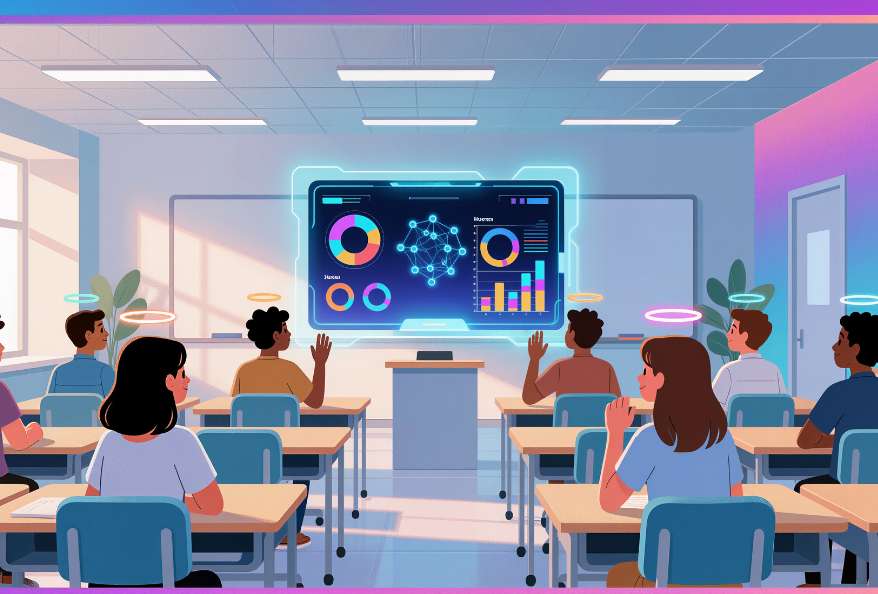
Once a student enters college in any STEM field, the journey continues with deeper dives. The first year can introduce core machine learning algorithms. These are the mathematical recipes behind predictions and classifications. Students can understand why a model succeeds or fails and how to judge its accuracy.
The second year is well suited for diving into deep learning. Neural networks that mimic patterns of the human brain become tangible. Students discover that computers can learn to identify faces or understand speech by adjusting millions of tiny numerical knobs. The excitement of seeing a system learn something new from data has no match.
In the third year, students can explore generative AI. Large language models, including the very tools that assist in writing and creativity today, reveal how machines generate new ideas from existing knowledge. This stage also encourages discussions on ethics, bias, and responsibility. Not everything a machine produces is trustworthy and students must learn to question the outputs they receive.
The fourth year should celebrate real world application. Students must build domain based projects in areas that they find personally meaningful. This is where the idea of Ikigai comes in. When students choose a domain they love and where they are naturally skilled, AI becomes a powerful tool to solve genuine problems. A student interested in medicine might build a system to detect anemia from image data. A student passionate about the environment might predict rainfall patterns. The project becomes a glimpse into their future career or research direction.
Habits that shape a strong AI learner
Alongside the roadmap, certain habits are invaluable. Students who join local communities or AI meetups find inspiration and mentorship. They learn languages and practices that are not written in textbooks. They meet people who have solved problems they are just discovering.
Documentation is another essential practice. Keeping a GitHub profile where projects live, and writing blog posts that explain what was learned, help others see the student’s capabilities. More importantly, students learn to communicate their work and reflect on mistakes and improvements.
Where possible, choosing further education in the chosen domain, rather than rushing into unrelated work, allows deeper learning. Of course life circumstances differ, but when a student can pursue knowledge with patience, the outcomes are richer.
TEDx Talk by Author: https://www.youtube.com/watch?v=-VbWRs7BsPY
The role of schools, counselors and communities in AI Education Roadmap for Students
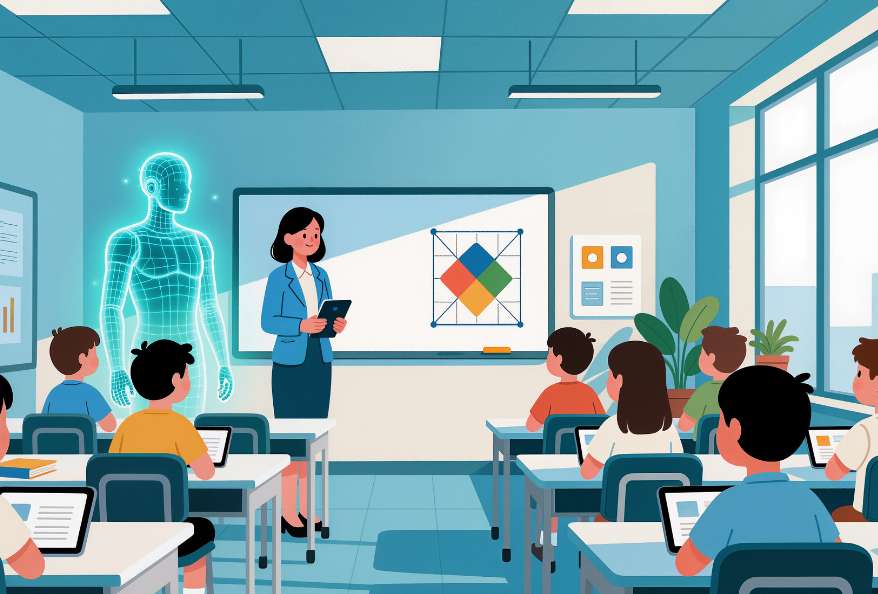
Educators need support too. Without proper training and encouragement, introducing AI Education in schools can feel intimidating. Teacher development programs are key. A teacher who feels confident with technology can shape an entire generation of fearless learners.
School counselors can guide students towards opportunities that match their strengths. They can help parents understand that AI Education is not only for math toppers or children who want to be engineers. It can also be for the creative child who wants to design animation, or the socially conscious child who wants to solve community problems using data.
Local communities must also play their part in AI Education. Spaces where students, colleges and industry professionals interact create a fertile ground for collaboration and internships. Cities like Pune already have dedicated AI Education communities (puneaicommunity.org) bringing people together to learn and build.
We need more such groups everywhere so that every child has access to inspiration and mentorship.
AI Education Roadmap: A movement that shapes the future
Introducing the basics of AI Education early in school does not mean replacing childhood with machines. It means empowering children to understand and shape the world that already surrounds them. AI should become a widespread learning movement and not a specialized privilege. If our goal is to nurture better researchers, innovators and responsible problem solvers, then we must catch them young, guide them patiently and give them space to explore.
Every child deserves a chance to see that they can create something useful, intelligent and compassionate. With the right AI Education roadmap for students, they not only learn about artificial intelligence. They learn the deeper art of asking good questions, seeking evidence and imagining better futures.
That is the true spirit of research.
Additionally, to stay updated with the latest developments in STEM research, visit ENTECH Online. Basically, this is our digital magazine for science, technology, engineering, and mathematics. Further, at ENTECH Online, you’ll find a wealth of information.
- Author
- Latest Posts

Yogesh has more than two decades of experience in Computer-aided Design/Engineering research, software development, and management. He has got Bachelor’s, Master’s, and Doctoral degrees in Mechanical Engineering, with a specialization in Geometric Modeling Algorithms. For past few years, he is working in fields such as Data Science, Artificial Intelligence, Machine Learning (ML), Deep Learning (DL), and Natural Language Processing (NLP).
More details about Yogesh are at https://www.linkedin.com/in/yogeshkulkarni/