Compare top data center cooling solutions and vendors. Learn how precision air and direct liquid cooling systems manage high rack heat densities and PUE.
Rack heat densities are climbing faster than most cooling systems were built to handle, and that gap is exactly where data center operators lose reliability, money, as well as headroom for growth. Picking from the best data center cooling options means balancing thermal load management against real operational constraints like budget, space, and PUE targets. After reviewing product specs, deployment case studies, and operator feedback across leading vendors, one thing stands out: the cooling decision shapes everything downstream. This guide covers five proven options worth considering for high-density computing environments that need to manage power and heat well.
Behind the ranking
Each option here was assessed through publicly available information, including product documentation, operator case studies, and also the feedback gathered from review platforms and official vendor sites. Only companies with a documented history in data center infrastructure made the cut.
→ See the full research breakdown
CSI Store – Best for data center liquid cooling with custom fabrication and sanitary-grade precision
MSC Industrial Supply – Best for metalworking and MRO product distribution, supporting industrial-scale operations
STULZ – Best for data center air-conditioning and precision cooling systems
Daikin Applied – Best for commercial and industrial HVAC systems with IoT-integrated cooling
CoolIT Systems – Best for AI and high-performance compute direct liquid cooling deployments
The Real Impact of Data Center Cooling Options
Picking the wrong cooling approach doesn’t just hurt your PUE score. It creates hotspots that shorten hardware life, drive energy costs up, and leave you scrambling when AI workloads double rack density overnight.
It’s no longer a problem of the future to deal with the heat that comes from GPU clusters and high-performance computing environments. It’s happening now in buildings that were only meant to handle a small part of the heat load that exists now.
The right cooling solution changes that equation. It keeps IT load vs. cooling load ratios tight, reduces water usage where WUE matters, and gives you the cooling capacity utilization rate that lets you plan with confidence.
Specialized cooling options built for data center environments understand these pressures in a way that general HVAC systems simply don’t, by design. When the fit is right, you stop firefighting hotspots and start running a facility where Power Usage Effectiveness, Water Usage Effectiveness, and Cooling Capacity Utilization Rate all move in the direction you want.
5 Top Data Center Cooling Solutions Picks at a Glance
Note: All data in this table is sourced from review platforms and the official websites of the listed companies.
Company Name
Years Operating
Headquartered In
CSI Store
Since 1977
Springfield, MO
MSC Industrial Supply
Since 1941
Davidson, NC
STULZ
Since 1947
Hamburg, Germany
Daikin Applied
Since 1924
Plymouth, MN
CoolIT Systems
Since 2001
Calgary, Canada
1. CSI Store – Best for Data Center Liquid Cooling with Custom Fabrication and Certified Welding
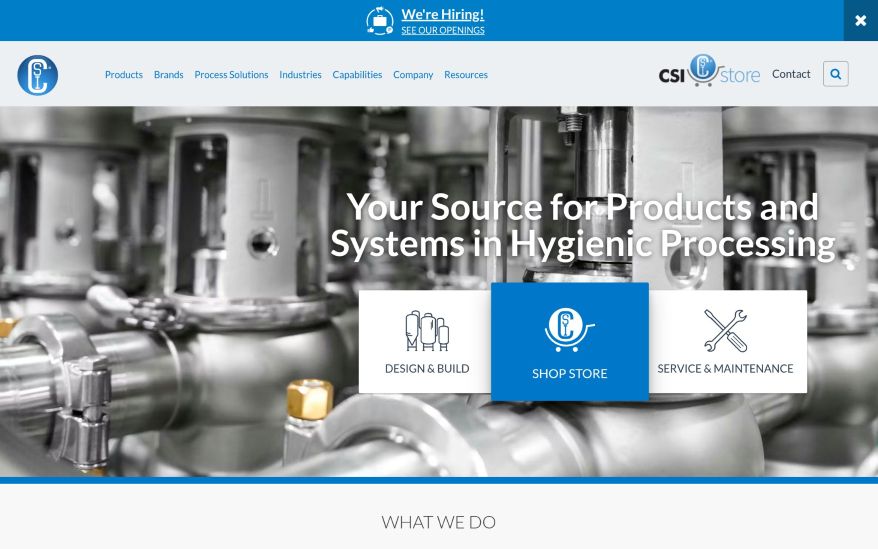
Fig. 1: CSI Store – Data Center Cooling Options
What Services Does CSI Store Provide?
Founded in 1977, CSI Store brings together engineering, fabrication, and distribution under one roof, which is a combination that’s genuinely hard to find. Their team supplies facilities with advanced data center cooling technology through a network of five US distribution centers stocked with fittings, pumps, valves, tubing, and specialty alloys. ASME Section IX certified welders and CNC machinists handle custom process skids in a climate-controlled facility, so the quality controls are built into the process rather than bolted on afterward. They also offer preventive maintenance programs, which matters when cooling system reliability isn’t something you can negotiate on.
Why Is CSI Store a Contender for Data Center Cooling Options?
Facilities that need liquid cooling precision combined with custom fabrication often struggle to find a single vendor who can handle both the off-the-shelf components and the engineered assemblies. CSI Store’s mix of stocked inventory, certified welding, and proactive service monitoring means operators aren’t stitching together multiple suppliers to get a complete cooling system. That’s a real operational advantage, not just a convenience.
From what the available information shows, CSI Store earns consistent recognition for its depth of inventory and fabrication quality. Operators working in regulated environments tend to call out the certified welding and sanitary-grade standards as standout differentiators. For a company that spans both distribution and custom engineering, that kind of reliability signal is rare.
2. MSC Industrial Supply – Best for Metalworking and MRO Product Distribution Supporting Industrial-Scale Operations
What Services Does MSC Industrial Supply Provide?
MSC Industrial Supply has been running since 1941, which gives them a supply chain depth that’s genuinely hard to replicate. With over two million catalog items, they cover metalworking and MRO products across machine shops, manufacturing facilities, and government operations. Their services include in-plant inventory management and vending solutions, which translates well to facilities that need consistent parts availability without chasing down suppliers. For data center environments, their MRO catalog supports the mechanical and operational side of cooling infrastructure maintenance.
Why Is MSC Industrial Supply a Contender for Data Center Cooling Options?
Large data center facilities need reliable access to MRO components to keep cooling equipment running between major service cycles, and MSC’s fulfillment setup handles that at scale. Their track record serving government agencies and complex manufacturing operations shows they can work within the operational discipline that demanding environments require.
Real User Sentiment:
MSC has been certified as a Great Place To Work across multiple countries, and their MSC MillMax product won the ISA 2021 Innovation Impact Award. From what the recognition history shows, they build long-term supplier relationships, and that kind of consistency tends to matter more to facilities teams than flashier alternatives.
3. STULZ – Best for Data Center Air-Conditioning and Precision Cooling
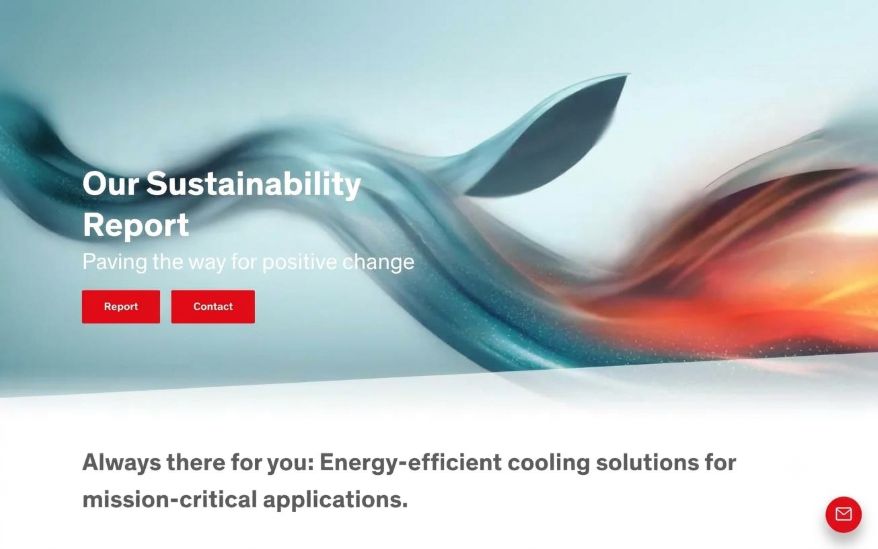
Fig. 2: STULZ – Data Center Cooling – AI Generated
What Services Does STULZ Provide?
STULZ has been building air-conditioning systems since 1947, and data center cooling is their actual main territory, not a product line extension. They produce computer room air conditioners, chillers, liquid cooling systems, and monitoring software across 11 production sites and a presence in over 150 countries. Their CyberCool WaterTec series reflects a real push toward low-GWP refrigerants and water-cooled systems that fit modern environmental targets. The global footprint means local support isn’t usually a logistical headache.
Why Is STULZ a Contender for Data Center Cooling Options?
Precision cooling for demanding environments requires equipment built to stay within tight tolerances, and STULZ’s decades of specialization in exactly that application set them apart from general HVAC vendors. Their focus on eco-friendly refrigerants and sustainable cooling design makes them a practical choice for facilities working toward aggressive PUE and WUE benchmarks.
Software companies get a lot of reviews, but STULZ doesn’t. They have a good reputation in the data center community though, thanks to long-term deployments and consistent engineering quality. When a vendor has been running production sites across multiple continents for over 75 years, that longevity says something real about operator trust.
4. Daikin Applied – Best for Commercial and Industrial HVAC with IoT-Integrated Cooling
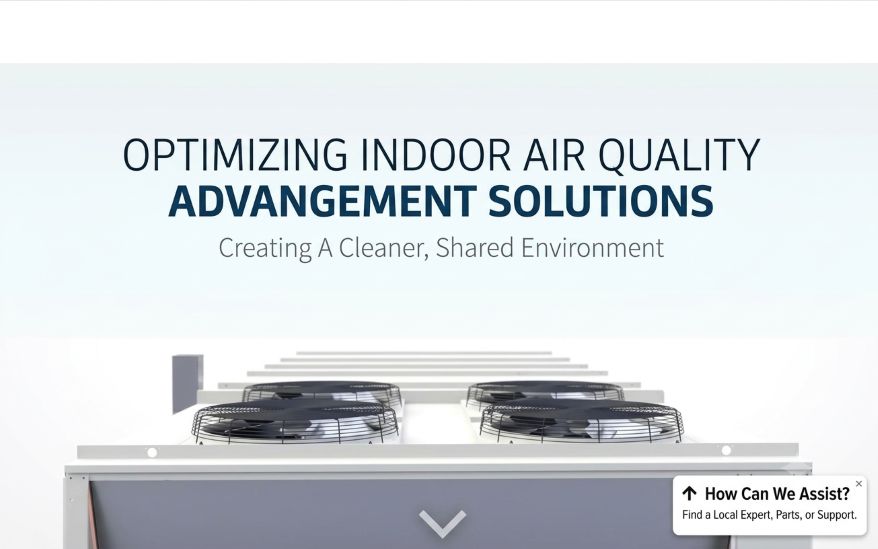
Fig. 3: DAIKIN Applied Solutions – AI Generated
What Services Does Daikin Applied Provide?
Daikin Applied designs and manufactures chillers, air handlers, fan coils, water source heat pumps, and rooftop systems for commercial and industrial applications. Daikin Industries is the parent company, and it ranks on the Forbes 2000 with $30.8 billion in 2024 revenues. This backs the R&D investment behind advanced compressor technology of Daikin Applied. They also offer 24/7 rental and temporary cooling capabilities across the US and Canada (useful during planned maintenance windows). Their 170 worldwide offices cover sales, service, and parts support.
Why Is Daikin Applied a Contender for Data Center Cooling Options?
Data centers need chillers and also air handling systems that can be controlled and monitored from afar. Daikin Applied’s IoT push directly meets this need. Their scale means replacement parts and field service are genuinely accessible, which cuts mean time between failures when something needs attention.
Real User Sentiment:
Daikin Applied has earned gold-level recognition in commercial HVAC equipment categories, and their parent company’s global scale gives operators confidence in long-term parts availability. From what the case study documentation shows, their installations tend to appear in environments where energy use and reliable performance are both non-negotiable.
5. CoolIT Systems – Best for AI and High-Performance Compute Direct Liquid Cooling
Fig. 5: CoolIT Systems – AI Generated
What Services Does CoolIT Systems Provide?
CoolIT Systems, founded in 2001 and based in Calgary, focuses entirely on liquid cooling for AI and high-performance computing. Their product line includes cold plates for CPUs and GPUs, coolant distribution units, rack manifolds, and integrated cooling loops, covering the full rack-level thermal management stack. They also handle prefabricated piping, system design, global onsite service, and operator training. That end-to-end scope means a hyperscaler doesn’t need to coordinate five separate vendors to deploy a liquid cooling system.
Why Is CoolIT Systems a Contender for Data Center Cooling Options?
Air cooling alone can’t safely handle the heat that comes from AI workloads and dense GPU clusters. Hence, CoolIT made their direct liquid cooling technology for this environment. This technology cools seven of the top ten supercomputers globally, including the number-one-ranked El Capitan system. That’s about as real-world validated as proof of performance gets.
Real User Sentiment:
The Financial Times named CoolIT one of the Americas’ Fastest Growing Companies for 2023 (Top 250). It was also on the Deloitte Technology Fast 500. As you can see from the trend of recognition, their growth is linked to real wins in large-scale deployment, not just marketing momentum. It’s hard to ignore validation like that from a third party.
Data Centre Cooling Solutions: How These Were Chosen and Verified?
Establishing the Foundation: Data Requirements
The research process started by pulling together a broad list of companies operating in the data center cooling space. Sources included industry directories, vendor marketplaces, case study repositories, and cooling-specific review platforms. For each candidate, the goal was to gather enough publicly available documentation to make a fair assessment, covering product scope, deployment history, and market positioning. Companies with thin or unverifiable public records were filtered out early, keeping the pool focused on vendors with a real, documented footprint.
The Shortlisting Pass
Next, the team reviewed each candidate strictly. We flagged unverified claims and removed companies lacking consistent third-party confirmation for their data center work. Then, we analyzed review patterns across multiple sources to identify recurring themes. Finally, we focused on vendors with consistent operator feedback rather than relying on outlier reviews.
Verification Pass
Next, we cross-referenced each company’s claims against independent sources, checking website statements against real operator feedback. Specifically, we prioritized real-world deployment evidence – such as case studies, published outcomes, and documented performance metrics. Consequently, only vendors whose capabilities matched third-party evidence moved forward.
Industry Recognition and Authority
Recognition signals were factored in as one input among several. Awards from credible industry bodies, mentions in sector publications, and documented honors from organizations like Deloitte, the Financial Times, and ISA were noted for relevant companies. The weight given to these signals was proportional to how closely the recognition was tied to data center infrastructure, specifically, rather than general business or growth metrics. Companies with both technical recognition and market-facing validation scored higher on this dimension.
Evidence Specific to Data Center Cooling Options
The final check focused on how directly each company’s public-facing evidence addressed data center cooling as a defined service area. Vendors with dedicated cooling service pages, verifiable client deployments in data center environments, and relevant case studies were prioritized. Generic industrial suppliers were assessed on whether their product scope and documented experience translated meaningfully to the thermal management and reliability requirements of modern data center operations.
What to Look For When Choosing Data Center Cooling Solutions
Choosing a cooling solution isn’t just about matching BTUs to square footage. The right fit depends on several factors that interact with your specific facility, workload profile, and growth plans.
Industry/Domain Experience: Look for vendors with documented deployments in data center environments specifically. General HVAC experience doesn’t automatically translate to precision cooling in demanding settings.
Features and Service Offerings: Check whether the vendor covers the full scope you need, from system design through installation, monitoring, and ongoing maintenance. Single-vendor coverage reduces coordination risk.
Pricing Structure: Liquid cooling and precision air systems both carry significant upfront costs (not cheap, but worth it for the right workload). Evaluate the total cost of cooling per kilowatt of IT load, not just the equipment purchase price.
Results Measurement: Ask vendors how they report on PUE, WUE, and Cooling Capacity Utilization Rate post-deployment. If they can’t show you how outcomes are tracked, that’s a gap worth questioning.
Industry Knowledge and Compliance: Verify alignment with ASHRAE thermal guidelines, ISO 14001, EN 50600, and Uptime Institute standards. Vendors familiar with these frameworks understand the operating boundaries your facility has to work within.
Data Center Solutions: Final Take
Data center cooling isn’t a problem you solve once. As AI workloads push rack densities higher and environmental pressure tightens PUE expectations, the gap between adequate cooling and purpose-built cooling keeps widening. The five options covered here represent genuinely different approaches, from precision air systems to direct liquid cooling at hyperscale. The right choice depends on your workload density, your operational model, and how far ahead you’re planning for the compute environments that are already on the way.
Deven Nandapurkar is a Software Engineer, Project Lead; working at the strategic intersection of software engineering, productivity science, and emerging technologies. Driven by a core philosophy of "building things worth building," he leads cross-functional teams and drives end-to-end technical strategy—from early-stage conceptualization through production-grade deployment.
A Computer Engineering graduate from Pune University, Deven brings a sharp systems-thinking approach to technical leadership, honed by years of managing high-stakes engineering projects and leading teams to top placements in national and international hackathons, including the NASA Space Apps Challenge and the Peerlist GenAI Hackathon.
Deven explores how human cognition and emerging technology converge. He regularly writes about cognitive performance optimization, attention management, AI integration, and the evolving dynamics of the modern workforce - offering actionable frameworks for professionals seeking to maximize their productivity and thrive alongside intelligent systems.
Deven Nandapurkar is a Software Engineer, Project Lead; working at the strategic intersection of software engineering, productivity science, and emerging technologies. Driven by a core philosophy of “building things worth building,” he leads cross-functional teams and drives end-to-end technical strategy—from early-stage conceptualization through production-grade deployment.
A Computer Engineering graduate from Pune University, Deven brings a sharp systems-thinking approach to technical leadership, honed by years of managing high-stakes engineering projects and leading teams to top placements in national and international hackathons, including the NASA Space Apps Challenge and the Peerlist GenAI Hackathon.
Deven explores how human cognition and emerging technology converge. He regularly writes about cognitive performance optimization, attention management, AI integration, and the evolving dynamics of the modern workforce – offering actionable frameworks for professionals seeking to maximize their productivity and thrive alongside intelligent systems.