Claude AI Computer Use: A Game Changer in AI Technology
Claude AI has launched a new feature that allows it to control your computer.

Claude AI Computer Use: A Game Changer in AI Technology
OpenAI DevDay 2024: Key Highlights
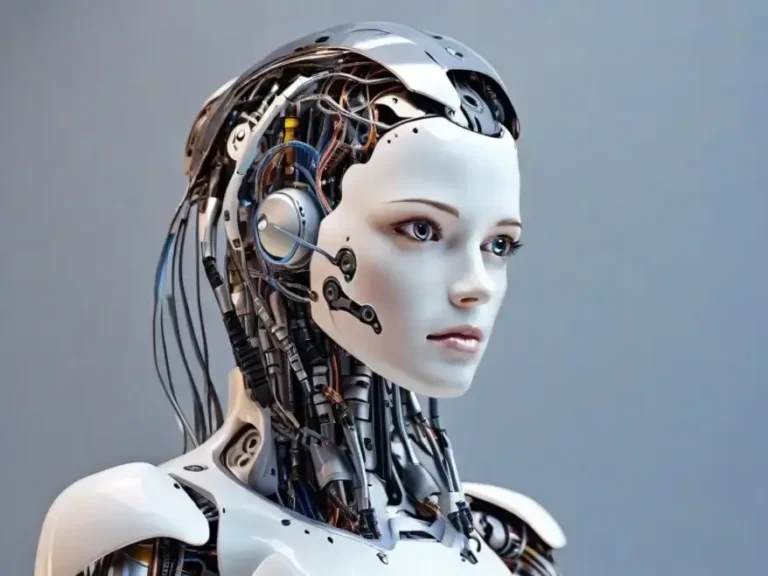
What is Artificial Intelligence? Everything a Teen Wants to Know for Education and Career Planning

Global STEM Education Expo: India’s biggest STEM focused Education Fair

ChatGPT’s o1-mini Reasoning Model Now Available for Free Users
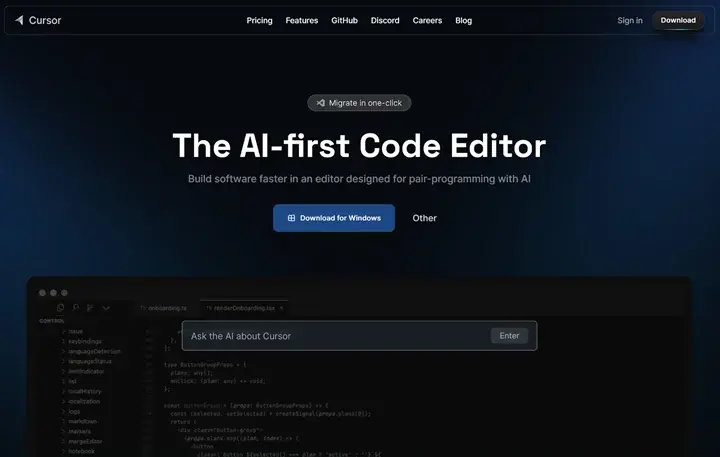
Introducing Cursor AI: Your New AI-Powered Coding Assistant
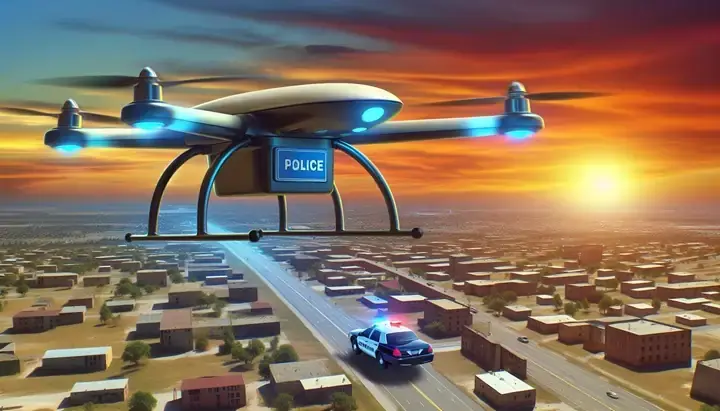
Autonomous Drones: Revolutionizing 911 Emergency Response in Texas
OpenAI o1: A newer AI Model from the maker of ChatGPT

Black Myth: Wukong – AI in Gaming

Google’s AI Traffic Management Solution: Project Green Light
Artificial Intelligence (AI) is a branch of computer science and engineering that focuses on developing machines and computer systems capable of performing tasks that usually require human intelligence. These tasks include learning, reasoning, recognising patterns, understanding language and solving problems. Today, artificial intelligence plays an important role in industries such as healthcare, education, manufacturing, transportation, finance and communication.
At ENTECH STEM Magazine, this category brings together educational articles, technical insights and industry developments related to artificial intelligence. It helps students, aspiring engineers and technology enthusiasts understand how AI works, explore its applications and discover the technologies shaping its future.
Artificial intelligence includes several specialised fields that help computers process information, learn from data and perform intelligent tasks. These fields combine mathematics, computer science, statistics, engineering and data science.
Some important areas of artificial intelligence include:
Machine Learning (ML) is a subfield of artificial intelligence that enables computer systems to learn patterns from data and improve their performance without being explicitly programmed for every task.
Machine learning uses algorithms to analyse information, identify patterns and make predictions. Common approaches include supervised learning, unsupervised learning and reinforcement learning. These techniques support applications such as recommendation systems, fraud detection, image recognition and predictive analytics.
Deep learning is a specialised area of machine learning that uses artificial neural networks with multiple layers to process complex information. These networks take inspiration from certain information-processing principles of the human brain.
Deep learning supports applications such as speech recognition, image classification, language processing and autonomous systems. In addition, advances in neural network architectures have helped improve the capabilities of modern AI applications.
Natural Language Processing (NLP) enables computers to understand, interpret and generate human language. It combines artificial intelligence, linguistics and computational methods to process written and spoken communication.
NLP powers technologies such as language translation, voice assistants, chatbots, text summarisation and sentiment analysis. Furthermore, large language models have expanded the ability of computers to work with complex language-based tasks.
Computer vision enables machines to interpret and analyse visual information from images and videos. It uses AI algorithms to identify objects, recognise patterns and extract useful information from visual data.
Applications include medical image analysis, quality inspection in manufacturing, facial recognition, agricultural monitoring and traffic analysis. Therefore, computer vision plays an important role in connecting artificial intelligence with the physical world.
Robotics combines mechanical engineering, electronics, control systems and computer science to develop machines that perform physical tasks. Artificial intelligence adds capabilities such as perception, learning, decision-making and adaptation.
AI-powered robots are used in manufacturing, healthcare, logistics, agriculture and research. Similarly, intelligent automation helps organisations perform repetitive or complex tasks with greater consistency.
Generative AI refers to artificial intelligence systems that can create new content based on patterns learned from training data. These systems can generate text, images, audio, video and computer code.
Large language models and image-generation models are important examples of generative AI. They have introduced new possibilities in education, research, software development, design and creative work.
Artificial intelligence is transforming how organisations analyse information, solve problems and deliver services. Its applications extend across several sectors.
These applications demonstrate how artificial intelligence connects computer science and engineering with practical challenges across different industries.
Although artificial intelligence offers many opportunities, its development also raises important technical and social challenges. AI systems depend on data, algorithms and computing infrastructure. As a result, their performance and reliability depend on how they are designed, trained and evaluated.
Some important considerations include data privacy, algorithmic bias, cybersecurity, transparency and accountability. AI-generated information can also contain errors or misleading content. Therefore, human oversight and responsible development remain important.
Researchers and engineers are working on explainable AI, fairness assessment, model evaluation and AI governance. These approaches aim to make artificial intelligence systems more reliable, transparent and useful.
Artificial intelligence offers several learning pathways for students interested in mathematics, computing, engineering and technology. Students can explore computer science, artificial intelligence engineering, data science, robotics and related academic programmes.
A strong foundation in mathematics, statistics, programming and computer science helps students understand AI concepts. Programming languages such as Python are widely used in machine learning, data analysis and AI development.
Students can also explore specialised topics such as neural networks, computer vision, natural language processing, robotics and generative AI. Furthermore, practical projects and problem-solving exercises help connect theoretical knowledge with real-world applications.
Career opportunities exist across technology companies, research organisations, healthcare, manufacturing, finance and other industries. Depending on their education and experience, professionals may explore roles such as AI engineer, machine learning engineer, data scientist, robotics engineer, AI researcher and computer vision engineer.
Artificial intelligence brings together several STEM disciplines to solve complex problems and develop new technologies. It also demonstrates how mathematics, computer science, engineering and data science work together.
Through this category, ENTECH STEM Magazine brings together educational articles, technical explanations, industry insights and career-related resources on artificial intelligence. Readers can explore machine learning, deep learning, robotics, generative AI, real-world applications and responsible AI.
Whether you are a student exploring AI as a career, an aspiring engineer learning about intelligent systems or a technology enthusiast interested in emerging innovations, explore our collection of artificial intelligence articles and discover how this field is shaping the future of technology.