Careers in the Growing Semiconductor Industry
Learn how recent agreements are transforming the semiconductor industry and what they mean for aspiring engineers and technologists.

Careers in the Growing Semiconductor Industry
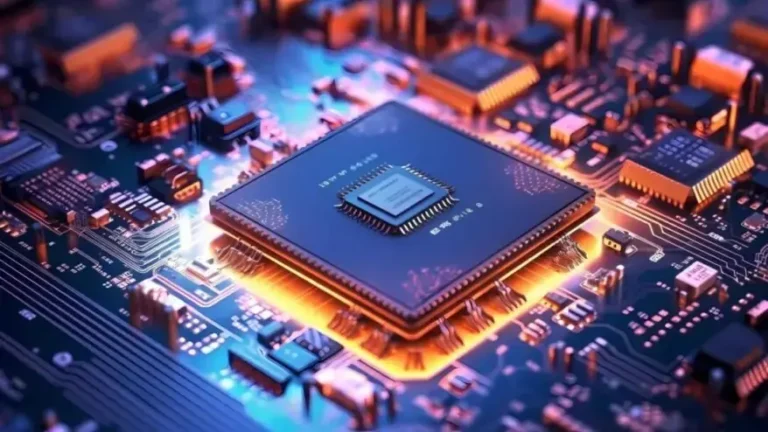
Electronics and Communication Engineering (ECE) is a branch of engineering that focuses on electronic devices, circuits, communication systems and signal processing. It combines principles from physics, mathematics and computing to develop technologies that help people process and exchange information.
From smartphones and computers to satellites, medical instruments and wireless networks, electronics and communication engineering supports many technologies used in everyday life. Engineers in this field design the electronic components that power devices and develop the systems that allow information to travel between them.
As digital technologies continue to evolve, ECE plays an important role in areas such as artificial intelligence, robotics, telecommunications, the Internet of Things and advanced computing. At ENTECH STEM Magazine, explore the concepts, applications and innovations that make this engineering branch an exciting field of study.
Electronics and Communication Engineering brings together several technical disciplines. These areas help engineers design electronic systems, process information and build reliable communication technologies.
Electronic circuits form the foundation of most modern electronic equipment. They use components such as resistors, capacitors, diodes and transistors to control electrical signals.
Engineers study how these components work together to perform tasks such as amplification, switching, filtering and signal generation. They use this knowledge to develop circuits for consumer electronics, industrial equipment, communication devices and medical instruments.
Semiconductors are materials whose electrical properties can be controlled for use in electronic devices. Silicon is one of the most widely used semiconductor materials.
Diodes, transistors and integrated circuits are built using semiconductor technology. These components form the foundation of microchips found in computers, smartphones, vehicles and many other devices.
ECE professionals may work on semiconductor devices, chip design, fabrication technologies and testing.
Digital electronics deals with circuits that process information using binary values, commonly represented as 0 and 1. Logic gates, flip-flops, counters and digital circuits are important building blocks of digital systems.
These concepts are used in computers, calculators, communication equipment and embedded devices. Digital logic design also provides a foundation for understanding how processors and other computing hardware operate.
Communication systems transmit information from one point to another. They may use electrical signals, radio waves, light or other transmission methods.
A basic communication system includes a transmitter, a communication channel and a receiver. Engineers study how information is encoded, transmitted and recovered while managing noise, interference and signal loss.
Radio, television, mobile networks, satellite communication and internet infrastructure all depend on communication engineering.
Signals carry information in different forms. They may represent sound, images, video, sensor readings or communication data.
Signal processing involves analysing and modifying these signals to extract useful information or improve their quality. Digital signal processing is widely used in audio systems, medical imaging, radar, wireless communication and multimedia technologies.
Embedded systems are computing systems designed to perform specific functions within larger devices. They often combine microcontrollers, sensors, software and electronic circuits.
Examples include smart appliances, vehicle control units, industrial monitoring equipment and wearable devices. ECE engineers help design the hardware and communication interfaces that allow these systems to operate.
ECE technologies are present across many industries. They help devices collect information, process signals and communicate with other systems.
Mobile phones depend on electronic circuits, antennas, radio-frequency components and communication protocols. These technologies allow devices to exchange voice, messages and data over wireless networks.
Engineers work on the technologies behind mobile communication, including network equipment, antennas, signal processing and wireless connectivity.
Satellites support communication, navigation, weather monitoring and scientific research. Their communication systems use antennas, transmitters, receivers and signal-processing equipment to exchange information with ground stations.
ECE engineers contribute to the design and testing of these systems, helping ensure that signals can travel reliably over long distances.
Televisions, cameras, audio equipment, gaming devices and smart appliances use electronic circuits and digital systems. These products combine hardware, software and communication technologies to provide different functions.
ECE principles help engineers improve device performance, reduce power consumption and develop new features.
Medical technologies often rely on electronic sensors and signal-processing systems. Equipment such as electrocardiographs, patient monitors and medical imaging systems collects and processes information that supports healthcare professionals.
Electronics engineers contribute to the design and development of these devices, with attention to accuracy, reliability and safety.
Factories use electronic sensors, controllers, communication networks and embedded systems to monitor and control machines. Robotics also depends on electronic circuits and sensors to collect information and coordinate movement.
ECE connects with mechanical engineering and computer engineering in the development of intelligent machines and automated systems.
Advances in electronics and communication are creating new possibilities across computing, transportation, healthcare and industry.
Modern wireless networks support faster data communication, greater network capacity and new connected applications. Engineers continue to research technologies that can improve network performance, reduce delays and support large numbers of connected devices.
These developments are relevant to smart infrastructure, connected vehicles and industrial communication.
The Internet of Things connects physical devices that collect and exchange data. Sensors, microcontrollers and communication modules allow everyday objects and industrial equipment to share information.
ECE plays an important role in developing the electronic hardware and communication interfaces used in IoT systems.
Artificial intelligence can help electronic systems analyse information and respond to changing conditions. Applications include voice recognition, image processing, smart sensors and intelligent communication networks.
AI also connects ECE with computer engineering and data science, creating opportunities for interdisciplinary research.
VLSI technology allows large numbers of electronic components to be integrated into a single chip. It is essential for developing modern processors, memory devices and specialised integrated circuits.
Chip design involves several stages, including logic design, verification and testing. Improvements in VLSI technology help make electronic devices more capable and compact.
Optical communication uses light to transmit information. Fibre-optic networks carry large amounts of data over long distances and form an important part of modern internet infrastructure.
Photonics also has applications in sensing, imaging and advanced communication technologies.
Students interested in electronics, physics, mathematics and communication technologies may find ECE an engaging engineering discipline. School-level concepts such as electricity, magnetism, waves and basic mathematics provide a useful foundation.
Undergraduate ECE programmes commonly cover subjects such as electronic devices, circuit theory, digital electronics, communication systems, electromagnetic theory, signal processing, microprocessors and embedded systems. Laboratory sessions and projects help students understand how these concepts are applied in real devices.
Graduates can explore opportunities in several areas, including:
The field also offers opportunities to work with professionals in computer engineering, electrical engineering, robotics and software development.
Electronics and Communication Engineering helps explain how modern devices work and how information travels around the world. It connects fundamental scientific concepts with technologies used in communication, computing, healthcare, transportation and industry.
Whether you are learning about semiconductors, exploring wireless networks or considering an engineering career, understanding ECE can help you discover the many possibilities within this field.
ENTECH STEM Magazine brings together educational articles, expert insights and technology-related content to help students explore science, technology, engineering and mathematics. Explore our electronics and communication engineering resources to learn about the systems, components and innovations shaping the connected world.