AI Home Care Robot for Aging Adults
An AI home care robot uses advanced artificial intelligence, smart sensors, and autonomous navigation to assist elderly users with daily tasks safely and independently.

AI Home Care Robot for Aging Adults
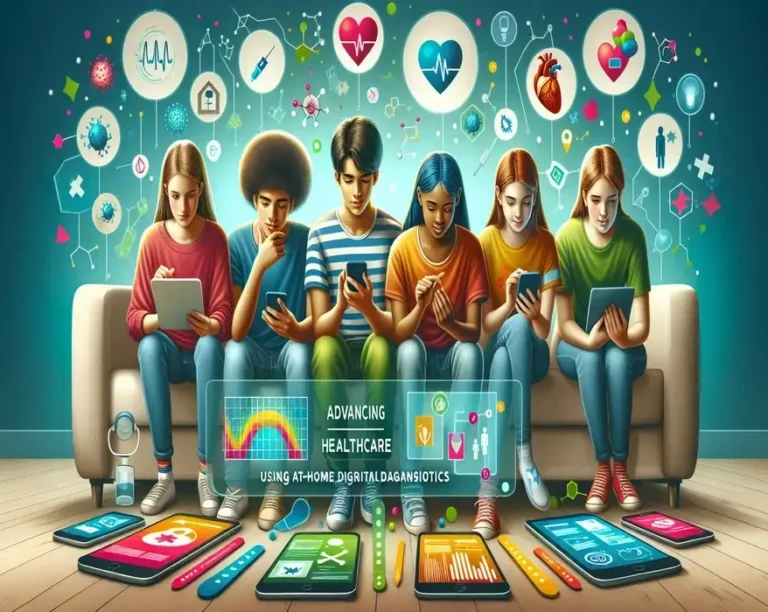
Advancing Healthcare: Using At-Home Digital Diagnostics
At-Home Digital Diagnostics refers to the use of digital technologies, connected devices, and diagnostic tools to collect and analyse health-related information outside traditional healthcare facilities. These technologies allow individuals and healthcare professionals to access certain health measurements, test results, and monitoring data without requiring every measurement to take place in a hospital or laboratory.
Advances in medical devices, sensors, mobile applications, artificial intelligence, and wireless communication have expanded the possibilities of digital healthcare. For example, connected blood pressure monitors, wearable health trackers, digital glucose monitors, and home testing systems can collect information and share it through digital platforms.
As healthcare becomes increasingly connected, At-Home Digital Diagnostics is gaining importance in remote healthcare services, preventive health monitoring, and patient data management.
At ENTECH Magazine, this category explores the technologies, innovations, and engineering developments making digital diagnostics possible. It covers connected medical devices, home testing solutions, remote patient monitoring, and emerging applications of digital health technology.
At-Home Digital Diagnostics depends on several technologies working together. These systems combine hardware, software, sensors, and communication networks to collect, process, and share health-related information.
Connected medical devices collect health measurements and transfer the information to digital platforms. Examples include blood pressure monitors, digital thermometers, pulse oximeters, and glucose monitoring devices.
Many of these devices use Bluetooth, Wi-Fi, or cellular connectivity to transmit readings to smartphones or healthcare platforms. Consequently, healthcare professionals can review certain measurements remotely when the service and device support this functionality.
Modern wearable sensors also collect information about parameters such as heart rate, physical activity, sleep patterns, and other physiological measurements.
Home testing technologies allow individuals to collect samples or perform certain tests outside traditional laboratories. These include different types of rapid diagnostic tests, home monitoring kits, and specialised testing devices.
Some digital diagnostic systems go beyond conventional test kits. They use connected hardware, smartphone applications, or software-based analysis to capture and process test information.
Furthermore, digital reporting systems can help organise test results and make relevant information available to healthcare professionals. However, the accuracy and intended use of each testing system depend on its design and validation.
Artificial Intelligence (AI) and Machine Learning (ML) are becoming important in digital healthcare. These technologies can analyse health-related data, identify patterns, and support certain diagnostic processes.
For example, AI-powered software may process information from medical images, wearable sensors, or specialised diagnostic devices. Similarly, machine learning algorithms can help identify patterns in large datasets.
However, AI-generated findings are not automatically equivalent to a clinical diagnosis. Their reliability depends on the quality of the data, validation methods, and intended medical application.
Mobile applications provide an interface between connected health devices and digital healthcare platforms. They can display measurements, organise health records, and support communication between individuals and healthcare providers.
Cloud computing allows digital platforms to store and process information across connected systems. In addition, cloud infrastructure can support data sharing, remote access, and integration with electronic health records.
Together, these technologies form an important part of the digital infrastructure behind modern diagnostic services.
Digital diagnostic technologies have applications across several areas of healthcare. They can support health monitoring, testing, and the exchange of information between individuals and healthcare professionals.
Remote Patient Monitoring (RPM) uses connected medical devices to collect health information outside traditional clinical settings. These devices can transmit measurements to healthcare providers for review.
Common examples include connected blood pressure monitors, digital weighing scales, glucose monitors, and pulse oximeters.
This approach can support the ongoing monitoring of certain health conditions. Moreover, it allows healthcare professionals to review selected measurements between scheduled appointments.
Wearable devices such as smartwatches, fitness bands, and specialised medical sensors can collect different types of health-related information.
Depending on the device, these technologies may track heart rate, movement, sleep patterns, and other physiological measurements. Some specialised devices also support continuous or periodic monitoring.
As wearable technology develops, improvements in sensor accuracy, battery efficiency, and data processing are expanding its potential applications in digital healthcare.
Home-based diagnostic testing allows certain tests to take place outside conventional laboratory settings. Depending on the test, users may collect samples at home, operate a testing device, or use a digital platform to access results.
Some systems also incorporate connected diagnostic technologies that capture and transmit test information electronically.
These developments can improve access to selected testing services. Nevertheless, test limitations, sample quality, and the need for professional interpretation remain important considerations.
Telehealth platforms use digital communication technologies to connect individuals with healthcare professionals. They can support remote consultations, information sharing, and certain forms of follow-up care.
When integrated with diagnostic devices, these platforms can also provide access to relevant measurements and test results.
Therefore, At-Home Digital Diagnostics and telehealth can work together to support more connected healthcare services.
At-Home Digital Diagnostics offers several potential benefits for healthcare systems and individuals. It can make certain measurements more accessible, support ongoing monitoring, and reduce the need for some routine in-person data collection.
Digital platforms can also organise health information and help healthcare professionals review measurements over time. Furthermore, connected devices can support communication between individuals and healthcare providers.
However, these technologies also introduce important challenges.
In addition, home-based testing and monitoring should complement appropriate professional healthcare rather than replace necessary medical evaluation.
Health information is sensitive, making data protection an important part of digital diagnostic technology. Connected devices collect information that may move between sensors, mobile applications, cloud platforms, and healthcare providers.
Therefore, developers must consider data encryption, secure authentication, access controls, and responsible information management.
Regulatory requirements also play an important role. Medical devices and diagnostic software may need to meet specific safety, performance, and clinical validation requirements depending on their intended use and the markets where they operate.
Similarly, AI-based diagnostic applications require careful evaluation to understand their accuracy, limitations, and suitability for particular medical purposes.
These considerations help build trust in digital healthcare technologies and support their responsible adoption.
Advances in sensors, AI, biotechnology, and connected medical devices continue to expand the possibilities of home-based diagnostics.
Some important developments include:
Moreover, improvements in edge computing and cloud infrastructure are helping digital health platforms process and manage growing volumes of information.
These developments are likely to influence the future of diagnostic services, connected medical devices, and remote healthcare delivery.
Understanding At-Home Digital Diagnostics involves exploring several interconnected fields, including biomedical engineering, medical electronics, sensor technology, artificial intelligence, software development, and telecommunications.
ENTECH Magazine brings these subjects together through educational articles, technology explainers, engineering insights, and coverage of emerging innovations. This category explores connected medical devices, wearable health technology, home testing systems, remote patient monitoring, AI-assisted diagnostics, and digital healthcare platforms.
Whether you are a student interested in biomedical engineering, an educator exploring healthcare technologies, or a technology enthusiast following developments in digital health, these resources offer useful insights into the technologies transforming healthcare.
Explore our At-Home Digital Diagnostics articles to understand how connected devices, intelligent software, and emerging medical technologies are changing the way health information is collected, analysed, and shared.