Colossal Biosciences has reached a huge goal by bringing back the dire wolf. This shows how cloning and gene editing can do amazing things.
Colossal Biosciences Achieves Historic Milestone with Dire Wolf Revival
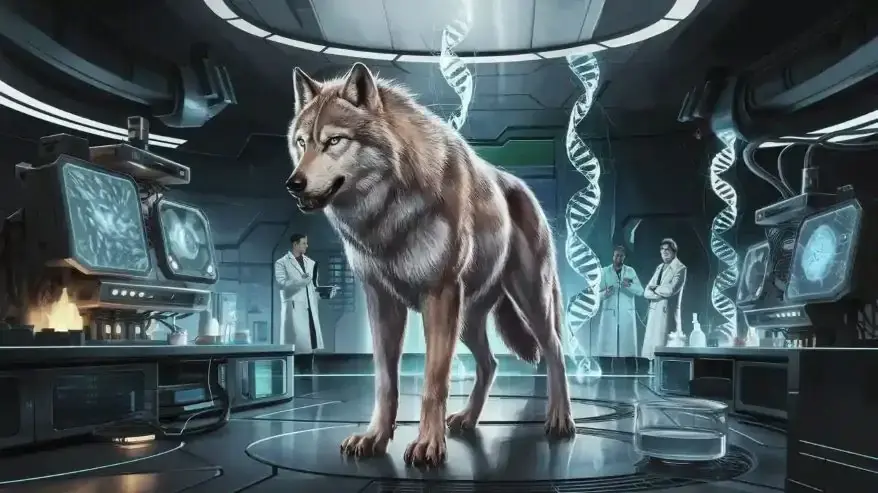
Colossal Biosciences has reached a big achievement by reviving the dire wolf. This predator, which lived during the Ice Age, is now back thanks to advanced genetic tools. Actually, scientists changed 14 parts of the gray wolf’s DNA and brought back 15 extinct genes. This success gives 500 times more DNA data on the dire wolf than before. Indeed, this project shows how de-extinction science can help protect nature and gives hope for saving other extinct animals.
The Dire Wolf: A Lost Icon of the Past
The History and Extinction of Dire Wolves
Dire wolves lived in North and South America long ago. They existed for about 250,000 years but disappeared 13,000 years ago. This happened when large plant-eating animals, their main food, declined. Fast environmental changes made survival harder for them. Unlike other wild dogs, dire wolves couldn’t adjust to these changes and died out.
Fossils from places like the La Brea Tar Pits show how common they were. These remains reveal their strong bodies and powerful jaws, making them fierce hunters. Even though they are extinct, people and scientists still find them fascinating.
Cultural and Scientific Significance of Dire Wolves
Dire wolves are important in both culture and science. Native languages in California have special words for wolves, showing their cultural value. Old records mention wolves in the area until the early 1800s, proving their role in nature.
Scientists have learned a lot about dire wolves using ancient DNA and proteins. They studied old remains, like a 13,000-year-old tooth, to see how they relate to other wild dogs. Their body shape is like gray wolves, but DNA shows they were a separate species.
Why Colossal Chose the Dire Wolf for Revival
Colossal Biosciences picked the dire wolf because of its importance in history and nature. Its extinction removed a key predator from ancient ecosystems. By bringing it back, Colossal hopes to help today’s environments.
The team used old DNA from fossils, like a 72,000-year-old skull, to recreate the dire wolf. In fact, they edited gray wolf genes to add traits unique to dire wolves. This success shows how de-extinction science can fight biodiversity loss.
Colossal Biosciences and the Science of De-Extinction
How Colossal Used Ancient DNA to Revive the Dire Wolf
Colossal Biosciences, a top genetic engineering company, brought back the dire wolf. Scientists studied DNA from old remains, like a 13,000-year-old tooth and a 72,000-year-old skull. Specifically, they compared this DNA with gray wolf DNA and found it was 99.5% the same. From this, they discovered 15 unique dire wolf genes. These genes were added to gray wolf DNA using advanced genetic engineering tools.
The team made embryos with these changes and placed them in domestic dogs. This led to the successful birth of dire wolf pups. These pups are the first de-extinct predator species ever. This breakthrough shows how de-extinction technologies can bring back lost animals and help ecosystems.
CRISPR Technology and Genetic Editing in Action
CRISPR technology was key to this historic breakthrough. Scientists used CRISPR to change 20 genes in gray wolf cells. These changes gave the wolves traits like strong bodies and powerful jaws, just like dire wolves. CRISPR made these edits very precise, so the pups looked like their extinct ancestors.
CRISPR is also used in other de-extinction projects, like adding mammoth traits to Asian elephants. But there are still challenges. For example, some hybrids, like the Christmas Island rat, don’t fully match extinct species. Even so, CRISPR is a big part of scientific progress in species de-extinction.
The Role of Surrogate Species in the Revival Process
Domestic dogs acted as surrogate mothers for the dire wolf embryos. The fertilized eggs were placed in these dogs, leading to two litters. The first litter had two males, Romulus and Remus, and the second had a female, Khaleesi. These pups were designed to be as close as possible to real dire wolves.
Surrogate species are important in bringing back extinct animals. They give embryos a safe place to grow. This method has also been used to clone endangered animals. By using surrogates, Colossal ensures the process is both ethical and biologically safe.
Challenges Faced by Colossal in De-Extinction Science
Colossal Biosciences faced many challenges in this huge achievement. Getting good DNA from ancient remains was hard because it breaks down over time. Editing gray wolf DNA to match dire wolf traits needed great accuracy. The team also had to make sure embryos survived and were born healthy.
Another problem was public doubt. Some people didn’t believe de-extinction could truly bring back extinct animals. Others worried about the risks of releasing predators into the wild. Despite these issues, Colossal is focused on using genetic engineering to fix ecosystems and help with global conservation.
Conservation and Ecological Impact of the Dire Wolf Revival
How the Dire Wolf Could Help Ecosystems
Bringing back the dire wolf could help nature in big ways. As a top predator, it can keep prey numbers under control. This stops animals from eating too many plants, letting plants grow back. Today, many ecosystems are unbalanced because predators like the dire wolf are gone. Adding the dire wolf back could fix these problems.
| Evidence Type | Description |
|---|---|
| Ecological Balance | Helps control prey and restores predator-prey relationships. |
| Biodiversity Enhancement | Encourages conservation and inspires people to protect wildlife. |
| Genetic Technology Application | Boosts genetic variety in endangered species, helping them recover. |
Helping Red Wolves with New Science
The tools used for the dire wolf are helping red wolves too. Colossal made red wolf pups using cloning, improving their genetic health. This work helps save red wolves, which are in danger of disappearing.
“Colossal’s work shows how reviving species can also protect others.”
Risks of Bringing Back Extinct Animals
Bringing back extinct animals like the dire wolf has risks. It could change ecosystems in ways we don’t expect. There are also concerns about the health of these animals. Modern ecosystems are very different from the past, raising ethical questions.
- The health of revived animals is a key concern.
- Changes to ecosystems might cause unexpected problems.
- Ethical issues about changing nature need to be solved.
Colossal’s Plan to Handle These Risks
Colossal has plans to deal with these challenges. They use advanced tools to stop inbreeding and protect animal health. In 2025, they created mice with mammoth traits to test ecosystem changes. These steps show their focus on solving problems during de-extinction projects.
Ethical and Scientific Perspectives on De-Extinction
Ethical Questions Surrounding De-Extinction Efforts
Bringing back extinct animals raises many ethical concerns. Some people think the money for de-extinction could help endangered species instead. They question if startups like Colossal are using conservation funds wisely. Another issue is the health of surrogate animals. These animals might face risks or suffer during the process. There’s also worry about how revived species could affect nature. Today’s ecosystems have changed, and adding extinct animals might cause problems.
- Funds might be better spent on saving endangered species.
- Surrogate animals could face health risks or ethical issues.
- Revived species might harm modern ecosystems.
Balancing De-Extinction with Current Conservation Priorities
It’s important to balance de-extinction with protecting living species. Studies show conservation efforts improve biodiversity in most cases. This proves how vital it is to expand these actions. De-extinction can also help by using new ideas to fight biodiversity loss. For instance, startups like Colossal combine both methods to protect nature. Together, conservation and de-extinction can work toward saving ecosystems.
Public Perception and Scientific Skepticism of Colossal’s Work
People have mixed feelings about de-extinction. Some think it’s an exciting way to fix biodiversity loss. Others doubt if it will work or last long. Scientists also worry about the health of revived animals. They question if these animals can survive in today’s world. Even with these concerns, startups like Colossal keep working to show the value of their projects.
Colossal Biosciences has reached a huge goal by bringing back the dire wolf. This shows how cloning and gene editing can do amazing things. The project brought back a predator and showed new ways to help nature. Experts like Elinor Karlsson said it helps keep Canidae species genetically diverse.
This work is about more than just de-extinction. These tools could save endangered animals and fix damaged ecosystems. The project also introduced better ways to store and study genetic samples for the future. Colossal plans to keep working on biodiversity and fixing ecosystems.
“This success is a big step for conservation science,” said Karlsson.
References
John. (2023, June 23). De-Extinction – colossal. Colossal. https://colossal.com/de-extinction/
Additionally, to stay updated with the latest developments in STEM research, visit ENTECH Online. Basically, this is our digital magazine for science, technology, engineering, and mathematics. Furthermore, at ENTECH Online, you’ll find a wealth of information.
- Author
- Latest Posts

Charudatta Pathak was a student at St. Aloysius High School in Bhusawal, established in 1874, making it one of India’s oldest convent institutions. He earned his bachelor’s degree in mechanical engineering from SSVPS College of Engineering, Dhule in 1995, demonstrating exceptional academic achievement. Thereafter, he launched his career as a CNC programmer in a toolroom. He has utilized FANUC, Deckel, Maho, and Mikron controllers to operate 2-axis and 3-axis machines for the fabrication of jigs, fixtures, dies, and molds. He commenced his career as an academic in 1996, when he assumed the role of lecturer at SSVPS College of Engineering, Dhule. Additionally, he earned his post-graduate degree in CAD/CAM from L. D. College of Engineering, Ahmedabad, in 2000, and then acquired a Ph.D. from COEP in 2011 while concurrently engaged in teaching. Until 2023, he occupied many academic roles, including lecturer, assistant professor, professor, dean, principal, director, and vice chancellor at both public and private universities throughout India. From 2008 to 2010, he served as the project lead in the CAE department of a European multinational firm. During his 28-year professional tenure, he identified a need for dependable books targeted at students in grades 8 to 12, particularly for nascent career planning. He founded ENTECH Digital Magazine, a free monthly publication available on entechonline.com and magzter.com. Teens with a strong interest in Science, Technology, Engineering, and Mathematics (STEM) who aspire to pursue careers in these fields may find ENTECH Digital Magazine beneficial.