Understand the process of aluminum alloy forging and how it enhances strength in manufacturing lightweight components.
Why Does Aluminum Alloy Forging Offer Advantages in Modern Industry?
Estimated reading time: 8 minutes
A small change in material can make a big difference in manufacturing. Engineers often need parts that are strong but not too heavy. They also need components that can handle vibration, pressure, heat, and repeated loads.
This is one reason aluminum has become so useful in the modern industry. When aluminum alloys are shaped through forging, manufacturers can produce strong and durable components for automotive, motorcycle, aerospace, machinery, and other demanding applications.
What Is Aluminum Alloy Forging?
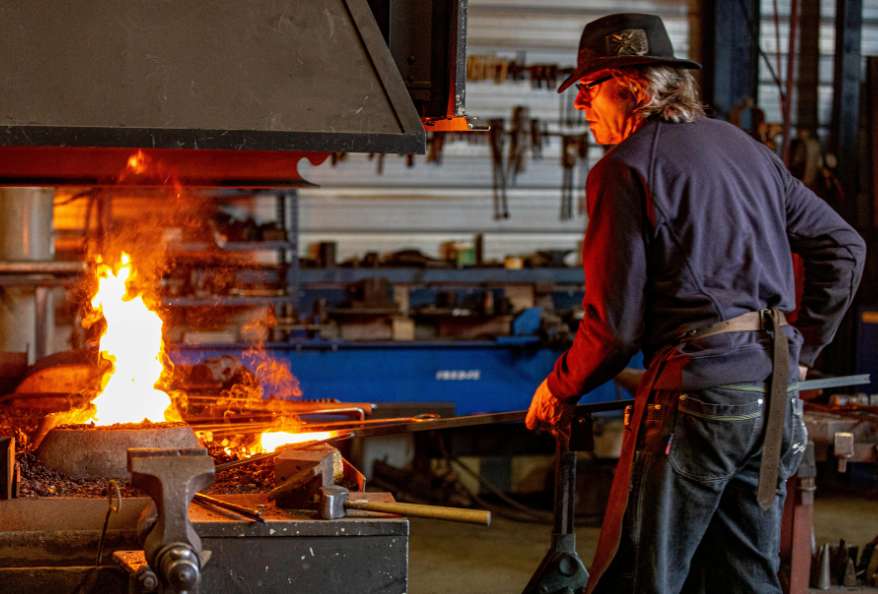
Aluminum alloy forging is a manufacturing process that uses controlled force to shape heated aluminum alloy into a specific form. The material is placed into specialized forging equipment, where pressure is applied through dies or tooling.
Unlike machining, forging does not create a component by removing most of the material from a large block. Instead, it changes the shape of the metal, which can improve material efficiency and influence its internal grain structure.
The final result depends on several factors. These include the aluminum alloy, forging temperature, tooling design, pressure, heat treatment, and overall production process.
Why Is Aluminum a Popular Material?
Weight is one of aluminum’s biggest advantages. It is considerably lighter than many commonly used steels, making it useful for applications where reducing component weight is important.
Aluminum also offers good corrosion resistance in many environments. Its thermal conductivity and machinability make it suitable for a wide range of industrial applications.
These properties make aluminum particularly useful in transportation. Automotive, motorcycle, and aerospace manufacturers often look for materials that can reduce weight without sacrificing the performance required from important components.
How Does Forging Improve Aluminum Components?
Forging does more than simply change the shape of aluminum. Controlled deformation can create a more consistent internal structure, while the grain flow can follow the general shape of the component.
This can be useful for parts that experience repeated mechanical loads. A vehicle component, for example, may face vibration, braking forces, acceleration, and other stresses throughout its service life.
However, forging alone does not guarantee a high-performing component. Alloy selection, component design, heat treatment, forging conditions, machining, and quality control all have an important role.
Also Read: Combustion of Aluminum Particles: A Short Review
Why Does Weight Reduction Matter?
Weight reduction has become a major goal across modern manufacturing. Automotive and motorcycle companies want lighter components that can still provide the strength and durability required for everyday operation.
This balance can be difficult to achieve. A component needs enough strength for its application, but unnecessary weight can affect the efficiency and performance of the complete system.
Aluminum forging can help manufacturers find that balance. It provides an opportunity to produce components that combine useful mechanical properties with the lower density of aluminum.
Where Is Aluminum Forging Used?
Aluminum forged components are used across many industries. Common applications include automotive systems, motorcycles, aerospace equipment, industrial machinery, agricultural equipment, marine applications, off-road vehicles, and general engineering products.
The actual component can vary considerably between industries. One manufacturer may need a suspension component, while another may require a structural fitting or custom mounting part.
This is where custom forging becomes particularly useful. Instead of relying on a standard component, manufacturers can work with a forging supplier to develop a part around their specific requirements.
Aluminum Forging in the Automotive Industry
The automotive industry has a strong focus on reducing unnecessary weight. Manufacturers need vehicles that deliver good performance while using materials efficiently.
Aluminum forged components can support this lightweighting strategy. They can provide a useful combination of low weight and mechanical performance where the application demands it.
Electric vehicles have also increased interest in lightweight components. While the effect of any single component depends on the complete vehicle design, reducing unnecessary weight can contribute to broader efficiency goals.
Many forged automotive components are also machined after forging. This allows manufacturers to achieve tighter dimensions on areas such as holes, mounting surfaces, and bearing locations.
Also Read: Lighter than Composites: Aluminum-Lithium Alloys in Aircraft
Why Are Motorcycle Forged Parts Important?
Motorcycle components can experience significant vibration and repeated mechanical loads. At the same time, motorcycle manufacturers want to keep overall weight under control.
This makes aluminum a useful option for selected motorcycle components. Properly designed forged parts can provide the strength needed for demanding applications without adding unnecessary mass.
When researching motorcycle forged parts, manufacturers should look beyond the basic material. Alloy grade, heat treatment, machining, dimensional tolerances, surface finish, and quality inspection should all be considered.
What Is Custom Forging?
Not every industrial component can be purchased from a standard catalog. Manufacturers often need parts with unique dimensions, shapes, mounting points, or performance requirements.
Custom forging starts with the customer’s specifications. These may include engineering drawings, material requirements, dimensions, tolerances, expected production quantities, and operating conditions.
The forging supplier can then develop suitable tooling and production methods. Depending on the project, the process may also include heat treatment, machining, surface finishing, and final inspection.
The goal is to produce a component that meets the actual requirements of the finished product.
Why Is Alloy Selection Important?
Not every aluminum alloy has the same properties. Some alloys are selected for higher strength, while others may provide better corrosion resistance, machinability, or other characteristics.
The application should determine the alloy choice. A component exposed to high loads may need different properties from a simple mounting bracket.
Operating temperature is another important consideration. The manufacturer should understand the environment, expected loads, service conditions, and required lifespan before selecting the material.
Choosing the right alloy at the beginning can prevent problems later in the manufacturing process.
The Role of Heat Treatment
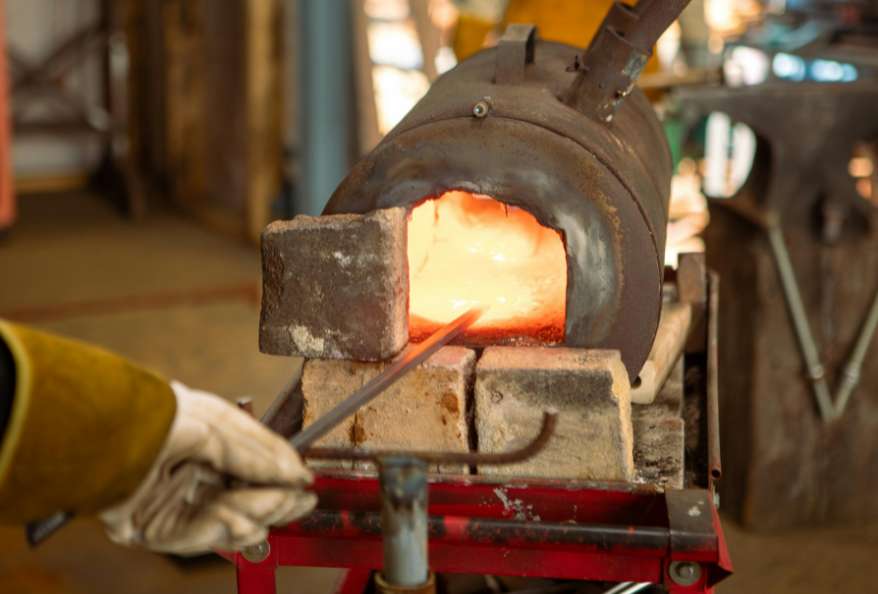
Heat treatment can be an important part of aluminum forging. For suitable alloys, controlled heat treatment can improve mechanical properties and help the finished component meet its required specifications.
Depending on the alloy, the process may involve solution treatment, quenching, and aging. The exact treatment should be selected according to the material and application.
This process needs to be carefully controlled. Incorrect heat treatment can affect the final properties of the component, which is why experienced manufacturing and quality-control practices are important.
Forging and Machining Can Work Together
Forging does not always produce a completely finished component. Many industrial parts still require machining after they have been forged.
Critical holes, threads, bearing surfaces, and mounting areas may need tighter tolerances than the forging process can provide on its own.
A typical production route may include material preparation, forging, heat treatment, machining, finishing, and inspection. The exact sequence depends on the design and specifications of the component.
This combination allows manufacturers to use forging for the main component shape while using machining for areas that require greater precision.
Does Forging Reduce Material Waste?
Forging can help improve material efficiency because the starting shape can be brought closer to the final component geometry. This may reduce the amount of material that needs to be removed during machining.
However, the actual savings depend on the design and production process. Forging also requires tooling, so the economics can vary depending on production volume.
For high-volume manufacturing, tooling costs can often be spread across a large number of components. For small production runs, machining or another manufacturing process may sometimes be more practical.
How to Choose a Forging Supplier
Choosing the right supplier involves more than comparing prices. Manufacturers should look at the supplier’s experience with the required aluminum alloys, available forging equipment, tooling capabilities, heat treatment, machining, and inspection processes.
Quality documentation is also important for many industrial applications. Material traceability, inspection records, and dimensional checks can help manufacturers maintain consistent production standards.
It is also useful to provide detailed information at the beginning of a project. Engineering drawings, material specifications, tolerances, production quantities, and operating conditions can help a supplier understand the project more accurately.
KSN Forging and Custom Forging Services
KSN Forging provides custom forging services for manufacturers that need components designed around specific requirements. Its capabilities can support projects involving material selection, tooling, forging, and related manufacturing processes.
For manufacturers exploring aluminum alloy forging, working with a custom forging supplier can help ensure the selected process matches the component’s requirements.
KSN Forging also provides solutions for customers looking for motorcycle forged parts. Motorcycle applications can require careful attention to weight, strength, dimensions, and repeatable production quality.
Providing detailed drawings and specifications can make the custom forging process easier. Information about production volume, material requirements, tolerances, and operating conditions can also help the supplier develop a suitable production approach.
Common Mistakes to Avoid
One common mistake is choosing an aluminum alloy based only on weight. The lightest option is not necessarily the right option for a demanding application.
Another mistake is overlooking heat treatment and post-forging processes. The final performance of a component depends on the complete manufacturing route, not just the forging stage.
Manufacturers should also avoid focusing only on the initial purchase price. A lower-priced component may require additional machining or processing, increasing the total manufacturing cost.
Quality documentation should not be ignored either. For important industrial components, traceability and inspection records can be valuable throughout the product’s service life.
Is Aluminum Forging Suitable for Every Part?
Aluminum forging is useful, but it is not the right choice for every component. Manufacturing decisions should consider the part’s geometry, production volume, tolerances, material requirements, and expected performance.
Casting may be more suitable for some complex shapes. Machining can also make sense for certain low-volume components where creating forging dies would not be economical.
The best manufacturing process is the one that meets the technical requirements while also making sense from a production and cost perspective.
Aluminum Alloy Forging: Final Thoughts
Aluminum alloy forging offers manufacturers a practical combination of low weight, strength, and efficient component production. It can be useful across automotive, motorcycle, aerospace, machinery, and many other industrial applications.
The best results come from looking at the complete process. The alloy, component design, forging method, heat treatment, machining, finishing, and inspection should all work together.
For manufacturers developing custom components, an experienced forging partner can make the process easier to manage. KSN Forging provides custom forging services for businesses looking for application-specific solutions. When the material and manufacturing process are selected carefully, aluminum forging can help manufacturers create lighter, reliable, and production-ready components for modern industrial applications.
- Author
- Latest Posts

Charudatta Pathak was a student at St. Aloysius High School in Bhusawal, established in 1874, making it one of India’s oldest convent institutions. He earned his bachelor’s degree in mechanical engineering from SSVPS College of Engineering, Dhule in 1995, demonstrating exceptional academic achievement. Thereafter, he launched his career as a CNC programmer in a toolroom. He has utilized FANUC, Deckel, Maho, and Mikron controllers to operate 2-axis and 3-axis machines for the fabrication of jigs, fixtures, dies, and molds. He commenced his career as an academic in 1996, when he assumed the role of lecturer at SSVPS College of Engineering, Dhule. Additionally, he earned his post-graduate degree in CAD/CAM from L. D. College of Engineering, Ahmedabad, in 2000, and then acquired a Ph.D. from COEP in 2011 while concurrently engaged in teaching. Until 2023, he occupied many academic roles, including lecturer, assistant professor, professor, dean, principal, director, and vice chancellor at both public and private universities throughout India. From 2008 to 2010, he served as the project lead in the CAE department of a European multinational firm. During his 28-year professional tenure, he identified a need for dependable books targeted at students in grades 8 to 12, particularly for nascent career planning. He founded ENTECH Digital Magazine, a free monthly publication available on entechonline.com and magzter.com. Teens with a strong interest in Science, Technology, Engineering, and Mathematics (STEM) who aspire to pursue careers in these fields may find ENTECH Digital Magazine beneficial.