The team used machine learning techniques to find the best combination of elements to mix with aluminum alloy. Instead of testing over a million mixtures by traditional simulations, their approach reduced the search to just…
MIT Engineers Develop 3D-Printable Aluminum Alloy 5 Times Stronger Than Traditional Metals
Estimated reading time: 4 minutes
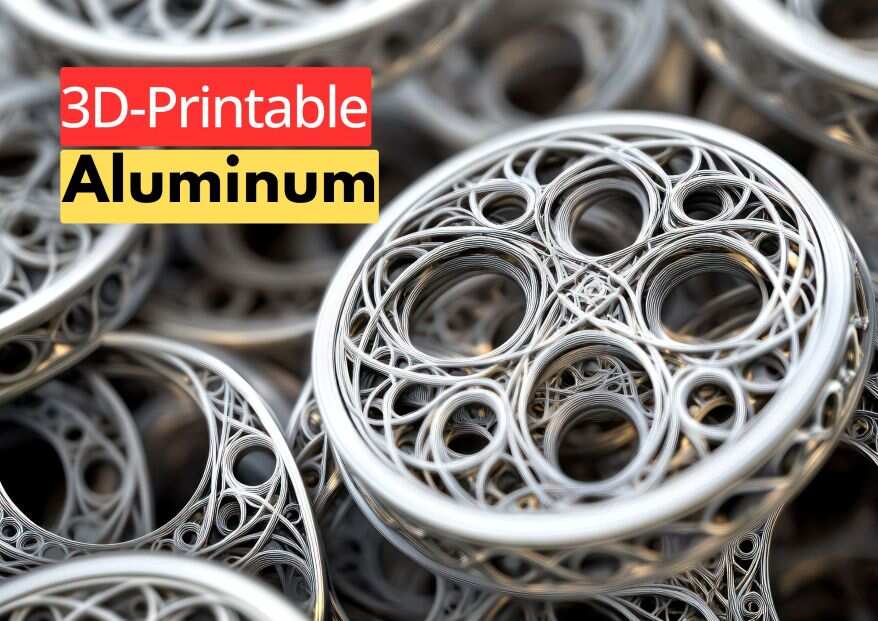
Scientists at MIT have created an innovative 3D-printable aluminum alloy that boasts a strength five times greater than aluminum produced by conventional methods. This new material is not only stronger but also holds up well under high temperatures, making it ideal for demanding engineering applications.
Engineering a Stronger Aluminum: The Role of Machine Learning
The team used machine learning techniques to find the best combination of elements to mix with aluminum alloy. Instead of testing over a million mixtures by traditional simulations, their approach reduced the search to just 40 promising candidates. This method allowed them to identify an alloy with a special structure composed of tiny, regular patterns called nanometer-scale precipitates.
Nanometer-scale precipitates are microscopic particles that appear throughout the metal and help increase its strength. Normally, discovering such materials would take years of trial and error. However, machine learning quickly pointed engineers toward the right formula, dramatically speeding up development.
The Power of Simulation and AI in Material Design
A class at MIT was where students first began to create alloys using computer models. This was the beginning of this breakthrough. When researchers found that traditional simulations were unable to provide stronger results, they rapidly moved their focus to approaches that were aided by artificial intelligence in order to investigate more intricate interactions between elements in alloys.
They were able to gain an understanding of which combinations regulate particular microstructural traits that are particularly important for strength thanks to this enhanced technique. In comparison to earlier methods, it was shown to be significantly more effective and precise.
Additive Manufacturing Meets Advanced Materials Science
- Rapid Cooling with 3D Printing: Traditional casting cools metals slowly, which can cause larger particles resulting in weaker alloys.
- Additive Manufacturing (3D Printing): Layer by layer printing using laser bed powder fusion (LBPF) allows quick melting and solidifying.
- Stable Microstructure: The rapid cooling helps maintain small particles that strengthen the alloy even at high temperatures up to 400°C.
The rapid solidification process used in LBPF keeps these tiny particles from growing too large. This produces a metal that is both super strong and lightweight qualities highly desirable for aerospace and automotive industries.
A Wide Range of Applications for the New Aluminum Alloy
When it comes to the production of components such as jet engine fan blades, which are typically constructed from titanium or composite materials, the newly developed printable aluminum alloy shows a great deal of potential. The use of this alloy can result in a significant reduction in weight while simultaneously preserving strength and resistance to heat.
Vacuum pumps, cooling systems in data centers, and high-performance automobiles, all of which benefit from lightweight materials that promote efficiency and performance, could also profit from this advancement.
The Future Potential of Machine Learning in Material Science
In the course of her postdoctoral study at MIT, Mohadeseh Taheri-Mousavi was in charge of this project. She intends to broaden the scope of her methodology beyond the realm of aluminum alloys. The accomplishments of the team illustrate how the combination of physics-based simulations and machine learning can speed up the process of innovation in the areas of materials design.
Not only does this new method open up interesting prospects for metals, but it also opens up opportunities for other material classes that are vital for addressing the advanced technical issues that today’s industries are facing.
Additionally, to stay updated with the latest developments in STEM research, visit ENTECH Online. Basically, this is our digital magazine for science, technology, engineering, and mathematics. Further, at ENTECH Online, you’ll find a wealth of information.
Reference:
MIT Engineers Develop 3D-Printable Aluminum Alloy 5 Times Stronger Than Traditional MetalsTaheri‐Mousavi, S. M., Xu, M., Hengsbach, F., Houser, C., Ge, Z., Glaser, B., Wei, S., Schaper, M., LeBeau, J. M., Olson, G. B., & Hart, A. J. (2025). Additively Manufacturable High‐Strength Aluminum Alloys with Coarsening‐Resistant Microstructures Achieved via Rapid Solidification. Advanced Materials, e09507. https://doi.org/10.1002/adma.202509507
- Author
- Latest Posts

I’m a web developer and science writer with a Master’s degree in Computer Applications (MCA) from Pune University.
I work in tech, building websites and staying updated with the latest developments. I also love writing about physics, chemistry, technology, robotics, mathematics, and breakthrough innovations. My passion is breaking down complex scientific topics into simple, easy-to-understand stories.
My goal is to help everyone stay informed about the exciting changes happening in science and technology. I believe understanding science shouldn’t be complicated—it should be accessible to all.