Evolution of compact utility tractors reflects changing expectations among equipment owners who value reliability, flexibility, and ease of use.
Compact Tractors Continue to Evolve for Modern Property and Farm Work
Estimated reading time: 4 minutes
Compact utility tractors are increasingly being designed to meet the needs of small farms, rural property owners, and landscaping professionals who require versatility without the complexity of large agricultural machinery.
Recent developments in compact tractors category show a clear shift toward simpler mechanical systems, improved operator control, and compatibility with a wide range of common implements.
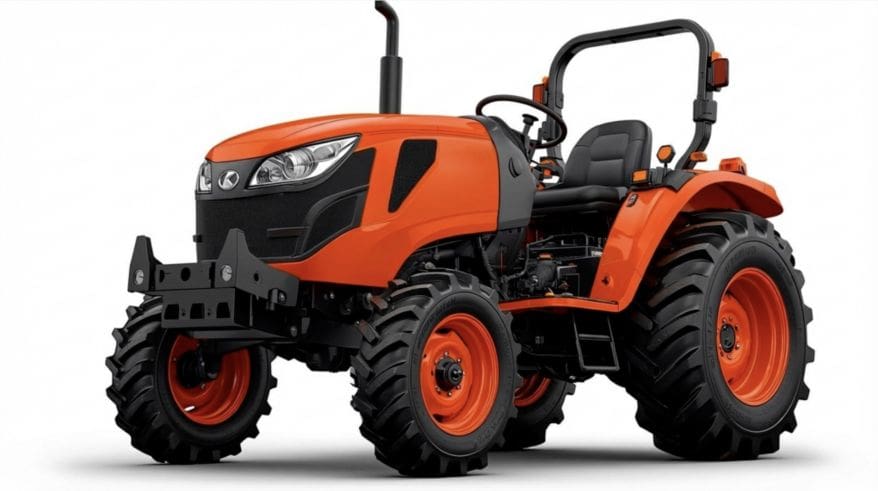
One model that reflects these trends is the Kubota L3301, a compact utility tractor positioned for general-purpose work rather than specialized or high-tech applications.
Designed for Practical Work, Not Excessive Complexity
Unlike many modern machines that rely heavily on electronic controls and digital interfaces, this tractor follows a largely mechanical design philosophy.
This approach reflects a broader movement within compact equipment manufacturing: prioritizing reliability, ease of servicing, and predictable performance over advanced automation.
Traditional utility tractors often required manual gear shifting and more operator input during speed changes. By contrast, newer compact tractors in this class commonly use hydrostatic transmissions, allowing smoother speed control through foot pedals rather than clutch-based gear systems.
This design is especially beneficial for tasks such as loader work, mowing, and property maintenance, where frequent direction changes are required.
Power and Size Balanced for Versatility
Compact tractors are expected to perform a wide range of tasks while remaining maneuverable in tight spaces.
With an engine output in the low-30-horsepower range, this model fits squarely between subcompact tractors and larger utility machines. This balance allows it to operate PTO-driven implements, loaders, and ground-engaging tools without the footprint or operating cost of full-sized farm tractors.
Compared with older compact tractors of similar size, newer designs emphasize higher lift capacities, improved hydraulic flow, and better weight distribution. These changes improve stability during loader operation and allow the use of heavier rear-mounted implements without compromising control.
Hydraulics and Hitch Systems Reflect Industry Standards
The inclusion of a Category I three-point hitch aligns with industry norms for compact tractors, ensuring compatibility with commonly available implements such as rotary cutters, tillers, box blades, and post-hole diggers.
Hydraulic systems in this segment are designed to support both front-mounted loaders and rear attachments, allowing a single machine to transition between tasks throughout the workday.
This standardized approach reduces barriers for equipment owners, who can source attachments from multiple manufacturers rather than relying on proprietary systems.
Fuel Efficiency and Mechanical Simplicity Remain Key Priorities
Diesel engines continue to dominate the compact tractor market due to their fuel efficiency and durability under sustained workloads.
Water-cooled, three-cylinder designs are widely used because they offer smoother operation and longer service life compared with single- or twin-cylinder engines often found in smaller equipment.
Mechanical layouts with accessible service points also reflect long-standing best practices recommended by agricultural extension services, particularly for owners who perform routine maintenance themselves.
Maintenance Practices Supported by Established Guidance
Routine maintenance for compact tractors follows principles outlined by agricultural and engineering institutions. Regular oil changes, hydraulic fluid checks, fuel system servicing, and cooling system cleaning are widely recognized as essential for maintaining engine performance and preventing premature wear.
To ensure correct replacement components are used during scheduled servicing, operators often consult a Kubota Parts Lookup system to identify compatible filters, fluids, and service items based on tractor configuration.
This practice aligns with broader recommendations from agricultural extension programs that emphasize accurate part selection as a factor in long-term equipment reliability.
Broader Trends in Compact Tractor Use
Compact tractors are increasingly used beyond traditional farming. Property maintenance, landscaping, light construction, and municipal work now account for a significant share of demand. This shift has influenced design priorities, favoring ease of operation, multi-attachment compatibility, and operator comfort over raw power.
According to agricultural equipment studies, compact tractors have become a preferred solution for small-scale land management due to their lower operating costs and adaptability across seasonal tasks.
Conclusion
The evolution of compact utility tractors reflects changing expectations among equipment owners who value reliability, flexibility, and ease of use.
By combining mechanical simplicity with modern transmission and hydraulic systems, today’s compact tractors are designed to meet diverse workloads without unnecessary complexity. This approach continues to shape how small farms and property owners manage land efficiently in a wide range of settings. ‘
Additionally, to stay updated with the latest developments in STEM research, visit ENTECH Online. Basically, this is our digital magazine for science, technology, engineering, and mathematics. Further, at ENTECH Online, you’ll find a wealth of information.
- Author
- Latest Posts

Charudatta Pathak was a student at St. Aloysius High School in Bhusawal, established in 1874, making it one of India’s oldest convent institutions. He earned his bachelor’s degree in mechanical engineering from SSVPS College of Engineering, Dhule in 1995, demonstrating exceptional academic achievement. Thereafter, he launched his career as a CNC programmer in a toolroom. He has utilized FANUC, Deckel, Maho, and Mikron controllers to operate 2-axis and 3-axis machines for the fabrication of jigs, fixtures, dies, and molds. He commenced his career as an academic in 1996, when he assumed the role of lecturer at SSVPS College of Engineering, Dhule. Additionally, he earned his post-graduate degree in CAD/CAM from L. D. College of Engineering, Ahmedabad, in 2000, and then acquired a Ph.D. from COEP in 2011 while concurrently engaged in teaching. Until 2023, he occupied many academic roles, including lecturer, assistant professor, professor, dean, principal, director, and vice chancellor at both public and private universities throughout India. From 2008 to 2010, he served as the project lead in the CAE department of a European multinational firm. During his 28-year professional tenure, he identified a need for dependable books targeted at students in grades 8 to 12, particularly for nascent career planning. He founded ENTECH Digital Magazine, a free monthly publication available on entechonline.com and magzter.com. Teens with a strong interest in Science, Technology, Engineering, and Mathematics (STEM) who aspire to pursue careers in these fields may find ENTECH Digital Magazine beneficial.