Edaphic (soil) conditions in coastal wetlands challenge plants alongside shifting water levels, making life tough for these green heroes.
Edaphic (Soil) Conditions and Hydrology Affect Plant Traits
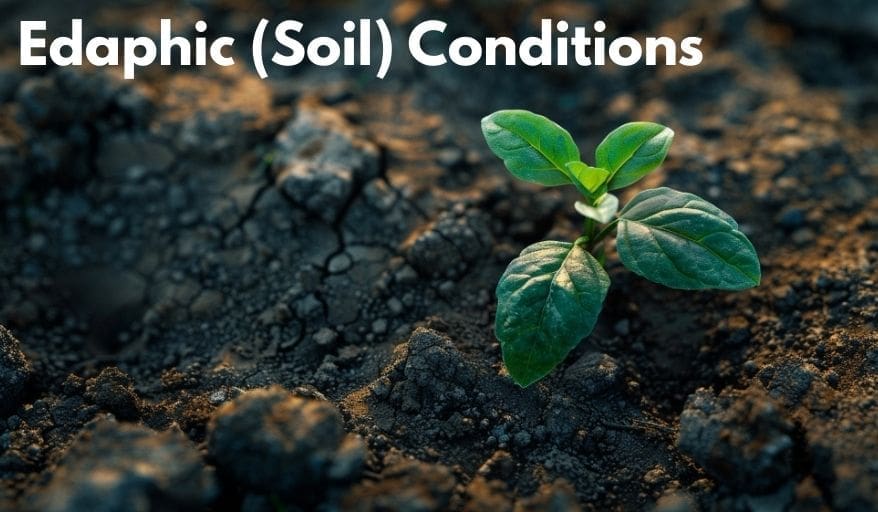
Edaphic (soil) conditions in coastal wetlands challenge plants alongside shifting water levels, making life tough for these green heroes. They act as the first line of defense against big storms. A new study examines how they survive urban stress, focusing on functional traits and elemental uptake in city shorelines to reveal their resilience to varying hydrology.
Meeting the Toughest Plants in the City
Urban coastal wetland plants face edaphic (soil) conditions daily, alongside rising tides and soggy soil. These ecosystems deliver vital services to nearby communities, filtering pollutants and preventing soil erosion during heavy rains amid challenging edaphic (soil) conditions. To grasp plant health, prioritize vascular tissues—they reveal adaptation to varying edaphic (soil) conditions. Explore how tissues function by discovering growth across plant types. This study highlights species ideal for restoration under tough edaphic (soil) conditions.
Understanding Plant Traits and Soil
The team measured how plants take up elements like nitrogen and phosphorus under varying edaphic (soil) conditions. They found that soil moisture, salt levels, and other edaphic (soil) conditions dramatically influence plant growth. Prior to this study, we knew little about urban plant stress amid dynamic edaphic (soil) conditions. What’s more, the research reveals hydrology as a major factor interacting with edaphic (soil) conditions. At first, scientists assumed all wetland plants responded the same way. In fact, each species copes uniquely with city edaphic (soil) conditions. All in all, these plants prove much tougher than they look.
Why This Matters for Your STEM Future
Do you like solving real-world problems using science and engineering? This research connects biology with environmental engineering and geology. To explain, engineers use this data to design better sea walls. At the same time, biologists use it to save endangered species. You can find exciting careers in paleontology or environmental science if you love the outdoors. So far, the demand for STEM experts in climate change is growing fast.
Careers in Coastal Science
Working in STEM lets you travel and study the natural world. To list, you could become a marine ecologist or a geotechnical engineer. So long as we have cities on coasts, we need these experts. To point out, these jobs pay well and help the planet. At length, you might lead a team to restore a local bay. To summarize, your curiosity today could lead to a great career tomorrow. All things considered, the world needs more young scientists like you.
Conclusion
In summary, this study elucidates how functional traits and elemental uptake of dominant plant species in urban coastal wetlands are shaped by variable hydrological regimes and underlying edaphic (soil) conditions. The research demonstrates that wetland plants exhibit distinct morphological and physiological adjustments in response to fluctuations between wet and dry periods, reflecting adaptive strategies that optimize survival under contrasting environmental stressors. Across species such as Acrostichum danaeifolium, Dalbergia ecastaphyllum, and Laguncularia racemosa, patterns in leaf gas exchange, specific leaf area (SLA), and nutrient dynamics varied markedly with changes in soil moisture and nutrient availability, highlighting the interactive influence of hydrology and soil characteristics on plant ecological performance.
The findings suggest that periods of soil saturation enhance certain nutrient uptake processes and promote traits associated with rapid resource acquisition, whereas drier soil and hydrological stress favor conservative trait expressions that minimize water loss and maintain physiological stability. These shifts indicate trait plasticity and potential species-specific strategies that allow plants to cope with urban wetland heterogeneity.
Importantly, the study underscores the role of edaphic conditions, such as soil texture, salinity, and nutrient concentration, in modulating how wetland plants balance growth and stress responses. Edaphic factors interacted with hydrologic variability to influence key traits, including photosynthetic nitrogen use efficiency and elemental content, reinforcing that soil environment is a critical determinant of plant functional ecology in coastal systems.
Overall, integrating hydrological and soil gradients enhances our understanding of plant.
Additionally, to stay updated with the latest developments in STEM research, visit ENTECH Online. Basically, this is our digital magazine for science, technology, engineering, and mathematics. Also, at ENTECH Online, you’ll find a wealth of information.
Reference
Elix Hernandez, Gloria Ortiz-Ramirez, Solimar Pinto-Pacheco, Elvira Cuevas, (2026) Functional Traits and Elemental Uptake in Urban Coastal Wetland Plants Under Variable Hydrology and Edaphic Conditions, AoB PLANTS ;, plag006, https://doi.org/10.1093/aobpla/plag006
- Author
- Latest Posts

I completed my Master of Science from the University of Allahabad in 2017 with a strong academic background in life sciences and chemistry. My specialization included Molecular Biology, Microbiology, Genetics, Plant Breeding, Phycology, Paleobotany, and Bioinformatics, along with Organic Chemistry, Inorganic Chemistry, and Physical Chemistry. This multidisciplinary training provided me with a comprehensive understanding of biological systems and analytical scientific approaches.
After completing my postgraduate studies, I gained valuable professional experience in both the education and social development sectors. I worked at A.M. Oxford Public School, where I was actively involved in guiding students toward academic excellence. In this role, I focused on creating an engaging learning environment, encouraging critical thinking, and nurturing students’ curiosity for scientific learning. My experience as an educator strengthened my communication, mentoring, and classroom management skills.
In addition to my teaching experience, I worked with Jeevan Jagriti Foundation, where I contributed to community-based initiatives aimed at improving educational access and awareness among underprivileged sections of society. Through this work, I participated in programs designed to support social development and promote the value of education in marginalized communities.
These professional experiences helped me develop strong interpersonal, leadership, and organizational skills while reinforcing my commitment to education and community service.