Scientists have developed human heart-macrophage assembloids that accurately mimic heart development, offering a powerful new model for studying cardiovascular diseases.
Human Heart-Macrophage Assembloids: A Breakthrough in Cardiac Research
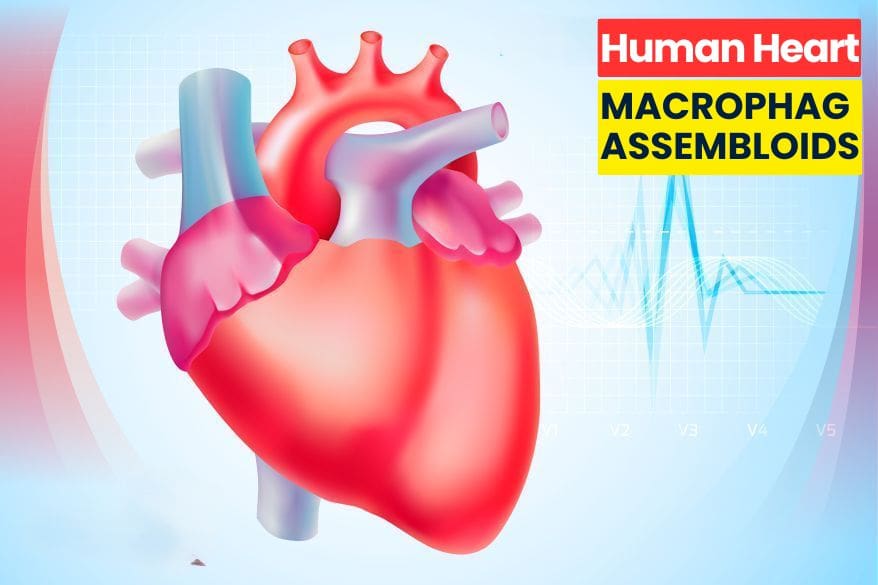
A recent breakthrough involves human heart-macrophage assembloids (hHMAs), which combine human pluripotent stem cells (hPSCs) with embryonic monocytes to form realistic heart models. These assembloids mimic key aspects of human heart development and function. Unlike animal models, they better represent the complexity of the human heart. This innovation opens up new possibilities to study heart diseases more effectively.
Why Human Heart Models Matter in Science
Cardiovascular diseases remain the leading cause of death worldwide. Sadly, much of what scientists know about human hearts comes from animal studies. However, animal hearts differ significantly from human hearts in anatomy and function. Therefore, researchers needed better models to study cardiac development and diseases specifically in humans.
Fortunately, advances in stem cell research now allow the production of cardiac organoids. These miniature 3D models simulate real heart tissues. They help scientists observe human heart development without using animals. Yet even these advanced organoids lacked certain immune cells vital to proper heart formation.
Understanding Tissue-Resident Macrophages in Heart Development
Tissue-resident macrophages (TRMPs) play a crucial role in cardiac development. These yolk-sac-derived immune cells colonize the heart early during embryonic growth. They support heart tissue remodeling, angiogenesis, electrical conduction, and immune regulation. However, most heart studies rely on animal models, which often fail to replicate human heart physiology accurately. Consequently, this limits progress toward effective therapies for cardiovascular diseases.
To overcome these challenges, scientists developed a human heart-macrophage assembloid (hHMA). This model integrates human pluripotent stem cell (hPSC)-derived embryonic monocytes with cardiac organoids. As a result, physiologically relevant TRMPs form within the cardiac tissue and persist long-term.
How Human Heart-Macrophage Assembloids (hHMA) Mimic Human Heart Function
The hHMA model displays multiple vital functions performed by TRMPs in the human heart. For example, these macrophages modulate paracrine signaling—communicating chemical signals with cardiac cells effectively. They also perform efferocytosis, clearing dead cells to maintain healthy tissue. Additionally, TRMPs contribute to extracellular matrix remodeling and regulate electrical conduction, ensuring proper heartbeat rhythm.
This model uses innovative methods like single-cell transcriptomics and live imaging to observe cell interactions. Such tools provide detailed insight into immune-cardiac communication mechanisms usually hidden in traditional models.
Modeling Cardiac Diseases Using hHMA
The researchers created a maturated hHMA with chronic inflammation to simulate disease conditions such as atrial fibrillation. When exposed to sustained inflammatory stimuli, TRMPs adopt pro-inflammatory phenotypes that promote arrhythmogenic activity—the electrical disturbances found in many heart rhythm disorders.
This behavior links directly to activation of the NLRP3 inflammasome pathway inside macrophages—a driver of inflammation-related arrhythmias. Therefore, the hHMA system provides a powerful platform for studying human heart diseases at cellular and molecular levels.
This advanced human heart-macrophage assembloid offers unprecedented capabilities for investigating cardiovascular development and inflammatory diseases, says lead researcher Dr. Y.R. Lewis-Israeli.
The Future of Cardiac Research and Therapies
This breakthrough allows scientists to move beyond animal studies toward more accurate human-based models. Consequently, it speeds up testing new drugs targeting inflammation-driven arrhythmias safely and effectively.
The hHMA system also highlights the importance of macrophages in maintaining normal heartbeat functions beyond their known roles in immunity. Thus many therapeutic approaches may soon focus on regulating these specialized immune cells within hearts to prevent or treat cardiovascular diseases better than ever before.
Additionally, to stay updated with the latest developments in STEM research, visit ENTECH Online. Basically, this is our digital magazine for science, technology, engineering, and mathematics. Also, at ENTECH Online, you’ll find a wealth of information.
Reference
- O’Hern, C., Caywood, S., Aminova, S., Zhou, C., Contag, C., & Aitor Aguirre. (2025). Human heart-macrophage assembloids mimic immune-cardiac interactions and enable arrhythmia disease modeling. Cell Stem Cell, 32, 1671–1690. https://doi.org/10.1016/j.stem.2025.09.011
- Author
- Latest Posts

Ashwini Kshirsagar holds a graduate degree in Chemistry and a postgraduate degree in Environmental Science from Shivaji University, Kolhapur. With a strong foundation in scientific principles and a creative flair, she blends her expertise in environmental science with skills in technical writing, graphic design, and video editing. Proficient in Adobe software, Ashwini excels at transforming complex scientific concepts into clear, engaging, and visually compelling content. Her unique ability to merge science and storytelling allows her to create impactful communication materials that are both informative and accessible to a wide audience.