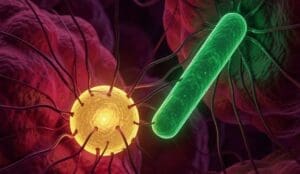
Long-Read Sequencing is advancing modern healthcare alongside tiny biological tools designed to track your health in real time.
Advances in Algal Genomics Using Long-Read Sequencing Analysis
Long-Read Sequencing analysis is advancing modern healthcare alongside tiny biological tools designed to track your health in real time. Among these tools are fluorescent biosensors, which allow doctors to see what is happening inside your cells, offering deeper insight into cellular activity and improving diagnosis and treatment, enabling personalized medicine and early detection of complex diseases.
The Science of Seeing Inside Cells
Cells are the building blocks of life. They carry out thousands of chemical reactions every second. At this time, it is hard to watch these reactions live. Traditional tests often require killing the cells to study them.
By comparison, fluorescent biosensors allow for live monitoring. They glow when they find specific proteins or metabolites. Researchers use these sensors to detect diseases early. This tech is a game-changer for medical diagnostics.
Genetically Encoded Magic
These sensors are often made of DNA. Scientists insert this DNA into living cells. At first, the cell treats the code like its own. The cell then builds the sensor. After that, the sensor starts its work.
To illustrate, take the case of cancer research. Some sensors glow only when cancer markers are present. This helps experts test new drug therapies quickly. In fact, it saves years of lab work. All things considered, this speeds up the search for cures.
Engineering the Glow
Engineers use protein engineering to make sensors brighter. They also make them more specific. A sensor must ignore the “noise” in a cell. It should only bind to its target molecule. With this in mind, researchers refine the sensor’s shape. They use computational modeling to predict how it folds.
Career Paths in Bio-Engineering
Are you curious about biotechnology? This field needs creative STEM students. You could become a biomedical engineer. Perhaps you prefer being a molecular biologist. To list, you might work in:
- Genetic engineering
- Synthetic biology
- Pharmaceutical development
These roles offer a chance to solve global health issues. You can explore more about biotech careers and engineering education to plan your path.
Real-World Impact and Future Tech
So far, most studies happen in labs. The next step involves clinical trials. Scientists want to use these sensors in human patients. Imagine a sensor that alerts you to a virus instantly. This could stop a pandemic before it starts.
To explain, these tools act like molecular GPS. They show exactly where a pathway is failing. While it may be true that the tech is new, it grows fast. In short, the future of healthcare is glowing.
STEM Skills You Need
To succeed in this field, focus on chemistry and biology. Coding is also a key skill now. Many labs use AI to design these sensors. At any rate, staying curious is the most important part. You must enjoy solving complex puzzles.
All in all, bio-sensors bridge the gap between biology and engineering. They turn living cells into smart devices. This is the core of modern innovation.
Future Prospective
LRS technologies are expected to revolutionize genomics by enabling more accurate genome assemblies, improved metabarcoding, and deeper insights into algal microbiomes and symbiotic interactions. Integration with artificial intelligence will further enhance data analysis, accelerating discoveries in algal biology and ecology. Additionally, advancements in pangenomics and environmental monitoring may support sustainable applications such as biofuel production, climate change mitigation, and biotechnology. Overall, LRS will play a crucial role in advancing molecular research and unlocking the full potential of algae in future scientific and industrial fields.
Conclusion: Long-Read Sequencing analysis
The study concludes that long-read sequencing technologies provide a transformative approach for advancing algal research by generating high-quality, contiguous genome and transcriptome assemblies. These methods significantly enhance the detection of genetic diversity, structural variations, and complex genomic regions that were previously unresolved. They also improve understanding of algal microbiomes, evolutionary processes, and functional biology. Despite existing technical and cost-related challenges, continuous improvements are making these tools more accessible and efficient. Overall, long-read sequencing represents a powerful and reliable platform that will drive future discoveries and applications in algal genomics, ecology, and biotechnology.
Additionally, to stay updated with the latest developments in STEM research, visit ENTECH Online.
Reference
Kastuganova, K., Askerov, A., Szabó, A., & Barteneva, N. S. (2026). Systematic Review: Long-Read Sequencing in Algal Studies. International Journal of Molecular Sciences, 27(5), 2415. https://doi.org/10.3390/ijms27052415
- Author
- Latest Posts

I completed my Master of Science from the University of Allahabad in 2017 with a strong academic background in life sciences and chemistry. My specialization included Molecular Biology, Microbiology, Genetics, Plant Breeding, Phycology, Paleobotany, and Bioinformatics, along with Organic Chemistry, Inorganic Chemistry, and Physical Chemistry. This multidisciplinary training provided me with a comprehensive understanding of biological systems and analytical scientific approaches.
After completing my postgraduate studies, I gained valuable professional experience in both the education and social development sectors. I worked at A.M. Oxford Public School, where I was actively involved in guiding students toward academic excellence. In this role, I focused on creating an engaging learning environment, encouraging critical thinking, and nurturing students’ curiosity for scientific learning. My experience as an educator strengthened my communication, mentoring, and classroom management skills.
In addition to my teaching experience, I worked with Jeevan Jagriti Foundation, where I contributed to community-based initiatives aimed at improving educational access and awareness among underprivileged sections of society. Through this work, I participated in programs designed to support social development and promote the value of education in marginalized communities.
These professional experiences helped me develop strong interpersonal, leadership, and organizational skills while reinforcing my commitment to education and community service.