Scientists are carefully examining meteorites that have fallen to Earth to better understand small asteroids and their potential for Asteroid Mining.
Asteroid Mining: Scientists Analyze Meteorites to Open Space Resources
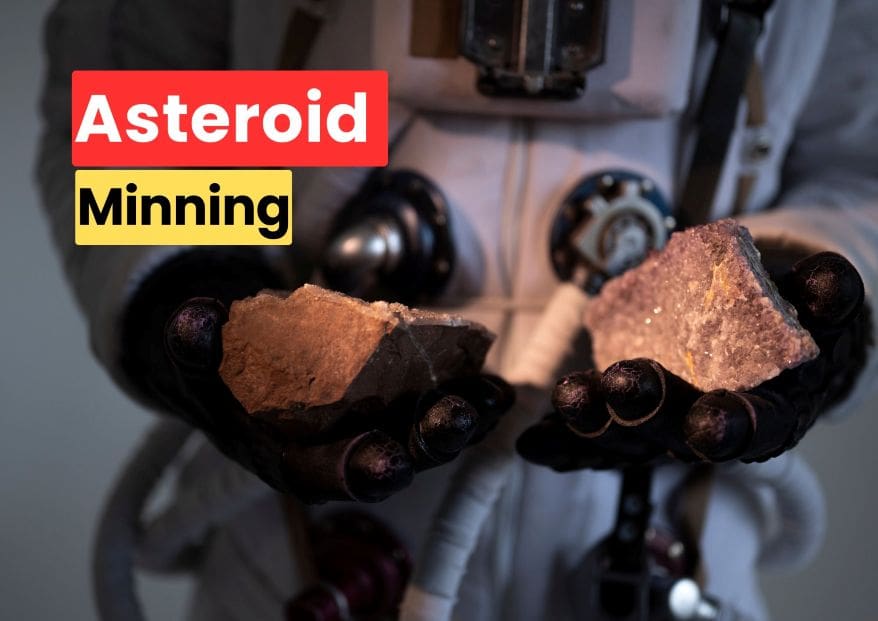
Meteorites Offer New Insights Into Asteroid Mining
Scientists are carefully examining meteorites that have fallen to Earth to better understand small asteroids and their potential for Asteroid Mining. These space rocks are made mostly of carbon and preserve valuable clues about the early solar system. A research team from the Institute of Space Sciences (ICE-CSIC) analyzed samples collected from NASA missions and Antarctica. By studying the composition of these meteorites, scientists can better predict what materials asteroids may contain—an important step toward future Asteroid Mining missions.
The Role of Carbonaceous Chondrites
Carbonaceous chondrites are an extremely uncommon form of meteorite, making up just around five percent of all meteorites that fall to the surface of the earth. It is imperative that scientists gather them as early as possible because they frequently disintegrate as they enter the atmosphere. The origin of these meteorites can be traced back to C-type asteroids, which are abundant in carbon and other vital components. Consequently, because of this, examining them provides essential information on the composition of asteroids and their history, both of which are essential for determining the possibility for mining asteroids.
Chemical Analysis Techniques Help Researchers
The ICE-CSIC study team utilized mass spectrometry, which is a technology that is extremely accurate in terms of quantifying the chemical elements that are present in meteorites, in order to acquire deeper insights. As a result of this investigation, detailed information was obtained regarding six different types of carbonaceous chondrites. By gaining an understanding of their chemistry, scientists are better able to determine whether or not mining for asteroid resources could potentially produce metals or other useful materials in the future.
The Challenge and Promise of Mining Asteroids
Meteorite studies reveal that most asteroids contain only small amounts of profitable metals. For this reason, large-scale Asteroid Mining remains technologically challenging and economically distant. However, scientists suggest that certain asteroid groups may be better targets, particularly those containing special minerals such as olivine or water-bearing compounds. Identifying these promising targets is a crucial step toward making Asteroid Mining feasible.
The Importance of Water-Rich Asteroids
Water-bearing minerals found in some asteroids could become extremely valuable resources for astronauts. Water can support life and also be converted into hydrogen and oxygen fuel. Therefore, Asteroid Mining focused on hydrated asteroids could significantly reduce the need to transport supplies from Earth, making long-duration missions to the Moon or Mars more practical.
Tackling Low-Gravity Extraction Problems
One major obstacle to Asteroid Mining is the low gravity of small asteroids. Mining equipment must be designed to collect materials without pushing them away into space. Consequently, scientists are working to develop new technologies that can safely extract resources in these conditions. Solving this challenge is essential before Asteroid Mining can operate on a larger scale.
A Step Toward Safer Space Exploration
Beyond resource extraction, Asteroid Mining research also contributes to planetary defense. By understanding asteroid composition, scientists can better plan ways to redirect potentially hazardous objects that could threaten Earth. Studying meteorites today may guide future efforts to safely alter asteroid paths or extract materials without increasing risks.
Looking Forward: Exploring Space Resources Responsibly
This rapidly growing field combines astronomy, chemistry, engineering, and advanced technology making it an exciting area for students interested in STEM careers. Moreover, research led by Josep M. Trigo-Rodríguez highlights how ancient fragments from the early solar system could support future exploration through responsible Asteroid Mining, all while minimizing harm to Earth’s environment.
Additionally, to stay updated with the latest developments in STEM research, visit ENTECH Online. Basically, this is our digital magazine for science, technology, engineering, and mathematics. Further, at ENTECH Online, you’ll find a wealth of information.
Reference:
- Trigo-Rodríguez, J. M., Grébol-Tomás, P., Ibáñez-Insa, J., Alonso-Azcárate, J., & Gritsevich, M. (2025). Assessing the metal and rare earth element mining potential of undifferentiated asteroids through the study of carbonaceous chondrites. Monthly Notices of the Royal Astronomical Society, 545(1). https://doi.org/10.1093/mnras/staf1902
- Azimzadeh, H., Azadmanesh, M., Nikolova, R., & Asiaei, R. (2026). Legal Frameworks for Asteroid Mining: Techno-Economic Impacts and Regulatory Needs. Engineering Proceedings, 121(1), 27. https://doi.org/10.3390/engproc2025121027
- Author
- Latest Posts

I’m a web developer and science writer with a Master’s degree in Computer Applications (MCA) from Pune University.
I work in tech, building websites and staying updated with the latest developments. I also love writing about physics, chemistry, technology, robotics, mathematics, and breakthrough innovations. My passion is breaking down complex scientific topics into simple, easy-to-understand stories.
My goal is to help everyone stay informed about the exciting changes happening in science and technology. I believe understanding science shouldn’t be complicated—it should be accessible to all.