When moss spores hit open space, they barely flinched. Their moss spores in space research environmental tolerance and space survivability now excite astrobiologists, materials scientists, and life-support engineers alike. Why This Space Moss Matters The star here…
Moss in Space: Environmental Tolerance and Survival Beyond Earth
When moss spores hit open space, they barely flinched. Their moss spores in space research environmental tolerance and space survivability now excite astrobiologists, materials scientists, and life-support engineers alike.
Why This Space Moss Matters
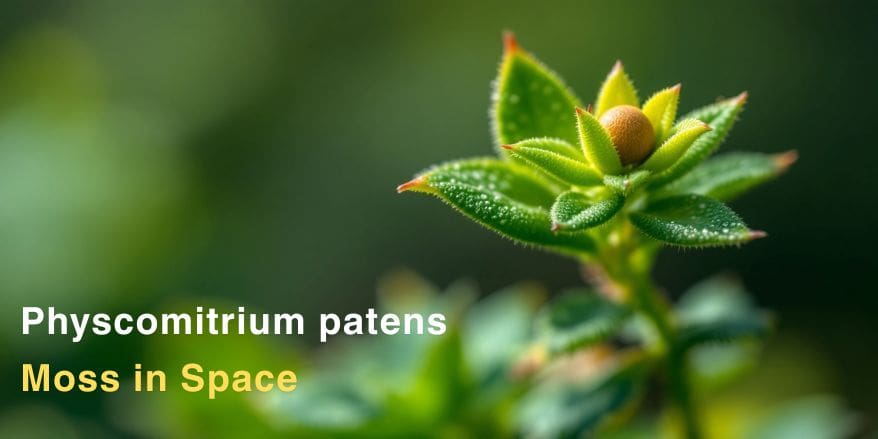
The star here is Physcomitrium patens, a model moss already famous for stress tolerance on Earth. Researchers chose it because its genome is mapped. Its stress‑response pathways are well studied, and its cells are easy to engineer.
Recently, teams exposed its spores to a brutal simulated space environment: vacuum, extreme heat and cold, plus hard UV radiation. Specifically, first tests showed classic tissues failed fast, yet spores stayed viable under combinations that kill most microbes and all mammals.
Environmental Tolerance Goes Orbital
Next, scientists sent sporophyte capsules containing spores to the International Space Station exterior. Then, astronauts mounted them outside. After that, they were left in open space for 283 days with vacuum, cosmic rays, rapid thermal cycling, and solar UV.
After return, more than 80% of spores survived, and most of those germinated into healthy moss under lab conditions. Modeling suggests some spores could endure space for up to 15 years, making them contenders for real interplanetary transfer scenarios.
Cellular Tech: Built‑In Hardening
So, what keeps this moss alive when hardware fails? Studies on freezing and desiccation tolerance in P. patens highlight a tight network of ABA‑regulated stress genes, dehydrins, and ROS‑scavenging systems. These systems stabilize membranes and proteins during extreme water loss. Spores add thick multi‑layer walls, dense pigments and compacted DNA, which together block UV and limit molecular damage.
Interestingly, juvenile protonemata die quickly under similar UV and temperature regimes, while spores show around 1,000‑fold higher UV tolerance. That contrast points to modular “hardware modes” within the same organism: a growth‑optimized mode and a survival‑optimized spore mode ready for space.
“This study demonstrates the astonishing resilience of life that originated on Earth,” notes lead author Tomomichi Fujita, highlighting how cellular systems alone can buffer full vacuum and intense radiation.
Tech Horizons: From Bioshields to Off‑World Greenhouses
For space systems engineers, these results feed directly into future hardware. Experiments like ARTEMOSS, which tests Antarctic moss radiation recovery on the ISS, already aim at bioregenerative life‑support that functions under deep‑space radiation and microgravity. Robust moss strains could anchor closed‑loop air revitalization, water polishing and even micro‑bioreactors embedded in station walls.
In planetary protection and panspermia modeling, long‑term spore survival reshapes risk estimates for contamination and natural transfer between worlds. For synthetic biologists and materials nerds, moss stress pathways and pigments hint at radiation‑hard bio‑coatings, “living paints” and adaptive shielding layers for habitats and spacecraft.
Additionally, to stay updated with the latest developments in STEM research, visit ENTECH Online. Basically, this is our digital magazine for science, technology, engineering, and mathematics. Also, at ENTECH Online, you’ll find a wealth of information.
Reference
- Maeng, C., Hiwatashi, Y., Nakamura, K., Matsuda, O., Mita, H., Tomita-Yokotani, K., Yokobori, S., Yamagishi, A., Kume, A., & Fujita, T. (2025). Extreme environmental tolerance and space survivability of the Moss, physcomitrium patens. https://doi.org/10.1016/j.isci.2025.113827
- Author
- Latest Posts

Ashwini Kshirsagar holds a graduate degree in Chemistry and a postgraduate degree in Environmental Science from Shivaji University, Kolhapur. With a strong foundation in scientific principles and a creative flair, she blends her expertise in environmental science with skills in technical writing, graphic design, and video editing. Proficient in Adobe software, Ashwini excels at transforming complex scientific concepts into clear, engaging, and visually compelling content. Her unique ability to merge science and storytelling allows her to create impactful communication materials that are both informative and accessible to a wide audience.