Quadruped robot learning to walk marks real progress. AI simulation improves movement and stability.
Quadruped Robot Learning to Walk Using AI Simulation
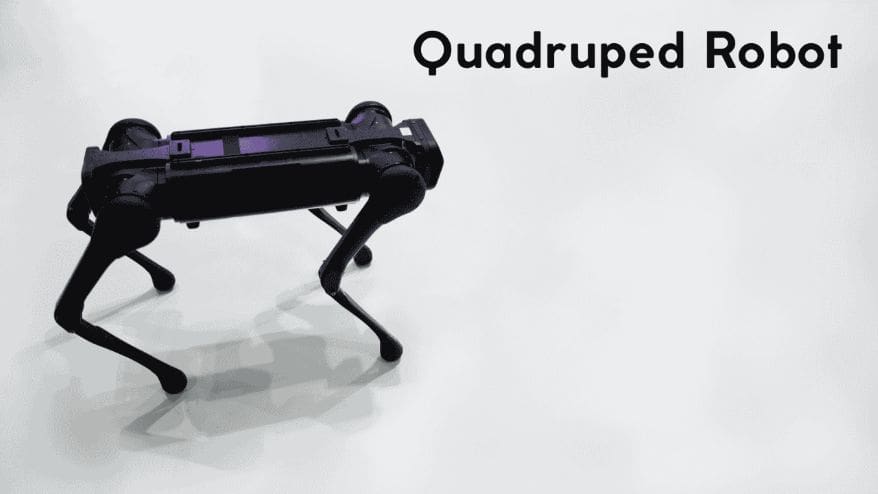
Quadruped Robot Learning to Walk: A New Step in Robotics
Quadruped robot learning to walk is changing modern robotics education. At first, walking feels simple for animals and humans. For robots, walking remains difficult at the present time. As a matter of fact, scientists now train robots using AI simulations. This breakthrough interests teens curious about science and engineering.
This research explains how AI helps robots move better. Above all, it shows how STEM concepts work together.
How Quadruped Robot Work
Training Before Real-World Movement
Prior to physical testing, robots train inside simulations. To explain, scientists create digital terrains and obstacles. The quadruped robot practices walking repeatedly. All of a sudden, balance and coordination improve.
This method prevents hardware damage. At least, it reduces repair costs. In effect, simulation acts like a practice ground.
Why Four Legs Matter in Robotics
Quadruped robots move like animals. In like manner, they handle uneven terrain better. Such robots cross rubble, slopes, and stairs.
As a result, they help during rescue missions.
The study confirms strong learning transfer. It shows robots walk well outside simulations.
Scientific Research Behind Quadruped Robot Learning to Walk
AI That Learns Through Experience
The robot uses reinforcement learning. To put it differently, it learns from rewards and mistakes. This method copies animal learning behavior. With attention to feedback, the robot adjusts leg movement. At this point, balance happens automatically.
Fewer Errors and Faster Results
Researchers recorded fewer failures. To point out, robots needed less real-world testing. Balanced against older methods, results improved greatly. So far, walking stability remains consistent.
All things considered, efficiency increased significantly.
Why Quadruped Robot Learning to Walk Matters for Students
STEM Subjects in Real Action
For grade 11 and 12 students, this topic feels exciting. It connects physics, mathematics, coding, and biology. In essence, textbooks become real-world tools. To illustrate, physics explains balance and motion. Coding controls robot movement. Math supports optimization and timing.
Learning Opportunities in AI and Robotics
Students can explore robotics early. At the present time, online simulators are available. Simple robot kits build practical skills. Projects teach problem-solving and teamwork. All in all, learning becomes hands-on and engaging.
Career Paths Linked to Quadruped Robot
Future STEM Careers
Sooner or later, such research shapes careers.
- Robotics engineers design walking machines.
- AI engineers train learning algorithms.
- Mechanical engineers build joints and frames.
- Software engineers program control systems.
Students can explore AI-driven robotics research on here
Education Choices for Teens
Physics and math build strong foundations. Programming languages like Python help greatly. Simulation tools improve understanding. With this in mind, students gain future-ready skills.
Explore STEM education and career pathways here.
Real-World Impact of Quadruped Robot
Helping Humans Safely
Quadruped robots inspect dangerous areas. They support disaster response teams. In spite of harsh environments, they keep moving.
In general, this protects human workers. At the same time, technology advances responsibly.
Ethics and Responsible Engineering
While this may be true, ethics remain important. Engineers design safe and controlled systems. With this intention, education includes responsibility. Students learn skills together with values.
Quadruped Robot Learning to Walk: Conclusion
In summary, quadruped robot learning to walk marks real progress. AI simulation improves movement and stability. Costs and risks decrease significantly. For students, this opens exciting STEM futures. To sum up, robotics blends creativity with science. All in all, today’s learning builds tomorrow’s engineers.
Additionally, to stay updated with the latest developments in STEM research, visit ENTECH Online. Basically, this is our digital magazine for science, technology, engineering, and mathematics. Further, at ENTECH Online, you’ll find a wealth of information.
Reference:
- Aractingi, M., Léziart, P.-A., Flayols, T., Perez, J., Silander, T., & Souères, P. (2026). Controlling the Solo12 quadruped robot with deep reinforcement learning. Scientific Reports. Advance online publication. https://doi.org/10.1038/s41598-025-34956-7
- Author
- Latest Posts

Kottauppari Venkat Raghava
I am an Information Technology graduate (B.Tech) and a technology writer specialising in artificial intelligence, robotics, automation, and space technologies. I analyse complex scientific research and convert it into clear, practical insights for students, tech enthusiasts, and professionals. My work bridges the gap between academic research and real-world understanding by simplifying findings from peer-reviewed journals into engaging, easy-to-follow content. Alongside my writing, I have hands-on experience developing real-world projects, showcased on my GitHub, including an Expense Tracker web application for managing and visualising spending, and a Simple Video Summariser that generates concise insights from video content using automation techniques. I also produce research-driven articles on topics such as AI-powered corrosion detection, deep learning in engineering, and advanced automation systems. I follow a research-driven approach, ensuring every article is grounded in verified sources, industry knowledge, and practical applications. My goal is to make advanced technology accessible and meaningful, helping readers stay informed about innovations shaping the future.