Scientists at Johns Hopkins University have made an amazing breakthrough by growing a whole-brain organoid.
Revolutionizing Brain Research: The Power of Multi-Region Brain Organoids
Estimated reading time: 4 minutes
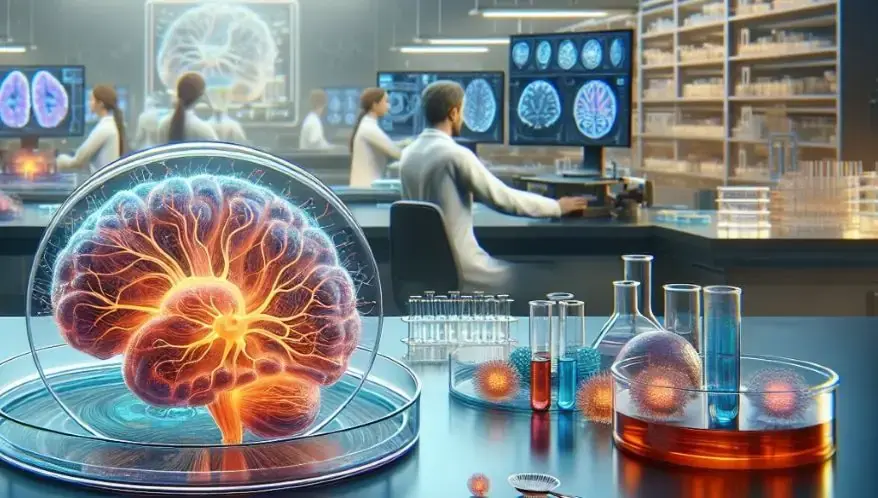
The human brain is a complex organ responsible for everything from thinking to movement. Studying its development has always been challenging, especially when it comes to disorders like autism or schizophrenia. Now, scientists have developed a groundbreaking tool called Multi-Region Brain Organoids (MRBOs). These tiny 3D models of the brain combine different brain regions and blood vessel systems in one structure.
This innovation allows researchers to observe how different parts of the brain work together over time. By including both neural cells and vascular endothelial cells, MRBOs mimic human fetal brain development more accurately than ever before. This is a big step forward in understanding how environmental factors and genetics affect neurodevelopment.
Creating MRBOs: A Combination of Different Organoids
The process starts with separate organoids representing the cerebral cortex, mid-hindbrain regions, and endothelial (blood vessel) systems. These are grown from induced pluripotent stem cells (iPSCs) using special protocols that encourage each region to develop correctly.
Next, these three organoids are carefully fused in a matrix like Matrigel to form one cohesive unit—the MRBO. This fusion happens around day 20 of growth, and by day 60, scientists perform detailed analyses using advanced techniques like single-nucleus RNA sequencing. The results show that these organoids maintain their unique regional identities while integrating into a unified network.
Why are MRBOs Important?
MRBOs provide a unique platform for studying diseases that affect specific brain areas or involve disrupted connections between regions. Because they include an actual endothelial system instead of isolated blood vessel cells, they offer a more realistic environment for testing new treatments or examining how toxins affect brain growth.
This could lead to better understanding and therapies for neurodevelopmental disorders, impacting millions worldwide. Scientists can also explore how different brain regions influence each other via feedback loops—something previously difficult to study in lab-grown models.
Mimicking the Human Brain
Furthermore, these MRBOs show a remarkable resemblance to a 40-day-old human fetus’s brain, containing roughly 80% of the cell types found in early human brain development. Although much smaller than an actual brain (containing millions, not billions, of neurons), the MRBOs offer an incredibly valuable model for studying whole-brain development. This innovation offers a significant ethical advantage, as it avoids the complexities and ethical concerns associated with using animal models.
A Better Drug Testing Platform
Currently, many drugs for neuropsychiatric disorders fail during early clinical trials because animal models are not perfect replicas of the human brain. Using whole-brain organoids can lead to more reliable drug testing since they closely mirror human brain development. This could increase the success rate of experimental treatments, making their way to patients faster.
An Ethical Window Into Human Brain Development
According to lead researcher Annie Kathuria, studying real human brains directly isn’t possible or ethical when researching conditions like autism. In contrast, watching whole-brain organoids develop provides valuable insights while respecting ethical boundaries, giving scientists a unique opportunity to uncover secrets about human neurodevelopment.
The Future of Brain Organoids
Brain organoids are still a relatively new technology, but their potential is vast. As the technology advances, scientists hope to create even more complex and realistic models of the human brain. This could lead to a better understanding of many neurological conditions, potentially even personalized medicine approaches based on an individual’s genetic makeup. Imagine creating a mini-brain specific to a patient to help discover targeted treatments.
Furthermore, brain organoids could be used to test new drugs and therapies more humanely and effectively. By studying how drugs affect MRBOs, researchers can screen potential candidates without the need for animal testing and potentially predict the efficacy of a drug before it even reaches clinical trials. This is an amazing example of how cutting-edge science is paving the way for a healthier future.
Additionally, to stay updated with the latest developments in STEM research, visit ENTECH Online. Basically, this is our digital magazine for science, technology, engineering, and mathematics. Furthermore, at ENTECH Online, you’ll find a wealth of information.
Reference
- Kshirsagar, A., Mnatsakanyan, H., Kulkarni, S., Guo, J., Cheng, K., Ofria, L. D., Bohra, O., Sagar, R., Mahairaki, V., Badr, C. E., & Kathuria, A. (2025). Multi‐Region brain organoids integrating cerebral, Mid‐Hindbrain, and endothelial systems. Advanced Science. https://doi.org/10.1002/advs.202503768
- Author
- Latest Posts

Neha Adikane holds a Master’s degree in Environmental Science from Pune University, bringing a unique blend of scientific expertise and creative writing skills to her craft. She specializes in creating engaging, insightful, and impactful content across various niches. With a passion for translating complex ideas into simple, relatable narratives, she excels at crafting blogs, articles, website content, and social media posts that captivate readers and drive engagement. Neha’s background in environmental science adds depth to her writing, allowing her to effectively cover topics related to sustainability, eco-awareness, and scientific innovations.