Scientists have just discovered a stunning new plant species in China called Rhododendron mulunense.
Rhododendron mulunense: A Critically Rare Species in Need of Protection
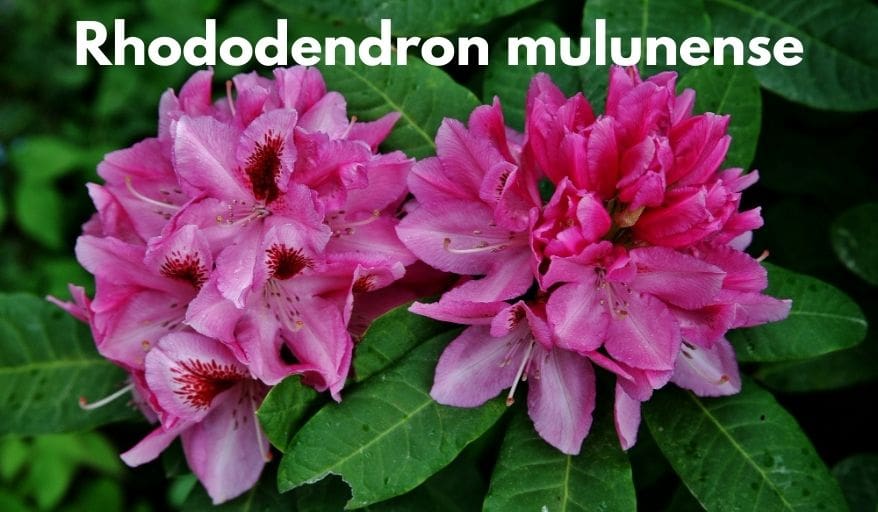
Scientists have just discovered a stunning new plant species in China called Rhododendron mulunense. This rare flower grows in dramatic karst mountains, which are steep, rugged limestone hills known for their harsh conditions. Reaching the plant was a major STEM challenge for researchers, requiring advanced climbing skills, careful geological analysis, and detailed biological study. The discovery highlights China’s rich biodiversity and shows how much there is still to learn about plants that survive in extreme, hard-to-access environments.
Rhododendron mulunense: A Rare Find in the Rocks
Researchers explored the remote regions of Guangxi and Guizhou, areas famous for their sharp rocks and dangerous terrain. While surveying the landscape, the team noticed an unusual bush growing among the limestone cliffs. It had thick, leathery leaves and striking purple flowers that immediately stood out. The scientists realized they had never documented this plant before. Many species had remained hidden in these hard-to-reach locations for centuries. Using detailed botanical comparisons and modern genetic analysis, the researchers confirmed their discovery was a brand-new species. They officially named it Rhododendron mulunense, honoring the region where it was found.
Why Rhododendron mulunense Discovery Matters?
Rhododendron mulunense grows in extreme weather conditions. It thrives in rocky karst soils. To illustrate, it flourishes where other plants perish. This demonstrates how biodiversity functions. We must study these ecosystems. At any rate, we need to protect them. The karst landscape harboring Rhododendron mulunense is highly fragile. Climate change poses a major threat. After all, every plant like Rhododendron mulunense plays a vital role.
The Life of a Botanist
Do you like nature? You might enjoy a career in ecology. Botanists travel to wild places. They use technology to map plants. At this time, the world needs more scientists. We can study biology in college. You will learn about DNA. You will learn about conservation. Seeing that you like science, this is great.
Engineering in the Wild
How do scientists reach high cliffs? They often use drones. They use GPS tools too. This involves engineering. You can build tools for exploration. To explain, STEM is not just books. It is adventure. It is problem-solving in the real world.
Your Path to STEM
To sum up, the Rhododendron mulunense discovery is truly special. It shows that Earth still has many surprises waiting to be uncovered. To be sure, a strong STEM education unlocks endless possibilities for exploration and innovation. This fragile karst dweller thrives in rocky extremes where others fail, highlighting biodiversity’s resilience and the urgent need for protection against climate threats, habitat loss, and growing human impact worldwide.
Conclusion: Rhododendron mulunense
Rhododendron mulunense (Ericaceae) is newly described from the karst mountain regions of Guangxi and Guizhou provinces in southwestern China, an area recognized for its complex limestone landscapes and high levels of plant endemism. Detailed field investigations, combined with careful morphological comparisons and genetic evidence, confirm that this taxon represents a distinct species within the genus Rhododendron, subsection Maddenia. It can be clearly differentiated from closely related species by a unique combination of characters, including glabrous young shoots and leaves, thick leathery foliage, and large, tubular-funnel shaped purple flowers with distinctive floral proportions.
The discovery of R. mulunense highlights the ecological significance of karst ecosystems, which often harbor narrowly distributed and previously undocumented plant species due to their rugged terrain and isolated habitats. Despite increasing botanical exploration in China, these limestone regions remain under-surveyed, suggesting that additional new taxa may still await discovery. However, the restricted distribution and limited population size of R. mulunense raise serious conservation concerns. Ongoing habitat disturbance and environmental pressures threaten the survival of this species in the wild life.
Accordingly, R. mulunense has been evaluated as Endangered based on current knowledge of its population and habitat conditions. This assessment emphasizes the urgent need for targeted conservation measures, long-term monitoring, habitat protection.
Additionally, to stay updated with the latest developments in STEM research, visit ENTECH Online. Basically, this is our digital magazine for science, technology, engineering, and mathematics. Also, at ENTECH Online, you’ll find a wealth of information.
Reference:
- Wei, S. Z., Wu, L., & Yu, S. Y. (2026). Rhododendron mulunense (Ericaceae), a new species from the karst mountains of Guangxi and Guizhou provinces, China. PhytoKeys, 269, 1-15. https://doi.org/10.3897/phytokeys.269.175011
- Rhododendronforeningen. (2026, January 14). Rhododendron mulunense from Guangxi and Guizhou Provinces. https://www.rhododendron.dk/arter/m/r-mulunense/
- Author
- Latest Posts

I completed my Master of Science from the University of Allahabad in 2017 with a strong academic background in life sciences and chemistry. My specialization included Molecular Biology, Microbiology, Genetics, Plant Breeding, Phycology, Paleobotany, and Bioinformatics, along with Organic Chemistry, Inorganic Chemistry, and Physical Chemistry. This multidisciplinary training provided me with a comprehensive understanding of biological systems and analytical scientific approaches.
After completing my postgraduate studies, I gained valuable professional experience in both the education and social development sectors. I worked at A.M. Oxford Public School, where I was actively involved in guiding students toward academic excellence. In this role, I focused on creating an engaging learning environment, encouraging critical thinking, and nurturing students’ curiosity for scientific learning. My experience as an educator strengthened my communication, mentoring, and classroom management skills.
In addition to my teaching experience, I worked with Jeevan Jagriti Foundation, where I contributed to community-based initiatives aimed at improving educational access and awareness among underprivileged sections of society. Through this work, I participated in programs designed to support social development and promote the value of education in marginalized communities.
These professional experiences helped me develop strong interpersonal, leadership, and organizational skills while reinforcing my commitment to education and community service.