Scientists discovered carbon material traps pores in just 2 minutes! Discover the chemistry behind cleaner water — and the STEM careers.
Carbon Material Traps: Scientists Build a Porous Material That Catches E. coli Like a Net
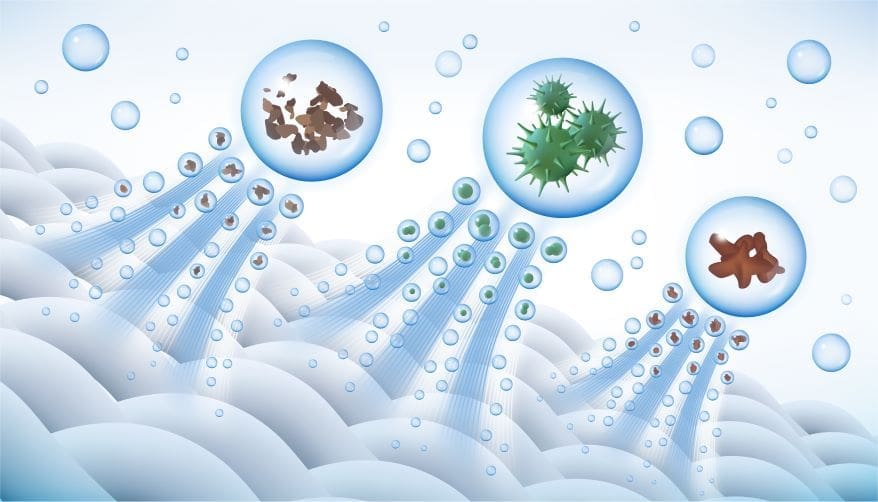
Carbon material traps Bacteria
Clean water is not available to everyone on our planet. Bacterial contamination kills millions of people each year. Most of these deaths happen in developing regions. At the present time, scientists are working hard on new solutions. A new study from Bulgaria and Serbia offers hope. Researchers built a special carbon material that traps harmful bacteria from water. The results are exciting and very promising.
What Is the Problem With Bacteria in Water?
Escherichia coli, or E. coli, is a dangerous bacterium. It lives in the gut of humans and animals. Infection spreads through contaminated water, food, or surfaces. As a matter of fact, E. coli can cause severe diarrhea. In some cases, it leads to kidney failure. It can even cause death in children and elderly people.
So far, removing E. coli from water has been a big challenge. While it may be true that chemical treatments work, they are expensive. They also leave chemical residues. To enumerate the issues: cost, safety, and availability are all barriers. To put it simply, we need better, cheaper, and safer method.
How Was the Carbon Material Made?
The preparation involved three key stages. At first, the chemical modification took place. The sulfuric acid helped to build a rigid carbon framework. Seeing that this step locked in the large pore structure, the next stage could proceed. After that, the team heated the solid material slowly. This stage is called carbonization. The slow heating released gases and started forming pores.
To illustrate the final step, the scientists activated the material with water vapor. This happened at 750°C for one hour. The water vapor acted like a gentle cleaning agent. It cleared out the pores. What’s more, it significantly increased the surface area of the material. All in all, the three-stage process produced a highly porous carbon block.
What Were the Results?
The researchers tested the MCA on multiple strains of E. coli. They also tested it on Bacillus subtilis, another common bacterium. The results were impressive. At a concentration of 5 mg/mL, the MCA removed 86.4% of E. coli from water. This happened in just 2 minutes of contact time. At this point, it is worth noting that speed matters in real-world water filtration.
To point out why this works so well: the pores in MCA measure between 0.5 and 5000 nanometers. E. coli cells measure about 1,000 to 2,000 nanometers. That is 1 to 2 micrometres in size. The bacteria physically fit inside the large pores. At least three different bacterial strains were successfully removed. The MCA acted like a molecular mousetrap. Sooner or later, all the bacteria got caught.
Why Is This Research Special?
While this may be true of many filtration materials, the MCA is different. To rephrase it: most carbon filters work well for small chemical molecules. However, they fail with large biological entities like bacteria. In contrast, this new material was designed specifically for bacteria. Balanced against other materials tested in the study, the MCA performed better. This is because of its dominant macropore volume of 0.568 cm³/g.
At the same time, the raw materials used are cheap and widely available. Coal tar pitch is an industrial waste product. Furfural comes from agricultural leftovers. With this in mind, this research could be scaled up cheaply. Such as remote villages and disaster zones could benefit most. In light of this, the MCA is a strong candidate for point-of-use water filters.
What Are the Career Opportunities Here?
To say nothing of the environmental side, environmental engineers design water treatment systems. Chemical engineers scale up lab processes to industrial size. Materials scientists like those in this study design new adsorbent materials. Provided that you study chemistry or engineering after Grade 12, these doors open up for you. You can also explore the wide range of high-paying chemistry careers available today.
What Comes Next for This Research?
In general, laboratory results need further testing before real-world use. With this purpose in mind, the authors plan future studies. They want to test the MCA in complex wastewater. Real wastewater contains salts, other ions, and multiple pollutants. So that the material can be proven practical, these tests are essential.
Additionally, to stay updated with the latest developments in STEM research, visit ENTECH Online. Basically, this is our digital magazine for science, technology, engineering, and mathematics. Also, at ENTECH Online, you’ll find a wealth of information.
Reference:
- Stoycheva, I., Petrov, P., Petrova, B., Tsyntsarski, B., Kosateva, A., Velkova, L., Petrov, N., Dolashka, P., & Krstić, J. (2026). Synthesis of Macroporous Carbon Adsorbent for Effective Bacterial Removal from Water. Chemistry, 8(3), 35. https://doi.org/10.3390/chemistry8030035
- Author
- Latest Posts

I am an inspirational writer and emerging science blogger with a deep-rooted passion for understanding and sharing the wonders of the world around us. My journey began with a Bachelor of Science in Chemistry from AKI’s Poona College of Arts, Commerce and Science, where I developed not only a strong foundation in scientific principles but also a mindset that values curiosity, observation, and critical thinking. Studying chemistry has taught me to approach problems with logic, to look beyond the obvious, and to see patterns where others might only see complexity. These experiences have shaped the way I perceive life and influence the way I express my thoughts, both scientifically and creatively.
I have always believed that knowledge is only as powerful as the way it is shared. This belief has guided me to create content that bridges the gap between science and everyday life. I aim to simplify complex scientific ideas so they become approachable, relatable, and engaging for everyone—whether someone has a formal background in science or is simply curious about the world. Science, in my view, is not confined to textbooks and laboratories; it is a way of thinking, understanding, and connecting with the world around us. By making science accessible, I hope to inspire curiosity, ignite learning, and encourage people to see the beauty and relevance of scientific discovery in their daily lives.
Alongside my love for science, I am deeply passionate about motivational writing. I believe words carry the power to transform perspectives, encourage self-reflection, and inspire action. By combining analytical thinking with creativity, I create content that is intellectually stimulating yet emotionally resonant. Whether I am breaking down a chemical concept, exploring a scientific phenomenon, or crafting motivational narratives, my goal is to communicate ideas in a way that is clear, meaningful, and impactful.
Through my work, I strive to empower my readers—not just by helping them understand the science around them, but by inspiring them to grow, learn, and realize their full potential. Every article, post, or story I write reflects my commitment to turning knowledge into inspiration. I want to spark curiosity, encourage self-improvement, and show that learning and personal growth are deeply connected. For me, writing is not just a craft; it is a way to touch minds, connect hearts, and make ideas come alive in a way that truly resonates.