Open source tools reduce development cost by 40-60% compared to proprietary software
Top Open-Source Tools for Developers in 2026

Estimated reading time: 10 minutes
The landscape of software development has changed dramatically. Today, open-source tools are the foundation of modern programming. Developers work with these tools every day. For example, they’re building applications, managing databases, and deploying services. Moreover, the best open source developer tools offer you freedom and flexibility. In addition, you can change them to fit your needs. Likewise, you can share improvements with other people. Thus, this co-creation is the engine of our innovation.
So why is this shift happening now? There are several reasons for this inclination. First, cloud computing is mature. Second, containerization is now the standard. Third, AI assistants have become mainstream. As a result, open source tools evolve rapidly to meet these changes. Additionally, development teams cut costs by using free software. Moreover, they’re not locked into a vendor. Instead, they get access to the cutting-edge features.
Key Takeaways: Best Open Source Developer Tools
- Open-source tools reduce development costs by 40-60% compared to proprietary software.
- 32% fewer security vulnerabilities in open-source projects in 2025
- Global open-source market to hit $95.6 billion by 2026
- AI integration is the fastest-growing feature in developer tools.
- For long-term projects, community maintenance is the biggest challenge.
- 90% of the top tools are now cross-compatible across platforms
- Real-time collaboration features are a must-have for distributed teams.
Why Open Source Development Tools Will Be Critical in 2026
The significance of community validation cannot be overemphasized. When thousands of developers review code, the quality improves. Security flaws are identified faster. Performance improvements come naturally. The best tools have active communities. These communities offer documentation, tutorials, and support. They make onboarding new developers simpler.
Cost-cutting is a major factor. For example, companies pay less in licensing fees. As a result, they put that money into innovation. Additionally, startups gain a lot from this model. Consequently, enterprise-grade tools are now accessible without enterprise budgets. Ultimately, this democratization of technology is driving entrepreneurship.
Open collaboration accelerates innovation. When code is open for everyone to see, things get better faster. Bugs are reported and fixed promptly. Features are added based on community needs. Thus, that organic development produces solid, well-tested software.
Security issues have been handled. Open-source tools used to be a source of reluctance for many organizations. They were concerned about soft spots. However, this view has been changed by modern practice. In addition, auditing processes have been improved. Moreover, bug bounty programs are pretty common. Furthermore, automated, routine security scans help identify vulnerabilities.
Moving from Closed to Open Development
The software industry has changed dramatically. For years, proprietary tools reigned. As a result, companies paid top dollar for licenses. Additionally, they were part of certain ecosystems. However, the pendulum has now swung toward openness. Today, developers want tools that they can look at, change, and improve.
Why did we change this? The answer is the community momentum. When developers share code, innovation happens faster. Problems are solved collaboratively. Solutions are developed faster than any one company can. Thousands of contributors help develop the best open-source developer tools.
Quality has risen dramatically. Today, open-source tools now equal or surpass proprietary counterparts. In addition, performance benchmarks show similar results. Moreover, user interfaces have gotten prettier. Furthermore, documentation quality has improved. As a result, the distance between open and closed sources is narrowing.
How Open Source Tools Cut Development Time
Modern development is all about speed and efficiency. Fortunately, there are some great open source tools for this. They offer ready-made solutions to everyday problems. As a result, developers do not need to reinvent the wheel. Instead, they can concentrate on unique business logic.
Think about the build process. For example, compilation is automated with tools like Webpack and Vite. They package code nicely. Similarly, testing frameworks such as Jest and Cypress automate quality checks. In addition, tools like Jenkins automate the release process using deployment pipelines. Notably, all of these tools are open source.
Furthermore, the ecosystem effect adds to the benefits. Each tool integrates with other tools. Additionally, plugins add functionality. Moreover, community contributions provide new features. As a result, this ecosystem ties everything together and considerably reduces development time.
Also Read: aaPanel – Lightweight Hosting Panel
Top Open Source Tools Transforming the Development Scene in 2026
Top open-source developer tools of 2026 include many categories. Each category caters to specific development needs. For example, version control is still important. In this space, Git is still king. Additionally, there are open-source alternatives to GitHub, GitLab, and Bitbucket. They provide code hosting, collaboration, and CI/CD integration.
Furthermore, containerization tools are a must now. Docker and Podman lead this category. They bundle up apps with their dependencies. As a result, deployment is the same in all environments. Moreover, Kubernetes manages containers at scale. Consequently, these tools allow a microservices architecture.
Similarly, code editors have evolved a lot. VS Code continues to be the most popular choice. Additionally, it supports many different extensions. These include themes, language support, and debugging tools. Since it is open source, community contributions are possible. As a result, new features are added all the time.
Finally, database management has innovated. PostgreSQL keeps getting better. In addition, it has similar JSON support to NoSQL databases. Meanwhile, MySQL is still strong for web apps. Likewise, SQLite works great for mobile and embedded scenarios. Furthermore, MongoDB provides document storage.
AI development tools are popping up fast. TensorFlow and PyTorch are kings in machine learning. LangChain makes it easy to integrate LLMs. AutoGPT powers autonomous agents. These tools make AI development accessible.
Integrated Development Environments: Visual Studio Code and More
VS Code is the de facto standard. Open-source base means it can be customized. Extensions add support for any language. The integrated terminal enhances the workflow. Integrates well with version control.
Different editors have different features. Neovim has terminal editing. Its modal editing approach makes it run faster. “Zed is about performance and collaboration. Eclipse is still good for enterprise Java development.
Why is VS Code so special? The extensibility is second to none. There are over 25,000 extensions available. They are languages, frameworks, and tools. Marketplace makes it easier to discover. Developers get to customize their entire workflow.
Version Control & Collaboration Platforms
Modern development is still based on Git. Its distributed nature gives flexible workflows. For example, branches allow you to develop in parallel. Meanwhile, conflicts are solved systematically. Additionally, history tracking gives accountability.
Furthermore, platforms extend Git. For instance, GitLab provides built-in CI/CD. Its pipeline configuration is flexible. Similarly, GitHub has social coding features. In addition, pull requests allow you to review code. Likewise, issues track issues and enhancements.
Moreover, it now offers more collaboration features. For example, we now have real-time editing. As a result, multiple developers can work on the same file. Additionally, comments make code better. Consequently, these features reduce the communication overhead.
Development Assistants Powered by AI
AI has changed how developers write code. Open source models are now on par with commercial alternatives. Code Llama and Star Coder are for code generation. They understand context and suggest completions. The accuracy has improved a lot.
Works seamlessly with editors. Plugins connect AI models to development environments. Developers receive suggestions in real time. Error detection is instantaneous. Refactoring is automatic.
The community helps improve the model. Fine-tuning on specific codebases improves performance. Custom models for specific domains appear. This specialization makes it more relevant. The best open-source developer tools now include AI capabilities.
Practical Applications Across Industries
Open-source tools benefit healthcare organizations. They create software for managing patients. Built-in HIPAA compliance. Supports standards such as FHIR for interoperability. Electronic health records are more easily accessed.
Engineering firms widely use these tools. Alternatives to CAD software are emerging. SOLIDWORKS has competitors that offer open-source options. Available: Finite element analysis tools. Simulation software has increased precision.
The environment is monitored using open-source tools. Data is.the collected efficiently by sensor networks. Climate patterns can be analyzed with Python libraries. Tools for visualizing data make the results clear. Geographic information systems are used to map environmental change.
Educational institutions have widely adopted these tools. Students learn using industry-grade software. Cost barriers are removed. Tools are universally accessible. Curriculum may incorporate current technologies.
Such tools are the engine of innovation for tech companies. Open-source solutions power cloud infrastructure. Kubernetes Orchestrates Huge Deployments. Performance is monitored by tools such as Prometheus. The ELK stack is a logging system that collects data.
Benefits of open-source developer tools
No licensing costs for software purchases
- Access to the full source code to enable security audits
- Community support through forums and chat
- Regular updates from contributors worldwide
- Vendor independence, no lock-in. Features customized for your needs
- Extensive documentation created by users
- Integration capabilities with existing systems – Long-term sustainability through community ownership
Challenges and limitations to consider
Learning curves can be steep for complex tools.
- Documentation quality varies between projects.
- Support options may be limited to the community.
- Compatibility issues can arise between versions.
- Security vulnerabilities require active monitoring.
- Abandonment risk if the community loses interest – Feature gaps compared to commercial alternatives
Future Outlook and Emerging Trends

The open-source ecosystem will continue evolving. In particular, AI integration will deepen. As a result, automated code generation will become standard. Additionally, testing will become fully automated. Ultimately, deployment will require minimal human intervention.
Furthermore, edge computing will drive the development of new tools. Consequently, lightweight containers will emerge. In addition, serverless frameworks will improve. As a result, local processing will reduce latency. Meanwhile, bandwidth requirements will decrease.
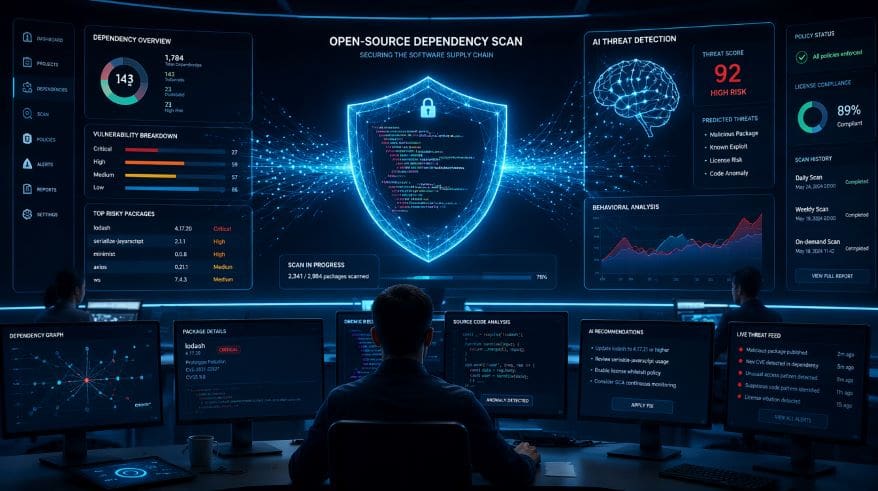
Similarly, security tools will become more sophisticated. For example, automated vulnerability detection will improve. Additionally, dependency scanning will become standard. Consequently, supply chain attacks will be mitigated. Furthermore, provenance tracking will verify integrity.
Meanwhile, quantum computing tools are emerging. For instance, open-source quantum frameworks exist. IBM Qiskit and Google Cirq are available. In addition, simulators run on classical hardware. Moreover, real quantum processors are accessible via the cloud.
Finally, sustainability features will become increasingly important. As a result, energy-efficient code will be prioritized. Additionally, carbon tracking tools will emerge. Furthermore, green computing practices will be promoted. Ultimately, environmental impact will be measured.
Emerging trends to watch: – Wasm (WebAssembly) enabling browser-based applications
- Web3 development tools for decentralized applications
- Low-code platforms built on open-source foundations – Cross-platform mobile development frameworks
- Real-time collaboration tools for distributed teams
Conclusion
Open-source developer tools have become essential for modern software development. They offer cost savings, flexibility, and innovation. The best open source developer tools in 2026 span version control, containerization, AI, and more. Communities drive continuous improvement. Security has improved significantly. Integration between tools creates powerful workflows. Real-world applications exist across healthcare, engineering, education, and technology. While challenges like learning curves exist, benefits outweigh limitations. The future includes deeper AI integration, edge computing support, and sustainability features. Start exploring these tools today. Join communities that interest you. Contribute improvements where you can. Your development workflow will transform. The open-source revolution is here. Be part of it.
Frequently Asked Questions
What are the best open-source developer tools for AI in 2026?
The best open-source developer tools for AI include TensorFlow for deep learning, PyTorch for research, and LangChain for LLM applications. These tools provide comprehensive APIs and pre-trained models. They support both training and deployment workflows. Community contributions ensure rapid improvements.
How do I choose among different open-source development tools?
Evaluate your specific requirements first. Consider language support, community size, and documentation quality. Please check the update frequency and long-term maintenance plans. Test performance with your workloads. Review integration capabilities with your existing stack. Try multiple options before committing.
Are there security risks in using open-source developer tools?
All software has security risks. Open-source tools have transparent code that enables security audits. Vulnerabilities are often found and fixed quickly. Regular updates patch known issues. Use dependency scanning tools to monitor for vulnerabilities. Follow security best practices in your implementation.
Can open source tools replace commercial software for enterprise use?
Yes, many enterprises successfully use open-source tools. Large companies like Google, Amazon, and Netflix rely on them. They provide enterprise-grade features and scalability. Support options include paid consulting and training. Performance often matches or exceeds commercial alternatives.
References
- Buchenberg, P., Döpfert, M., Baecker, B. R., Genena, H. M. A., Stengel, M., Huang, M. W., Kalkan, K., Kuper, L., Ayasse, C., & Salari, H. E. (2026). InfDB: An Open Source Energy and Infrastructure Data Ecosystem for Modeling and Planning, 11(122), https://doi.org/10.21105/joss.10458
- Smith, A. M., Niemeyer, K. E., Katz, D. S., Barba, L. A., Gatto, L., Madan, L. N., Padilla, P., Munk, A., Jered, B., Reimer, J., & Huff, K. (2018). Journal of Open Source Software (JOSS): Design and first-year review. PeerJ Computer Science, 4, e147. https://doi.org/10.7717/peerj-cs.147
- Author
- Latest Posts

Deven Nandapurkar is a Software Engineer, Project Lead; working at the strategic intersection of software engineering, productivity science, and emerging technologies. Driven by a core philosophy of “building things worth building,” he leads cross-functional teams and drives end-to-end technical strategy—from early-stage conceptualization through production-grade deployment.
A Computer Engineering graduate from Pune University, Deven brings a sharp systems-thinking approach to technical leadership, honed by years of managing high-stakes engineering projects and leading teams to top placements in national and international hackathons, including the NASA Space Apps Challenge and the Peerlist GenAI Hackathon.
Deven explores how human cognition and emerging technology converge. He regularly writes about cognitive performance optimization, attention management, AI integration, and the evolving dynamics of the modern workforce – offering actionable frameworks for professionals seeking to maximize their productivity and thrive alongside intelligent systems.