Pneumatophore roots are special aerial roots found in plants that thrive in wetlands. To begin with, these unique roots grow straight upward from the soil. Additionally, they play a crucial role in gas exchange by…
What Are Pneumatophore Roots and Their Main Characteristics
Estimated reading time: 7 minutes
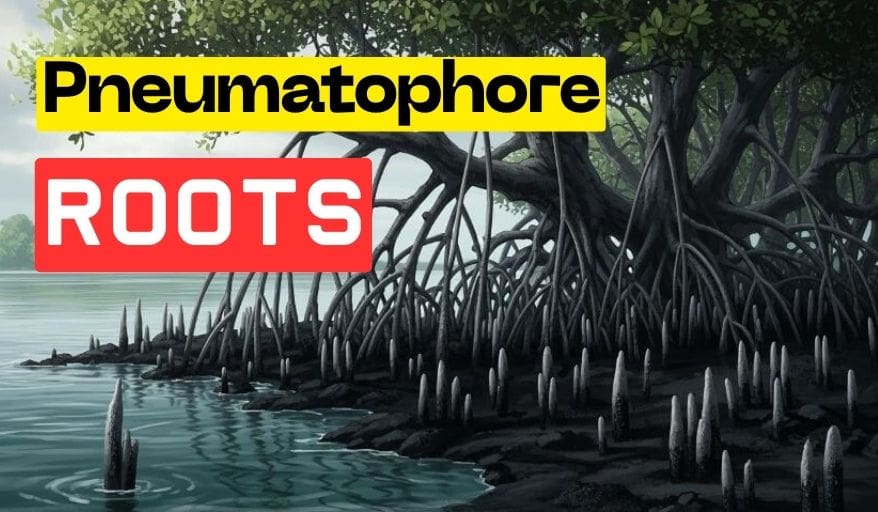
Pneumatophore roots are special aerial roots found in plants that thrive in wetlands. To begin with, these unique roots grow straight upward from the soil. Additionally, they play a crucial role in gas exchange by allowing plants to take in oxygen directly from the air. Because wet soils often lack sufficient oxygen, pneumatophores become vital for survival. For example, in mangrove ecosystems, pneumatophore roots are essential because they enable the plants to access atmospheric oxygen, thereby supporting their growth in waterlogged environments.
- Special aerial roots, known as pneumatophores, take in oxygen from the air.
- Growing upward helps plants survive in wet, low-oxygen soil.
- Other roots may not be able to get oxygen from the air like pneumatophores do.
Key Takeaways
- Pneumatophore roots grow above ground.
- They help plants breathe in wet soil with little oxygen.
- These roots have small holes called lenticels.
- Lenticels let oxygen go inside.
- This helps plants live in mangrove areas.
- Pneumatophores also stop soil from washing away.
- They help keep land safe during floods and storms.
What Are Pneumatophore Roots
Pneumatophore Definition

A pneumatophore is a root that grows above the ground. It helps plants get air in places with little oxygen in the soil. Scientists say a pneumatophore is an aerial root with small holes called lenticels. Lenticels let air go into the root. Plants use pneumatophores when other roots cannot get enough oxygen. Wetland plants like black mangrove and grey mangrove have these roots. The main job of a pneumatophore is to help with gas exchange in wet or packed soil.
| Term | Definition |
|---|---|
| Pneumatophore | A special aerial root that comes out of the soil, covered with lenticels for gas exchange. |
| Function | Lets gas exchange happen in wet or packed soils where normal roots do not work well. |
| Examples | Found in black mangrove and grey mangrove, which live in salty and low-oxygen places. |
Origin and Growth Direction
Pneumatophores begin as side roots from the main root. They grow upward, not downward like most roots. This upward growth is called negatively geotropic. Most roots go down into the soil, but pneumatophores reach up to the air. This helps the plant get oxygen from above the ground. Wetland trees use these roots to live in swampy, salty, or flooded places. Pneumatophores also help keep the soil in place. This stops the land from washing away during floods or tides. Their special way of growing lets them live where other trees cannot.
- Pneumatophores are ‘breathing roots‘ that grow up from the soil or water.
- They help trees get air in swampy, salty, or wet places.
- These roots hold soil in tidal areas and stop erosion.
- Their special trait helps them survive floods and live where most trees cannot.
Also Read: Dan Shen, Red Sage or Salvia Miltiorrhiza: Are They the Same Ingredient?
Key Characteristics
Pneumatophores roots have many special features. These roots grow straight up from the ground or water. They are aerial and stand tall. Pneumatophores have lenticels, which are small holes that let air in. These roots are called ‘breathing roots’ because they help plants take in oxygen. They work well in wet soils where other roots cannot get air. The size and shape of pneumatophores can be different for each plant. For example, Avicennia has roots that look like pencils, while Sonneratia has cone-shaped roots. Some plants have thousands of pneumatophores. These roots can also have chlorophyll, which lets them make food from sunlight.
| Characteristic | Description |
|---|---|
| Size | Less than 30 cm for Avicennia, less than 20 cm for Laguncularia, 30 cm to 3 m for Sonneratia. |
| Shape | Avicennia has pencil-like or finger-like roots; Sonneratia has cone shapes. |
| Density | High density; a 2–3 m tall Avicennia marina can have over 10,000 pneumatophores. |
| Photosynthesis | Pneumatophores have chlorophyll under the surface, so they can do photosynthesis. |
Plants with pneumatophores often live in wet, salty, or flooded places. Plants that generate pneumatophore roots are frequently found in mangroves, particularly Avicennia and Sonneratia. These pneumatophores also have lenticels that facilitate airflow into the root. These holes widen when the earth floods, increasing the amount of gas exchange. They simultaneously allow air to enter while keeping water out. Consequently, these modifications aid in the plant’s survival in difficult conditions. All things considered, pneumatophore roots are unique structures that allow plants to thrive in marshes.
Pneumatophore Root System and Functions
What Are Pneumatophore Root-Gas Exchange and Lenticels
In damp environments, pneumatophores aid plants in breathing. First of all, these roots have lenticels—tiny holes that let oxygen in—and grow upward. Additionally, the root system effectively transports oxygen using air tubes and soft tissue. As a result, oxygen helps the plant breathe by moving from the air to the roots underground. Pneumatophores work much better than other roots in wet soil because they are specifically made for gas exchange. Aerenchyma also produces air spaces inside the roots, which facilitates the movement of gases, particularly oxygen, even in challenging circumstances. For plants to survive in damp conditions, these roots are crucial.
- Lenticels let oxygen go into the roots.
- Soft tissue moves air to the plant.
- Pneumatophores help roots breathe in wet places.
What Are Pneumatophore Root-Adaptation to Waterlogged Soils
Wetland plants and mangroves require unique adaptations to thrive. Pneumatophores first form in wet, low-oxygen soil. Consequently, these roots provide air to the plant’s subterranean sections. As a result, they enable plants to thrive in environments that are inhospitable to regular roots. Furthermore, mangroves can thrive in flooded areas thanks to adaptations like pneumatophores. For plants to survive in wetland environments, these roots are crucial.
What Are Pneumatophore Root-Pneumatophores in Mangroves
Mangrove forests contain many different types of mangrove plants, and each has its own unique pneumatophore shape. For example, Avicennia species have pencil-shaped roots, while Sonneratia species have cone-shaped ones. In addition, Rhizophora species also develop strong pneumatophore roots. Moreover, mangrove forests often have a very large number of pneumatophores; in fact, some areas contain more than 1,000 pneumatophores in just one square meter. Because of this, these roots not only help mangroves take in air but also help keep the soil in place. Therefore, pneumatophores are essential for the stability and survival of mangrove ecosystems.
What Are Pneumatophore Root-Role in Plant Survival
For plants, pneumatophores function similarly to snorkels. They first transfer oxygen to the submerged roots. Because of this, mangroves remain healthy and the plants are better able to adapt to their moist surroundings. Additionally, these breathing roots stop soil from washing away by slowing the flow of water. Pneumatophores also facilitate the entry of air into the soil and facilitate the easier movement of nutrients. As a result, their function is crucial to the wellbeing of wetland habitats and mangrove forests.
Pneumatophore roots grow straight upward from the ground. To begin with, they have lenticels that allow them to take in oxygen. Because of this, these roots help plants survive in wetland and mangrove areas. Moreover, they keep the soil from washing away. In addition, pneumatophore roots support many animals and plants that live in these habitats.
Frequently Asked Questions
What makes a mangrove root different from other roots?
A mangrove root grows upward. This root helps the mangrove breathe. Other roots grow down. The mangrove root stands out in wet places.
Why do mangrove roots grow above the ground?
A mangrove root grows above the ground for air. This root lets the mangrove survive in wet soil. The mangrove root helps the plant breathe.
How do mangrove roots help the environment?
The soil is held in place by a mangrove root. It aids in erosion prevention. Numerous animals are protected by this sturdy structure. It also maintains the water’s purity. It also sustains a diverse range of living things..
Tip: Mangrove roots help the mangrove forest stay strong during storms.
- Mangrove roots help the mangrove forest.
- Mangrove roots support many animals.
- Mangrove roots keep the soil in place.
Additionally, to stay updated with the latest developments in STEM research, visit ENTECH Online. Basically, this is our digital magazine for science, technology, engineering, and mathematics. Furthermore, at ENTECH Online, you’ll find a wealth of information.
References
- Nayak, D., Mishra, A. K., Biswas, K., Sen, A., Malakar, C., Panda, J., Kungwani, N. A., Rustagi, S., Panda, B. P., & Mohanta, Y. K. (2025). Mangrove pneumatophores as biocatalysts for the fabrication of silver nanoparticles and their potential applications against biofilm formation and hepatic carcinoma. Nanoscale Advances, 7(9), 2608–2625. https://doi.org/10.1039/d4na00722k
- Norris, B. K., Mullarney, J. C., Bryan, K. R., & Henderson, S. M. (2019). Turbulence within natural mangrove pneumatophore canopies. Journal of Geophysical Research Oceans, 124(4), 2263–2288. https://doi.org/10.1029/2018jc014562
- Purnobasuk, H., & Mitsuo Suzuki. (2005). Functional Anatomy of Air Conducting Network on the Pneumatophores of aMangrove Plant, Avicennia marina (Forsk.) Vierh. Asian Journal of Plant Sciences, 4(4), 334–347. https://doi.org/10.3923/ajps.2005.334.347
- Author
- Latest Posts

I completed my Master of Science from the University of Allahabad in 2017 with a strong academic background in life sciences and chemistry. My specialization included Molecular Biology, Microbiology, Genetics, Plant Breeding, Phycology, Paleobotany, and Bioinformatics, along with Organic Chemistry, Inorganic Chemistry, and Physical Chemistry. This multidisciplinary training provided me with a comprehensive understanding of biological systems and analytical scientific approaches.
After completing my postgraduate studies, I gained valuable professional experience in both the education and social development sectors. I worked at A.M. Oxford Public School, where I was actively involved in guiding students toward academic excellence. In this role, I focused on creating an engaging learning environment, encouraging critical thinking, and nurturing students’ curiosity for scientific learning. My experience as an educator strengthened my communication, mentoring, and classroom management skills.
In addition to my teaching experience, I worked with Jeevan Jagriti Foundation, where I contributed to community-based initiatives aimed at improving educational access and awareness among underprivileged sections of society. Through this work, I participated in programs designed to support social development and promote the value of education in marginalized communities.
These professional experiences helped me develop strong interpersonal, leadership, and organizational skills while reinforcing my commitment to education and community service.