Discover key historical events in March, including Mendeleev’s periodic table, Bell’s first telephone call, Salk’s polio vaccine, and Goddard’s liquid-fueled rocket.
Time Capsule: March

March has been a month of turning points in science and technology. Across centuries, it has witnessed groundbreaking discoveries, new ways of understanding the universe, and innovations that reshaped daily life. From chemistry and astronomy to medicine and engineering, the month highlights how human curiosity pushes boundaries. In this article, we revisit historical events in March that shaped the course of scientific history.
March 6, 1869
Dmitri Mendeleev Presents the Periodic Table
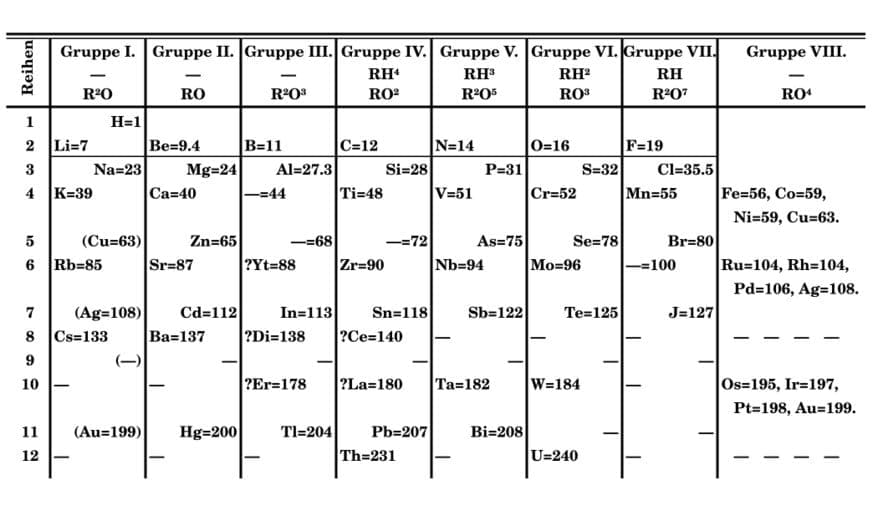
In 1869, Russian chemist Dmitri Mendeleev presented the first organized version of the periodic table to the Russian Chemical Society. He arranged 63 known elements according to their atomic weights, grouping them in rows and columns that revealed repeating chemical properties. This approach created a logical framework that connected seemingly unrelated substances and gave chemistry a powerful new order.
The importance of Mendeleev’s table lay not just in its organization but in its predictive power. He left blank spaces where he believed undiscovered elements would fit, even predicting their properties with remarkable accuracy. Within a few years, elements such as gallium and germanium were discovered, and their properties matched his predictions almost perfectly. This breakthrough provided proof that scientific reasoning could reveal the unknown and set the foundation for modern chemical science.
March 10, 1876
First Successful Telephone Call
On this day, inventor Alexander Graham Bell made history by transmitting his voice through electrical wires. He called to his assistant Thomas Watson with the words, “Mr. Watson, come here, I want to see you.” The device was crude, but it demonstrated that speech could be carried across distances instantly, something previously unimaginable. Bell’s telephone turned communication into a live, personal exchange no longer tied to letters or telegraphs.
The success of this call marked the beginning of a communications revolution. Within decades, telephone networks spread across cities and nations, shrinking the world and connecting people in real time. The technology laid the groundwork for later innovations in radio, mobile phones, and the internet. The first telephone call showed that science could bring voices across wires, and eventually, it made global communication routine. Undoubtedly, this is one of the most important historical events in March.
March 16, 1926
Robert H. Goddard Launches the First Liquid-Fueled Rocket
Physicist Robert H. Goddard launched the world’s first liquid-fueled rocket in Auburn, Massachusetts. Standing 10 feet tall and powered by liquid oxygen and gasoline, the rocket rose 41 feet and landed 184 feet away. Although modest in scale, the flight proved that liquid fuel could power rockets, something critics had long doubted. Goddard’s success was the first practical step toward space travel.
The experiment signaled the start of modern rocketry. Over time, Goddard’s designs inspired future rocket engineers in the United States, Germany, and beyond. His principles guided the development of missiles, satellites, and eventually spacecraft. What began as a short test flight in a snowy field opened the door to the exploration of outer space and set humanity on a path to the Moon and beyond.
March 25, 1655
Titan, Saturn’s Largest Moon, Discovered
Dutch astronomer Christiaan Huygens peered through a telescope of his own making and identified Titan, Saturn’s largest moon. Using improved lenses, he observed a small point of light orbiting Saturn, a planet already known for its rings. This discovery added to the growing list of celestial bodies charted in the 17th century, an era when telescopes revealed worlds invisible to the naked eye.
Titan would later prove to be one of the most fascinating objects in the solar system. It is the only moon with a dense atmosphere and liquid lakes of methane and ethane. When the Huygens probe landed there in 2005, it transmitted the first images from Titan’s surface. The discovery in 1655 was the first step in centuries of research that revealed Titan as a world in its own right, one that could even provide clues about conditions on early Earth.
March 26, 1953
Jonas Salk Announces the Polio Vaccine
Medical researcher Jonas Salk announced that his team had developed a vaccine for poliomyelitis, one of the most feared diseases of the 20th century. Polio struck without warning, paralyzing children and causing widespread fear in communities. Salk’s announcement in 1953 brought hope after decades of failed attempts to control the virus.
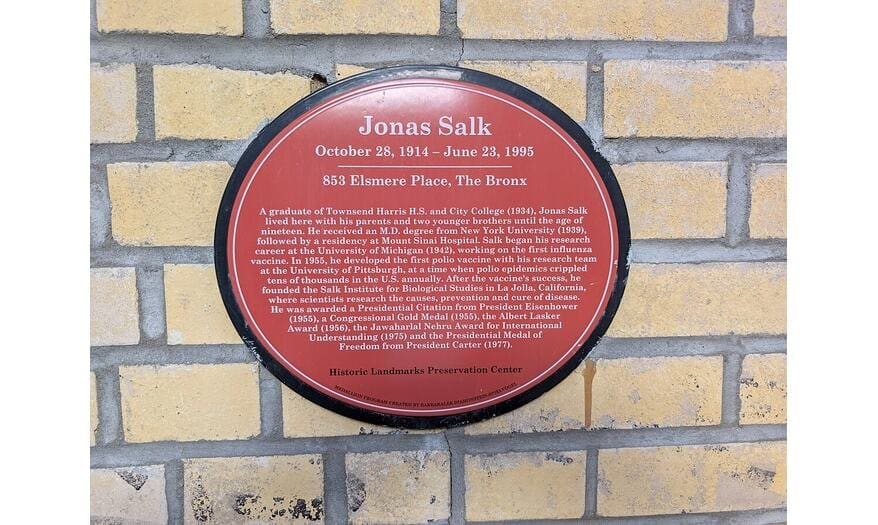
The vaccine proved safe and highly effective in clinical trials. When it was introduced for public use in 1955, polio cases fell dramatically within a few years. Salk became a household name, celebrated not only for his science but also for refusing to patent the vaccine, ensuring it could reach as many people as possible. His work stands as a triumph of medical research and one of the most important public health victories in history.
March 30, 1842
First Use of Anesthesia in Surgery
In Jefferson, Georgia, Dr. Crawford Long performed the first surgical operation using ether as an anesthetic. Before this breakthrough, surgery was performed with patients fully awake, often restrained as they endured pain. Long’s use of ether allowed him to remove a tumor painlessly, showing for the first time that operations could be conducted without suffering.
The use of anesthesia transformed medicine. Complex surgeries that were once unthinkable became possible, and the risks associated with shock and trauma were reduced. Thus, this is one of the major historical events of March. Anesthesia spread rapidly across the medical world, saving lives and making surgery more humane. Dr. Long’s operation in 1842 marked the beginning of a new era in healthcare.
March 31, 1918
Daylight Saving Time Introduced in the United States
The United States introduced daylight saving time as a wartime measure during World War I. The policy required clocks to be shifted forward by one hour in spring and back in autumn, extending evening daylight. It was believed that this adjustment would conserve fuel and energy by reducing the need for artificial lighting.
Though controversial, the idea of daylight saving time endured well beyond the war. It has been adopted, adjusted, and debated in countries worldwide. While its benefits remain disputed, its introduction reflected how governments used scientific reasoning and social policy to address national challenges. The event showed how even the measurement of time itself could be reshaped for practical needs.
Conclusion
From Mendeleev’s periodic table to Salk’s polio vaccine, historical events in March showcase the enduring impact of human curiosity and innovation. Each event built bridges between the unknown and the possible—whether charting moons, preventing disease, or finding new ways to communicate. These stories remind us that progress often begins with one bold step, and the legacy of these moments continues to shape modern science and medicine.
References
- Turner, T. (2012). Development of the Polio Vaccine: A Historical Perspective of Tuskegee University’s Role in Mass Production and Distribution of HeLa Cells. Journal of Health Care for the Poor and Underserved, 23(4 0), 5. https://doi.org/10.1353/hpu.2012.0151
- Smithsonian Institution Archives. (n.d.). Robert H. Goddard: American rocket pioneer. Retrieved September 28, 2025, from https://siarchives.si.edu/history/featured-topics/stories/robert-h-goddard-american-rocket-pioneer
- NASA. (n.d.). Titan. Retrieved September 28, 2025, from https://science.nasa.gov/saturn/moons/titan/
Additionally, to stay updated with the latest developments in STEM research, visit ENTECH Online. Basically, this is our digital magazine for science, technology, engineering, and mathematics. Furthermore, at ENTECH Online, you’ll find a wealth of information.
- Author
- Latest Posts

I am currently pursuing Masters degree in Chemistry from the University of Lucknow, and I hold a keen interest in both the subject and its broader applications. With a particular fascination for physical and organic chemistry, my academic path is complemented by a passion for science communication and writing.
I am also actively involved in extracurricular activities, especially public speaking, and debates, where I learned to think clearly and communicate effectively. These experiences have been instrumental in developing my confidence, critical reasoning, and a sense of responsibility toward effective knowledge-sharing.
My skill set includes research writing and editing, and of course, a constant zeal to learn more from everybody. Alongside academics, I enjoy reading poetry and history. My hobbies include singing and gardening.
I have participated in platforms that support women in science, such as IUPAC’s Global Women’s Breakfast. These engagements have helped shape my perspective and strengthened my resolve to contribute positively wherever possible.