From the discovery of Ceres in 1801 to the first Macintosh computer in 1984, January is filled with historical events in science, technology, and exploration. Discover the breakthroughs that continue to shape our world.
Time Capsule: January

Estimated reading time: 6 minutes
January often sets the pace for the year, yet many of its most important moments come from science, discovery, and human innovation. From observing new worlds and inventing transformative technologies to protecting the environment before the harm becomes irreversible, many historical events in January took place that continue to affect our lives. Let’s explore several of these defining moments.
January 1, 1801
Giuseppe Piazzi discovers Ceres
On January 1, 1801, Italian astronomer Giuseppe Piazzi made a momentous discovery: an object orbiting the Sun between Mars and Jupiter that he named Ceres. Initially believed to be a star or comet, this object challenged astronomers’ understanding of the solar system’s structure.
Piazzi’s observations were cautious because the object moved slowly and lacked characteristics of a comet. Yet its calculated orbit showed it belonged to a previously uncharted region — the asteroid belt. Soon after, mathematician Carl Friedrich Gauss devised a method to predict its orbit and so “recover” it when it became obscured.
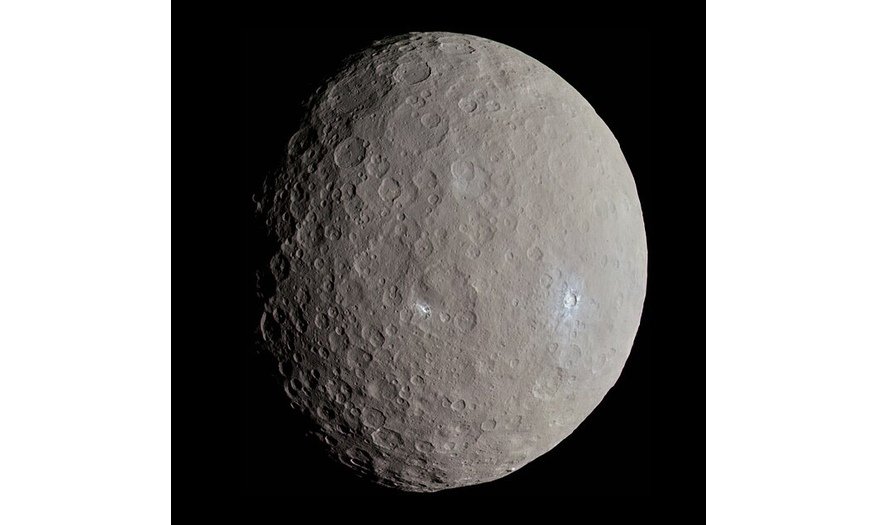
Today, Ceres is classified as a dwarf planet, one of the largest objects in the asteroid belt. Its study has given scientists insight into planetary formation, the early solar system, and mysterious chemistry (including subsurface water ice). The discovery remains one of the earliest historical events in January that bridged humanity’s comprehension of planets and smaller celestial bodies.
January 5, 2005
Discovery of Eris, the largest known dwarf planet
On January 5, 2005, a team led by astronomer Mike Brown discovered Eris, now recognized as one of the largest known dwarf planets in the solar system. The object was first found via archived images taken at Palomar Observatory; its slow movement across background stars delayed its detection until careful reanalysis.
Eris has a diameter nearly comparable to Pluto, prompting astronomers to reconsider definitions of what constitutes a planet. Its discovery intensified debates that led the International Astronomical Union to refine planetary classification in 2006.
This event is among the more recent historical events in January, marking not just the expansion of our catalog of space objects but also how our conceptual frameworks in astronomy evolve with each new finding.
January 9, 1816
Sir Humphry Davy tests the Davy lamp at Hebburn Colliery (tentatively)
On January 9, 1816, Sir Humphry Davy is said to have tested his safety lamp for miners at Hebburn Colliery. The Davy lamp, invented by Davy in 1815–16, was designed to prevent gas explosions underground by enclosing the flame so that dangerous gases would not ignite.
This invention drastically improved safety in coal mines, reducing deaths and injuries related to underground mining. The lamp’s design was simple yet effective: enclosing a flame in a fine mesh, allowing light to pass but cooling hot gases so they cannot trigger ignition.
While this date appears in some sources, the exact day and location are less firmly documented than others. Still, this is one of those historical events in January that illustrates the critical social impact of scientific innovation on everyday work and human lives.
January 19, 1915
Georges Claude patents the neon discharge tube for advertising
On January 19, 1915, French engineer Georges Claude patented the neon discharge tube. This paved the way for neon signage and lighting. The neon tube produces bright, colorful light when an electric current passes through neon gas. This transformed commercial advertising, art, and urban landscapes.
Before this, electric signage was limited in its visual variety and range; neon opened up vibrant possibilities in public display. Today, neon lights have become iconic in signage culture. It is used from movie marquees to nightlife districts and is celebrated for both aesthetics and creative expression.
January 21, 1954
Launch of USS Nautilus, the first nuclear-powered submarine
On January 21, 1954, the USS Nautilus (SSN-571) was launched in Groton, Connecticut. It was the world’s first nuclear-powered submarine, a major advance in naval engineering and military technology.
Powered by a nuclear reactor, Nautilus could remain submerged far longer than conventional diesel submarines. This set a new standard for underwater endurance and strategic capability. This launch initiated a new era in both civilian studies of nuclear propulsion and naval power projection.
Decades later, nuclear propulsion remains central to many submarines and maritime vessels that require extended range and autonomy.
January 23, 1978
Sweden becomes the first country to ban aerosol sprays with CFCs
On January 23, 1978, Sweden became the first country in the world to ban aerosol sprays that used chlorofluorocarbons (CFCs) as propellants. This environmental regulation came in response to scientific evidence that CFCs damaged the ozone layer. The Ozone Layer is the protective shield high in Earth’s atmosphere that blocks harmful ultraviolet rays.
The policy was ahead of its time. Long before the discovery of the Antarctic ozone hole, Sweden’s move underscored precaution in environmental policy. Following Sweden, many nations adopted similar bans, culminating in the Montreal Protocol of 1987. The international community universally acknowledged the treaty as one of the most effective environmental agreements.
This is one of the more socially significant historical events in January. This reminds us that scientific understanding must sometimes lead policy and public health action.
January 24, 1984
Apple Introduces the Macintosh Computer
On January 24, 1984, Apple unveiled the Macintosh computer. It was a milestone in personal computing that forever changed how people interact with technology. Unlike most computers of its time, the Macintosh featured a graphical user interface (GUI) with icons, windows, and menus navigated by a mouse. This made it far more user-friendly than the command-line systems that dominated the market.
The Macintosh became a cultural and technological landmark. Its design emphasized simplicity and accessibility, drawing everyday users into the computing world. The launch was famously accompanied by Apple’s “1984” Super Bowl commercial, one of the most iconic advertisements in history.
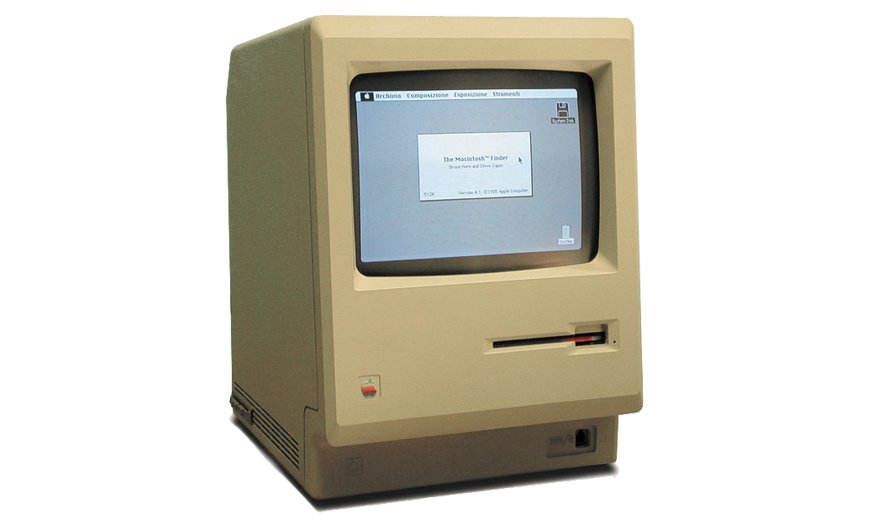
Though it achieved only limited initial commercial success, the Macintosh inspired an entire generation of software development, design standards, and user experience principles.. Today, graphical interfaces are the norm across nearly all devices, tracing their roots back to this pivotal historical event in January.
Conclusion
Reviewing these historical events in January reveals the breadth of human endeavor. It ranges from celestial discoveries that expand our view of the cosmos to inventions that transformed daily life and policies that protected our planet. Whether through explorers peering through telescopes, inventors shaping light and safety, or nations making bold regulatory moves, these moments remind us that January isn’t just about new beginnings : it’s about redefining what’s possible.
Additionally, to stay updated with the latest developments in STEM research, visit ENTECH Online. Basically, this is our digital magazine for science, technology, engineering, and mathematics. Furthermore, at ENTECH Online, you’ll find a wealth of information.
References:
- EarthSky. (2022, January). Sweden 1st to ban aerosol sprays containing CFCs. Retrieved from https://www.earthsky.org/earth/sweden-1st-to-ban-aerosol-sprays/EarthSky
- Computer History Museum. (2023, December). Hello. The Apple Mac @ 40. Computer History Museum. https://computerhistory.org/exhibits/hello-the-mac-at-40/
- Author
- Latest Posts

I am currently pursuing Masters degree in Chemistry from the University of Lucknow, and I hold a keen interest in both the subject and its broader applications. With a particular fascination for physical and organic chemistry, my academic path is complemented by a passion for science communication and writing.
I am also actively involved in extracurricular activities, especially public speaking, and debates, where I learned to think clearly and communicate effectively. These experiences have been instrumental in developing my confidence, critical reasoning, and a sense of responsibility toward effective knowledge-sharing.
My skill set includes research writing and editing, and of course, a constant zeal to learn more from everybody. Alongside academics, I enjoy reading poetry and history. My hobbies include singing and gardening.
I have participated in platforms that support women in science, such as IUPAC’s Global Women’s Breakfast. These engagements have helped shape my perspective and strengthened my resolve to contribute positively wherever possible.