From Magellan’s daring navigation to Einstein’s quantum leap and from the discovery of X-rays to the detection of distant atmospheres.
Time Capsule: November

Estimated reading time: 6 minutes
History often turns into quiet moments that later prove monumental. November is full of such instances, ranging from bold sea voyages to discoveries that forever altered science and medicine. Across centuries, breakthroughs in exploration, mathematics, physics, and astronomy have reshaped how people see the world and the universe beyond. By looking at historical events in November, we uncover how single days sparked revolutions in thought and progress.
November 3, 1973
NASA launches Mariner 10 towards Mercury
On November 3, 1973, NASA launched Mariner 10, a space probe designed to study Mercury and Venus. It became the first spacecraft to use a gravity assist maneuver, flying past Venus to gain the speed needed to reach Mercury. This bold technique later became a cornerstone of interplanetary missions, allowing spacecraft to reach distant planets without requiring enormous amounts of fuel.
Mariner 10’s achievements were groundbreaking. It transmitted the first close-up images of Mercury’s cratered surface, revealing that the planet resembled Earth’s Moon more than expected. The probe also collected crucial data on Mercury’s thin atmosphere, magnetic field, and surface temperature extremes.
Beyond its technical triumphs, the mission proved humanity could design complex space navigation strategies. It marked a turning point in planetary science, sparking curiosity about how small, rocky planets evolve. Today, every major planetary mission owes part of its success to the techniques Mariner 10 pioneered.
November 8, 1895
Wilhelm Roentgen discovered the X-ray
In Würzburg, Germany, on November 8, 1895, Wilhelm Roentgen made a discovery that transformed medicine and science alike. While experimenting with cathode rays and vacuum tubes, he noticed a mysterious glow on a nearby fluorescent screen. Roentgen realized this was a new kind of invisible radiation that could pass through solid objects but leave shadows of denser materials. He called them “X-rays,” with “X” standing for the unknown.
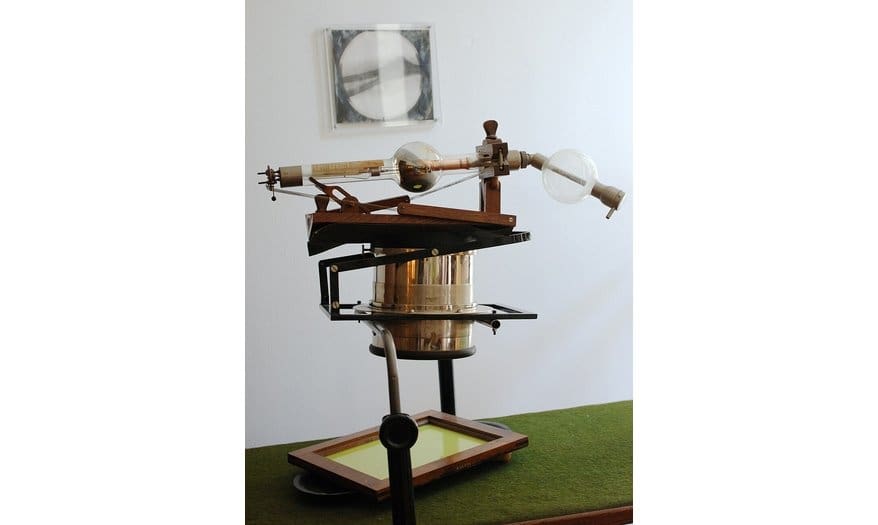
Roentgen’s discovery had immediate practical applications. For the first time, doctors could see inside the human body without surgery. Within months, hospitals across Europe and America began using X-rays to locate broken bones, detect lung conditions, and remove foreign objects.
The impact of this finding cannot be overstated. It revolutionized diagnostics, transformed medical imaging, and contributed to physics research in understanding radiation. Roentgen received the very first Nobel Prize in Physics in 1901 for his work, ensuring his discovery was recognized as a cornerstone of modern science.
November 8, 1968
Pioneer 10: A Bold Voyage Beyond the Solar System
Owning one of the major historical events in November, NASA launched Pioneer 10, marking a watershed moment in human space exploration. The spacecraft departed Earth aboard an Atlas-Centaur rocket and embarked on a daring trajectory that would take it through the asteroid belt and on toward the outer planets. Its mission objectives included measuring solar wind, cosmic rays, magnetic fields, and tracing how space behaves far from Earth’s influence.
As Pioneer 10 traversed the solar system, it achieved several firsts. It became the first mission to cross the asteroid belt safely, demonstrating our ability to send probes through regions once considered too dangerous. Moreover, it relayed vital data on interplanetary atoms and particles, thereby enriching our understanding of the heliosphere’s structure. At later stages, it brought imagery and measurements of Jupiter’s radiation and magnetosphere, pushing the frontiers of human knowledge into the cold expanse beyond.
Because Pioneer 10 continued transmitting long after its prime mission, it transitioned into a symbolic pioneer. Its legacy remains influential: it opened the path for future missions to the stars and proved that human curiosity can stretch far beyond familiar horizons.

November 9, 1921
Albert Einstein was awarded the Nobel Prize for the photoelectric effect
Although best known for his theory of relativity, Albert Einstein was awarded the Nobel Prize in Physics on November 9, 1921, for his explanation of the photoelectric effect. This phenomenon occurs when light striking a material causes electrons to be emitted. At the time, classical physics could not explain why the effect depended on the frequency of light rather than its intensity.
Einstein’s explanation showed that light behaves as both a wave and a particle, introducing the concept of “quanta,” or photons. This idea laid the foundation of quantum theory, one of the most revolutionary frameworks in physics.
The award not only cemented Einstein’s place as a leading scientist but also pushed forward new technologies. Solar panels, light sensors, and even modern cameras rely on principles born from the photoelectric effect. Thus, it became one of the major historical events in November.
1847
Sir James Young Simpson used chloroform as an anesthetic
Around November, 1847, Sir James Young Simpson, a Scottish physician, introduced chloroform as an anesthetic during surgery. At a time when operations were brutal and often fatal due to shock and pain, the idea of rendering a patient unconscious was revolutionary.
Simpson’s experiments with chloroform quickly demonstrated its effectiveness. Patients no longer experienced the excruciating pain of surgery, allowing doctors to perform longer and more complex operations. Chloroform spread rapidly across Europe and America, although debates over its safety and morality accompanied its use.
Despite its risks, chloroform paved the way for modern anesthesia. It inspired the development of safer drugs and transformed surgery into a life-saving medical practice rather than a last resort. Simpson’s work stands as a reminder of how medical courage and innovation can alter the future of healthcare.
November 27, 2001
First atmosphere detected on an extrasolar planet
On November 27, 2001, astronomers using the Hubble Space Telescope made a discovery that expanded the boundaries of planetary science. While studying the planet HD 209458 b, also called Osiris, researchers detected hydrogen escaping from its atmosphere. This marked the first confirmed detection of an atmosphere around an extrasolar planet.
The discovery was a landmark moment for astronomy. Until then, exoplanets had been detected indirectly, usually through their gravitational effects on stars. Proving that these distant worlds could hold atmospheres opened a new era of exploration. Scientists could now study the composition of alien skies and search for chemical signatures that might hint at life.
Today, the study of exoplanetary atmospheres is one of the fastest-growing fields in astronomy. From water vapor to complex molecules, telescopes continue to reveal that other planets are not lifeless rocks but dynamic worlds with rich and varied environments. The first step on this journey began with Osiris in November 2001.
Conclusion
Looking at these historical events in November shows us how progress unfolds in diverse forms: voyages that shrink the world, discoveries that unveil hidden dimensions of nature, and innovations that heal and protect human life. Thus, from Magellan’s daring navigation to Einstein’s quantum leap and from the discovery of X-rays to the detection of distant atmospheres, November demonstrates that even ordinary days can hold extraordinary change.
Additionally, to stay updated with the latest developments in STEM research, visit ENTECH Online. Basically, this is our digital magazine for science, technology, engineering, and mathematics. Furthermore, at ENTECH Online, you’ll find a wealth of information.
References:
- National Aeronautics and Space Administration. (2025, May 7). Mariner 10. https://science.nasa.gov/mission/mariner-10/
- Nobel Prize Outreach. (n.d.). Wilhelm Conrad Röntgen – Facts. Retrieved September 12, 2025, from https://www.nobelprize.org/prizes/physics/1901/rontgen/facts/
- Author
- Latest Posts

I am currently pursuing Masters degree in Chemistry from the University of Lucknow, and I hold a keen interest in both the subject and its broader applications. With a particular fascination for physical and organic chemistry, my academic path is complemented by a passion for science communication and writing.
I am also actively involved in extracurricular activities, especially public speaking, and debates, where I learned to think clearly and communicate effectively. These experiences have been instrumental in developing my confidence, critical reasoning, and a sense of responsibility toward effective knowledge-sharing.
My skill set includes research writing and editing, and of course, a constant zeal to learn more from everybody. Alongside academics, I enjoy reading poetry and history. My hobbies include singing and gardening.
I have participated in platforms that support women in science, such as IUPAC’s Global Women’s Breakfast. These engagements have helped shape my perspective and strengthened my resolve to contribute positively wherever possible.