April has been a month of daring explorations, transformative discoveries, and breakthroughs that changed the trajectory of science and human history. From the birth of modern cinema to the mapping of our very genetic code,…
Time Capsule: April
Estimated reading time: 6 minutes
April has been a month of daring explorations, transformative discoveries, and breakthroughs that changed the trajectory of science and human history. From the birth of modern cinema to the mapping of our very genetic code, this month has carried landmark achievements. In this article, we revisit the historic events of April, exploring the inventions, theories, and explorations that continue to define the modern age.
April 6, 1869
Celluloid Is Patented
On this day, John Wesley Hyatt patented celluloid, one of the first synthetic plastics. Initially developed as a substitute for ivory in billiard balls, celluloid became the foundation for the motion picture industry. Its flexibility and transparency made it ideal for photographic film, which soon carried moving images to audiences worldwide.
The impact of celluloid reached far beyond billiards. It revolutionized entertainment, communication, and culture by making cinema possible. Celluloid films transformed storytelling, blending science and art into a new medium that shaped global culture throughout the 20th century. Hyatt’s invention proved how chemistry could reshape everyday life in ways few could have imagined.
April 10, 1953
Warner Bros. Premieres the First 3D Film
The Warner Bros. studio premiered House of Wax, the first feature-length film produced and released in 3D with stereophonic sound. Audiences, equipped with polarized glasses, were immersed in a new dimension of cinema. The film was a commercial success and proved that motion pictures could create experiences that went beyond flat screens.
Though 3D cinema had ups and downs in popularity, House of Wax opened the door for decades of experimentation in film technology. From IMAX theaters to today’s digital 3D productions, its premiere marked the beginning of an industry constantly striving to make visual storytelling more immersive. The event showed how technology and entertainment evolved hand in hand.
April 14, 2003
Human Genome Project Completed
After 13 years of global collaboration, the Human Genome Project announced the completion of sequencing 99% of the human genome with 99.99% accuracy. This achievement was one of the most ambitious scientific undertakings of the 20th century. By decoding our DNA, scientists gained a blueprint of human life that would transform medicine, biology, and genetics.
The implications were immense. The project opened the door to personalized medicine, genetic testing, and new therapies targeting the molecular roots of disease. It also raised profound ethical questions about privacy, identity, and genetic engineering. The Human Genome Project demonstrated the power of international cooperation in tackling challenges at the frontiers of science.
April, 1923
Insulin Becomes Widely Available
In April 1923, insulin became generally available for diabetics, turning what was once a fatal disease into a manageable condition. Before insulin therapy, patients with diabetes faced a certain decline, as diets and other treatments could not control the disease. The wide release of insulin offered, for the first time, a way to regulate blood sugar and prolong life.
This advance quickly spread worldwide, saving millions of lives. The availability of insulin also marked a turning point in medicine—it proved that a biochemical substance could replace a missing function in the body. The discovery and distribution of insulin laid the groundwork for modern endocrinology and therapies for countless metabolic disorders.
April 19, 1770
Captain Cook Reaches Australia
British explorer Captain James Cook and his crew aboard the HMS Endeavour sighted the eastern coast of Australia. This encounter marked the first recorded European contact with the continent’s eastern seaboard. Cook’s detailed maps and reports would later influence global navigation and British colonization.
From a scientific perspective, the voyage was as much about discovery as conquest. Cook’s crew catalogued plants, animals, and celestial observations, contributing to the era’s expanding scientific knowledge. While the expedition enriched European science, it also marked the beginning of upheaval for Indigenous Australians, whose lands and cultures faced profound disruption.
April 24, 1990
Hubble Space Telescope Launched
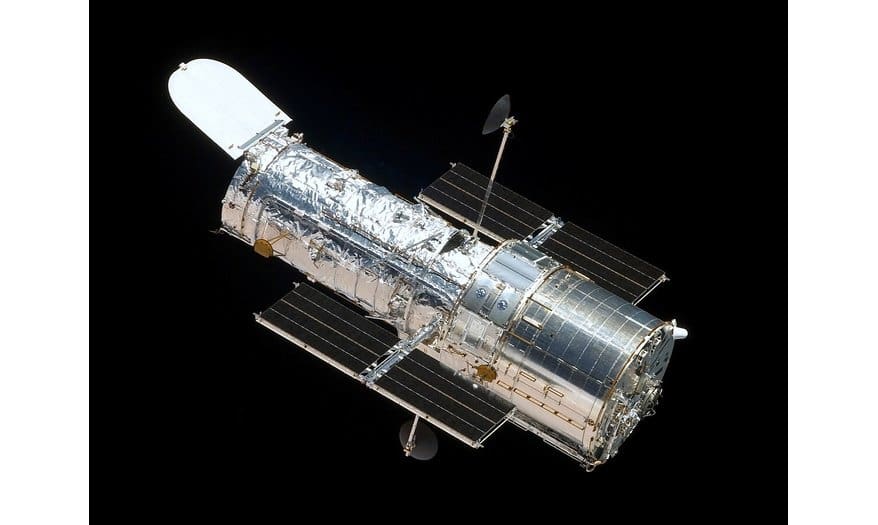
The Space Shuttle Discovery carried the Hubble Space Telescope into orbit, offering humanity an eye into the universe free from Earth’s atmospheric distortions. Initially plagued by a flawed mirror, the telescope was later repaired, and it went on to deliver images of unprecedented clarity. From distant galaxies to nebulae, Hubble transformed astronomy.
Beyond beautiful images, Hubble provided hard data that reshaped our cosmic understanding. It helped determine the universe’s age, revealed the acceleration of cosmic expansion, and guided the search for exoplanets. The telescope’s legacy lies in combining technological engineering with human curiosity, showing how space exploration could answer fundamental questions about existence.
April 26, 1986
Chernobyl Nuclear Disaster
In the early hours of April 26, 1986, Reactor No. 4 at the Chernobyl nuclear power plant in Ukraine exploded during a safety test gone wrong. The accident released massive amounts of radioactive material into the atmosphere, making it the worst nuclear disaster in history. Immediate casualties were followed by long-term health effects across Europe, with thousands exposed to radiation.
Chernobyl became a symbol of the dangers and responsibilities tied to nuclear power. The disaster forced nations to rethink safety protocols and sparked debates on the future of nuclear energy. Decades later, the site remains a cautionary reminder of both human error and technological risk, even as nature slowly reclaims the Exclusion Zone. This remains one of the major historic events of April that has had such an impact.

Conclusion
From the chemistry of plastics to the mapping of our DNA, the historic events of April highlight how curiosity and innovation can reshape human life. These milestones span exploration, medicine, physics, and space science, reminding us that progress often comes through both triumphs and tragedies. April’s stories show the enduring human drive to push beyond limits in search of knowledge.
References
- National Human Genome Research Institute. (2023). The Human Genome Project. NIH. https://www.genome.gov/human-genome-project
- NASA. (2020). Hubble Space Telescope: 30 Years of Discovery. https://www.nasa.gov/mission_pages/hubble/main/index.html
- World Health Organization. (2021). Chernobyl: the true scale of the accident. https://www.who.int/news/item/05-09-2005-chernobyl-the-true-scale-of-the-accident
Additionally, to stay updated with the latest developments in STEM research, visit ENTECH Online. Basically, this is our digital magazine for science, technology, engineering, and mathematics. Furthermore, at ENTECH Online, you’ll find a wealth of information.
- Author
- Latest Posts

I am currently pursuing Masters degree in Chemistry from the University of Lucknow, and I hold a keen interest in both the subject and its broader applications. With a particular fascination for physical and organic chemistry, my academic path is complemented by a passion for science communication and writing.
I am also actively involved in extracurricular activities, especially public speaking, and debates, where I learned to think clearly and communicate effectively. These experiences have been instrumental in developing my confidence, critical reasoning, and a sense of responsibility toward effective knowledge-sharing.
My skill set includes research writing and editing, and of course, a constant zeal to learn more from everybody. Alongside academics, I enjoy reading poetry and history. My hobbies include singing and gardening.
I have participated in platforms that support women in science, such as IUPAC’s Global Women’s Breakfast. These engagements have helped shape my perspective and strengthened my resolve to contribute positively wherever possible.