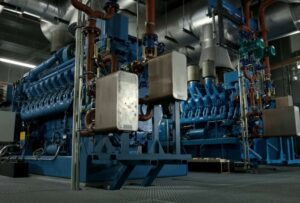
If AI demand keeps accelerating, the RAM shortage could remain severe until substantial new capacity arrives.
AI Drives RAM Shortage: Why Memory Prices Are Suddenly So High

Estimated reading time: 4 minutes
A global RAM shortage is unfolding as the AI boom soaks up memory chips. Analysts warn that this squeeze could keep DRAM and HBM prices high well into the next few years.
How AI Drives RAM Shortage?
AI data centers now sit at the center of this memory crunch. Modern AI servers use huge pools of DDR5, LPDDR5X, and especially High‑Bandwidth Memory (HBM) attached to powerful GPUs and custom AI chips.
Moreover, each new generation of large language models demands even more high-speed RAM per server. Consequently, AI workloads are consuming a growing share of the world’s premium memory output, leaving less for ordinary PCs and phones.
AI Data Centers outbid everyone
Today, hyperscalers like Nvidia’s partners, Microsoft, Google, and Amazon buy memory in massive lots to secure supply. As a result, AI-focused orders often outbid consumer and small enterprise buyers for the same wafers.
In fact, some reports suggest AI data centers now drive DRAM demand at two to three times the growth rate of standard compute servers. Therefore, traditional markets struggle to keep up as stock levels fall to just a few weeks in many channels.
AI Drives RAM Shortage: Market Conditions In Late 2025
The RAM market has entered what analysts call a supercycle, driven not by normal gadget demand but by AI and data center expansion. Inventory levels that once covered several months have dropped to as low as two weeks for some buyers, which naturally pushes prices higher.
Furthermore, market trackers report that prices for some DRAM products have already doubled or even tripled year over year. In addition, spot prices for popular DDR5 modules keep rising as distributors ration limited supply.
Why manufacturers can’t fix it quickly
Major memory makers like Samsung, SK hynix, and Micron have shifted production capacity toward HBM and advanced low‑power DRAM for AI chips. Because HBM dies are larger and more complex, they consume more wafer area, which leaves fewer wafers for commodity PC and laptop RAM.
At the same time, building new fabs and cleanrooms takes years, not months. Therefore, even though companies are investing heavily, structural constraints will likely keep RAM supply tight into 2027 and beyond.
AI Chip Makers Reshape The RAM Shortage
AI chip makers are now reshaping the entire memory ecosystem. For example, Nvidia’s latest accelerators rely on large stacks of HBM3 or HBM3e, sometimes reaching hundreds of gigabytes per GPU. As each server may pack multiple such GPUs, total memory per rack skyrockets compared with older cloud servers.
In addition, some AI platforms have started using LPDDR5X, originally designed for smartphones, inside servers to squeeze out more bandwidth and efficiency. This trend blurs the line between mobile and server memory markets and adds more pressure across every segment.
“AI data centers have become the new gravity well of the memory industry, pulling in capacity from every other segment.”
AI Drives Ram Shortage: How it Hits Consumers And Industry
Because AI drives RAM shortage at the top of the supply chain, the impact now cascades down to everyday users. PC builders already see higher prices for DDR5 kits, while some retailers report limited stock or forced bundles for gaming rigs.
In addition, smartphone and automotive makers face higher component costs and tougher negotiations to secure memory volumes. If conditions persist, many experts expect price hikes for laptops, phones, and even connected cars in 2026.
AI Drives Ram Shortage: What happens next?
Looking ahead, two paths seem likely. If AI demand keeps accelerating, the RAM shortage could remain severe until substantial new capacity arrives. However, if the AI market cools or efficiency improves, some pressure might ease, although prices are unlikely to return quickly to pre‑boom levels.
For now, one thing is clear: AI drives RAM shortage. This shift has turned memory chips into one of the most critical bottlenecks of the current technology era.
Additionally, to stay updated with the latest developments in STEM research, visit ENTECH Online. Basically, this is our digital magazine for science, technology, engineering, and mathematics. Further, at ENTECH Online, you’ll find a wealth of information.
Reference:
- Ruwitch, J. (2025, December 28). Memory loss: As AI gobbles up chips, prices for devices may rise. NPR. https://www.npr.org/2025/12/28/nx-s1-5656190/ai-chips-memory-prices-ram
- Author
- Latest Posts

Deven Nandapurkar is a Software Engineer, Project Lead; working at the strategic intersection of software engineering, productivity science, and emerging technologies. Driven by a core philosophy of “building things worth building,” he leads cross-functional teams and drives end-to-end technical strategy—from early-stage conceptualization through production-grade deployment.
A Computer Engineering graduate from Pune University, Deven brings a sharp systems-thinking approach to technical leadership, honed by years of managing high-stakes engineering projects and leading teams to top placements in national and international hackathons, including the NASA Space Apps Challenge and the Peerlist GenAI Hackathon.
Deven explores how human cognition and emerging technology converge. He regularly writes about cognitive performance optimization, attention management, AI integration, and the evolving dynamics of the modern workforce – offering actionable frameworks for professionals seeking to maximize their productivity and thrive alongside intelligent systems.