Explore how pyrofuses enhance safety in critical infrastructure power systems and improve response times during emergencies.
How Pyrofuses Improve Safety in Critical Infrastructure Power Systems
Estimated reading time: 6 minutes
Critical infrastructure power systems form the backbone of modern society, delivering electricity to hospitals, data centers, telecommunications networks, transportation systems, and emergency services. When these systems fail, the consequences can be catastrophic – endangering lives, disrupting essential services, and causing millions of dollars in damages. As power distribution networks become increasingly complex and operate at higher voltages and currents, traditional protection methods often fall short of providing the rapid, reliable disconnection required in emergency situations. This is where pyrofuses emerge as a transformative technology, offering a level of safety and response speed that conventional circuit protection simply cannot match.
At the core of critical infrastructure protection lies the need for ultra-fast circuit isolation during fault conditions or emergency shutdowns. While advanced semiconductor protection devices have revolutionized protection for power electronic equipment, pyrofuses address a different but equally critical challenge: the instantaneous physical disconnection of high-voltage, high-current circuits when milliseconds matter. Unlike traditional mechanical switches or even electronic circuit breakers, pyrofuses utilize controlled pyrotechnic reactions to physically sever electrical conductors in microseconds, providing the fastest possible disconnection in life-threatening or equipment-critical situations.
The fundamental advantage of pyrofuses becomes clear when examining the physics of fault current interruption. Traditional mechanical contactors require tens of milliseconds to open, during which fault currents can reach destructive levels. Electronic switches, while faster, still require several milliseconds and depend on semiconductor components that themselves can fail. Pyrofuses, by contrast, use a small explosive charge to physically cut the conductor, achieving complete electrical isolation in under 100 microseconds—literally hundreds of times faster than conventional methods. This extraordinary speed prevents arc flash hazards, limits fault current magnitude, and protects both equipment and personnel from thermal and electromagnetic damage.
Key Applications in Critical Infrastructure:
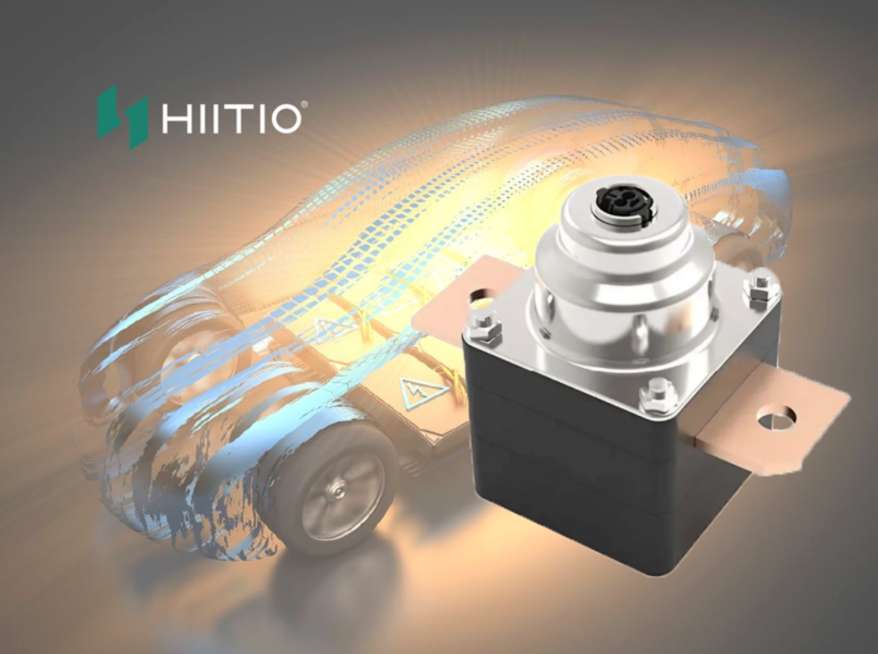
Electric Vehicle Battery Systems: Modern electric vehicles and energy storage systems contain battery packs operating at voltages exceeding 800V and capable of delivering thousands of amperes during a short circuit. In the event of a severe collision, thermal runaway, or internal fault, pyrofuses provide instantaneous disconnection, preventing battery fires and protecting occupants. The pyrotechnic disconnection occurs faster than the fault current can propagate through the battery management system, offering a critical safety margin that saves lives.
Data Center Power Distribution: Hyperscale data centers consume megawatts of power and operate 24/7 with no tolerance for downtime. When fault conditions occur in high-density power distribution units, pyrofuses enable rapid isolation of affected circuits while maintaining power to critical servers. This selective isolation prevents cascading failures that could bring down entire data halls, protecting billions of dollars in infrastructure and irreplaceable data.
Railway Electrification Systems: Electric railways operate at voltages ranging from 750V DC to 25kV AC, with traction systems drawing enormous currents during acceleration. Pyrofuses in railway applications provide emergency disconnection for pantograph systems, traction converters, and auxiliary power supplies. In the event of an overhead wire failure or vehicle collision, pyrofuses isolate the electrical system instantly, preventing electrocution hazards and secondary fires.
Renewable Energy Installations: Large-scale solar farms and wind installations present unique protection challenges due to their distributed nature and inability to “shut off” the energy source. Pyrofuses in photovoltaic combiner boxes and wind turbine power converters provide rapid isolation during ground faults, equipment failures, or emergency maintenance operations. This protection is especially critical for firefighter safety, as energized solar panels continue producing voltage even during fire suppression efforts.
Technical Advantages Over Conventional Protection:
Absolute Disconnection Certainty: Unlike mechanical switches that can weld shut under high fault currents, or semiconductor devices that can fail short-circuited, pyrofuses provide guaranteed physical separation. Once activated, the conductor is completely severed, creating an air gap that cannot be bridged by any fault current, arc, or electromagnetic phenomenon.
Zero Maintenance Requirements: Traditional circuit breakers require periodic testing, mechanical maintenance, and eventual replacement of arc-extinguishing media. Pyrofuses have no moving parts, no contact surfaces to degrade, and no maintenance intervals. They remain ready for decades with 100% reliability, making them ideal for inaccessible or harsh-environment installations.
Immunity to Electromagnetic Interference: In high-voltage substations and industrial environments, electromagnetic interference can cause false tripping of electronic protection devices. Pyrofuses, being purely mechanical in their disconnection action, are completely immune to EMI, voltage transients, and electromagnetic pulses.
Compact Form Factor: The energy density of pyrotechnic materials allows pyrofuses to achieve in a compact package what would require bulky mechanical disconnectors. This space efficiency is invaluable in applications like electric vehicles and aerospace systems where every cubic centimeter matters.
Integration with Modern Safety Systems:
Modern critical infrastructure increasingly relies on integrated safety architectures that combine multiple protection layers. Pyrofuses function as the ultimate “last line of defense” in these hierarchical systems:
- First Layer: Electronic monitoring and control systems detect abnormal conditions and attempt corrective action
- Second Layer: Fast-acting circuit breakers interrupt fault currents within milliseconds
- Third Layer: Pyrofuses provide instantaneous physical disconnection when faster layers fail or when emergency conditions demand absolute certainty
This defense-in-depth approach ensures that even in worst-case scenarios—multiple simultaneous failures, extreme fault currents, or catastrophic equipment damage—the pyrofuse guarantees complete electrical isolation.
Design Considerations for Critical Applications:
Implementing pyrofuses in critical infrastructure requires careful attention to several engineering factors:
Current Carrying Capacity: The pyrofuse conductor must handle normal operating currents indefinitely without degradation, typically ranging from 100A to several thousand amperes depending on application.
Voltage Isolation: After activation, the air gap created must withstand the system voltage without flashover, requiring careful consideration of gap distance, insulation coordination, and environmental factors like humidity and contamination.
Activation Energy: The pyrotechnic charge must be sized to reliably sever the conductor under all conditions, including cold temperatures, aged components, and maximum current loading at the moment of activation.
Containment and Venting: The explosive disconnection generates gas pressure and heat that must be safely contained and vented. Enclosure design must prevent shrapnel emission while allowing pressure relief.
Environmental Qualification: Critical infrastructure applications demand operation across extreme temperature ranges (-40°C to +85°C), high humidity, vibration, and contamination exposure. Pyrofuses must maintain reliability across these conditions for service lives of 15-20 years.
Regulatory and Standards Compliance:
As pyrofuse technology matures, industry standards and regulatory frameworks continue evolving. Current standards addressing pyrofuse applications include:
- UN ECE R100: Electric vehicle safety requirements
- UL 248: Fuses and fuse holders
- IEC 60947: Low-voltage switchgear and control gear
- SAE J2929: Electric and hybrid vehicle propulsion battery safety
Compliance with these standards ensures interoperability, safety, and acceptance by regulatory authorities worldwide. As critical infrastructure increasingly adopts pyrofuse technology, standards development accelerates to address emerging applications and lessons learned from field deployments.
As power systems continue evolving toward higher voltages, greater currents, and increased criticality, pyrofuses will become not just an option but a necessity for ensuring the safety and reliability that modern society demands. For engineers designing tomorrow’s critical infrastructure, understanding and properly applying pyrofuse technology represents an essential component of responsible system design.
Additionally, to stay updated with the latest developments in STEM research, visit ENTECH Online. Basically, this is our digital magazine for science, technology, engineering, and mathematics. Further, at ENTECH Online, you’ll find a wealth of information.
- Author
- Latest Posts

Deven Nandapurkar is a Software Engineer, Project Lead; working at the strategic intersection of software engineering, productivity science, and emerging technologies. Driven by a core philosophy of “building things worth building,” he leads cross-functional teams and drives end-to-end technical strategy—from early-stage conceptualization through production-grade deployment.
A Computer Engineering graduate from Pune University, Deven brings a sharp systems-thinking approach to technical leadership, honed by years of managing high-stakes engineering projects and leading teams to top placements in national and international hackathons, including the NASA Space Apps Challenge and the Peerlist GenAI Hackathon.
Deven explores how human cognition and emerging technology converge. He regularly writes about cognitive performance optimization, attention management, AI integration, and the evolving dynamics of the modern workforce – offering actionable frameworks for professionals seeking to maximize their productivity and thrive alongside intelligent systems.