Author: Dr. Siddharth Shahi
Dr. Siddharth Shahi
Role: Neuroscientist & Researcher
Organization: BG Universitätsklinikum Bergmannsheil, Ruhr University Bochum
Educational Foundation: Ruhr University Bochum
Subject Expertise: Neuropsychology, Artificial Intelligence, Machine Learning for Neurological Diagnostics, Neuromorphic Computing, Neural Cognitive Function Simulation, Brain-Computer Interfaces, and the Intersection of Biological Intelligence & Computational Theory.
Short Bio
Dr. Siddharth Shahi is a distinguished neuroscientist and researcher currently pioneering work at the intersection of biological intelligence and computational theory. With an academic and research foundation rooted in Ruhr University Bochum and his current clinical and research contributions at BG Universitätsklinikum Bergmannsheil, Dr. Shahi's work is at the forefront of understanding the human brain's most complex functions. His expertise lies in the revolutionary field of Neuropsychology and Artificial Intelligence, where he explores how machine learning can be leveraged to simulate neural cognitive functions and predict neurological disorders with unprecedented accuracy. By synthesizing clinical data with advanced algorithms, Dr. Shahi is dedicated to developing more efficient, accessible, and safer models for diagnosing neuropsychological conditions. Beyond the lab, he is a passionate advocate for Neuromorphic Computing — the endeavor to design computer systems that mimic the human brain's architecture. His vision is a future where neuro-inspired technology is not only more powerful but also more affordable and ethically integrated into healthcare.Extended Bio
Dr. Siddharth Shahi works at the most exciting frontier in modern science: the boundary between the brain and the machine, between biological intelligence and computational theory. His research asks a question that is at once deeply scientific and profoundly philosophical: can we understand the human brain well enough to simulate its functions, predict its failures, and build machines that think like it does?His academic foundation was built at Ruhr University Bochum in Germany, one of Europe's leading centers for neuroscience research. His current clinical and research work at BG Universitätsklinikum Bergmannsheil — a university hospital with deep roots in the Ruhr region's industrial and medical heritage — gives him access to the clinical data and patient populations that make his computational work grounded in real human need.The field he works in — Neuropsychology and Artificial Intelligence — is still emerging, but its potential is enormous. The human brain is the most complex system in the known universe, with approximately 86 billion neurons and trillions of connections. Understanding how this system produces thought, memory, emotion, and consciousness is the ultimate scientific challenge. But there is also an urgent practical dimension: neurological and neuropsychological disorders affect hundreds of millions of people worldwide, and our diagnostic tools are often imprecise, expensive, or invasive.Dr. Shahi's approach is to bring the power of machine learning to bear on this challenge. By training algorithms on clinical data — brain imaging, cognitive assessments, genetic profiles — he is developing models that can simulate neural cognitive functions and predict neurological disorders with accuracy that rivals or exceeds human experts. The goal is not to replace clinicians, but to give them better tools: diagnostic models that are faster, cheaper, more accessible, and more consistent.His advocacy for Neuromorphic Computing goes beyond the immediate diagnostic applications. Neuromorphic computing is the endeavor to design computer systems that physically mimic the brain's architecture — with neurons and synapses implemented in silicon rather than biology. This is not just a theoretical exercise. Neuromorphic chips have the potential to be vastly more energy-efficient than conventional processors for certain tasks, because they are designed from the ground up to do what brains do best: pattern recognition, learning, and adaptation.Dr. Shahi's vision is a future where neuro-inspired technology is not only more powerful but also more affordable and ethically integrated into healthcare. He is alert to the ethical dimensions of his work — the questions of privacy, consent, bias, and justice that arise whenever AI meets medicine. He writes for the neuroscientist who wants to learn what machine learning can offer, the computer scientist interested in brain-inspired architectures, the clinician who wants better diagnostic tools, and the student who dreams of building the bridge between wetware and hardware.Primary Beats
- Neuropsychology & Artificial Intelligence: Applying machine learning to understand and predict cognitive functions; developing AI models for diagnosing neuropsychological disorders; integrating clinical neuropsychology with computational methods for improved diagnostic accuracy and accessibility.
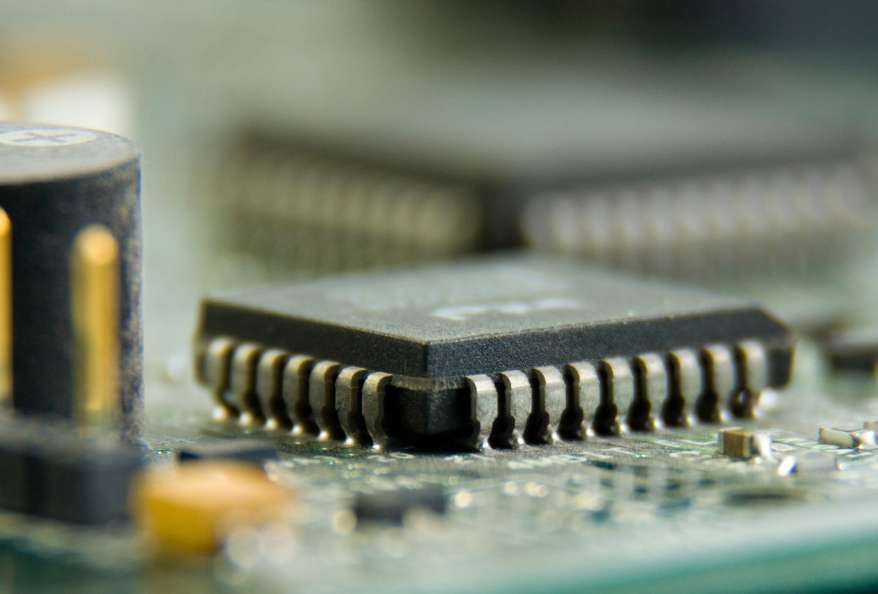
- Neuromorphic Computing & Brain-Inspired Architecture: Designing computer systems that mimic the neural architecture of the human brain; energy-efficient computing through neuromorphic hardware; bridging the gap between biological neural networks and artificial implementations.
- Machine Learning for Neurological Diagnostics: Training algorithms on multimodal clinical data (imaging, cognitive tests, biomarkers) to predict neurological conditions; developing interpretable and clinically deployable AI models; reducing cost and increasing access to neurological screening.
- Ethics of Neurotechnology & AI in Healthcare: Addressing ethical challenges in AI-driven diagnosis and neurotechnology; ensuring fairness, privacy, and transparency in computational models; advocating for responsible innovation at the intersection of neuroscience and artificial intelligence.