Author: Priyanka Priyadarsini Singh
Priyanka Priyadarsini Singh
Role: Ph.D. Researcher (Physics – Acoustics) | Sustainable Materials Scientist | Green Innovation Advocate
Institution: Veer Surendra Sai University of Technology, Odisha
Research Focus: Sustainable Acoustic Materials from Biomass & Agricultural Waste
Publications & Presentations: 18+ Peer-Reviewed Publications | Multiple International Conference Presentations
Notable Award: Young Scientist Award 2024 — Lindau Nobel Laureate Council
Technical Expertise: XRD, SEM, FTIR, Ultrasonic Processing, Laser Speckle Analysis
Collaborations: DRDO, CSIR, IITs
Professional Memberships: Acoustical Society of India (Lifetime Member) | Lindau Nobel Laureate Committee
Certifications: Advanced Material Simulation, Laser-Assisted Manufacturing
Core Philosophy: Circular Economy | Scientific Rigor + Environmental Responsibility
Publication: Author, ENTECH Magazine
Subject Expertise: Acoustics, Sustainable Acoustic Materials, Biomass & Agricultural Waste Valorization, Material Characterization (XRD, SEM, FTIR), Ultrasonic Processing, Laser Speckle Analysis, and Green Engineering.
Short Bio
Priyanka Priyadarsini Singh is a dedicated Ph.D. researcher in physics (acoustics) at Veer Surendra Sai University of Technology, Odisha. Her research focuses on the development of sustainable acoustic materials using biomass and agricultural waste. With over 18 peer-reviewed publications and multiple international conference presentations, her work bridges advanced material characterization and eco-conscious engineering. Priyanka's contributions have earned her notable accolades, including the prestigious Young Scientist Award 2024 by the Lindau Nobel Laureate Council and several national research honors. Her hands-on expertise spans techniques such as XRD, SEM, FTIR, ultrasonic processing, and laser speckle analysis. She has also collaborated with institutions like DRDO, CSIR, and IITs. She is a lifetime member of esteemed bodies, including the Acoustical Society of India and the Lindau Nobel Laureate Committee. Beyond research, Priyanka actively engages in peer review and editorial roles, and she holds certifications in advanced material simulation and laser-assisted manufacturing. A firm believer in circular economy principles, she combines scientific rigor with environmental responsibility, making her a rising contributor to green innovation in acoustic materials.Extended Bio
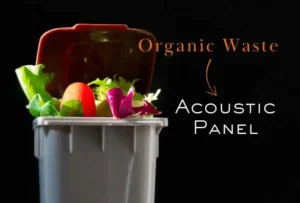
Priyanka Priyadarsini Singh believes that the best scientific solutions are the ones that solve two problems at once — and her research does exactly that. She is a Ph.D. researcher in physics, specializing in acoustics, at Veer Surendra Sai University of Technology, Odisha, where she is developing sustainable acoustic materials from biomass and agricultural waste.The problem she addresses is twofold. First, noise pollution is a growing environmental and public health concern, and conventional acoustic materials are often made from synthetic fibers and petrochemical derivatives that are energy-intensive to produce and difficult to recycle. Second, agricultural waste — crop residues, husks, shells, and fibers — is often burned or landfilled, creating its own environmental burdens. Priyanka's work connects these two challenges: she transforms agricultural waste into high-performance acoustic materials, creating value from what was previously discarded.Her research spans the entire material development pipeline — from raw biomass characterization to acoustic performance testing. She uses advanced characterization techniques including X-ray Diffraction (XRD), Scanning Electron Microscopy (SEM), and Fourier Transform Infrared Spectroscopy (FTIR) to understand the structure and properties of her materials. She employs ultrasonic processing to modify and enhance material properties, and laser speckle analysis to study surface dynamics and material behavior.With over 18 peer-reviewed publications and multiple international conference presentations, her work has been recognized by the global scientific community. The highlight of her early-career recognition came in 2024, when she received the prestigious Young Scientist Award from the Lindau Nobel Laureate Council — an honor that places her among emerging researchers from around the world and connects her to the unique community of Nobel laureates and young scientists that the Lindau Meetings represent.She has collaborated with premier Indian research institutions including DRDO, CSIR, and IITs, bringing her materials science expertise to bear on challenges with national significance. She is a lifetime member of the Acoustical Society of India and the Lindau Nobel Laureate Committee, and she actively contributes to the scientific community through peer review and editorial work.Priyanka holds certifications in advanced material simulation and laser-assisted manufacturing, and she is guided by the principles of the circular economy — the vision of an economic system where waste is eliminated, resources are kept in use, and natural systems are regenerated. She writes for the materials scientist exploring sustainable alternatives, the acoustics engineer looking for greener solutions, the student interested in the intersection of physics and environmental science, and anyone committed to the idea that scientific innovation and environmental responsibility are not in conflict — they are the same thing.Primary Beats
- Sustainable Acoustic Materials from Biomass & Agricultural Waste: Developing sound-absorbing and sound-insulating materials from renewable agricultural residues; transforming waste into value through materials science; the acoustic performance of natural fibers, husks, shells, and other biomass; circular economy approaches to noise control.
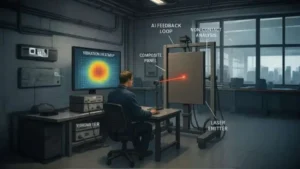
- Advanced Material Characterization (XRD, SEM, FTIR, Ultrasonic Processing, Laser Speckle): Characterizing the structure, morphology, and chemistry of sustainable acoustic materials; using X-ray diffraction to understand crystallinity and phase composition; scanning electron microscopy for microstructure analysis; FTIR for chemical bonding and functional groups; ultrasonic processing for material modification; laser speckle analysis for surface and dynamic studies.
- Acoustics & Noise Control Engineering: The physics of sound absorption, transmission, and insulation; designing acoustic materials for real-world applications; measuring and predicting acoustic performance; the role of sustainable materials in addressing noise pollution.
- Green Innovation, Circular Economy & Environmental Responsibility in Science: Applying circular economy principles to materials research; reducing the environmental footprint of acoustic materials; the philosophy of doing more with less — and doing it better; how early-career researchers can contribute to sustainability through their scientific work.