Food Systems Transformation Creates a Better Future for Global Agriculture
Food Systems Transformation Helps Build Climate-Resilient Global Agriculture

Food Systems Transformation Creates a Better Future for Global Agriculture

Plant Communication: Revolutionizing Agriculture
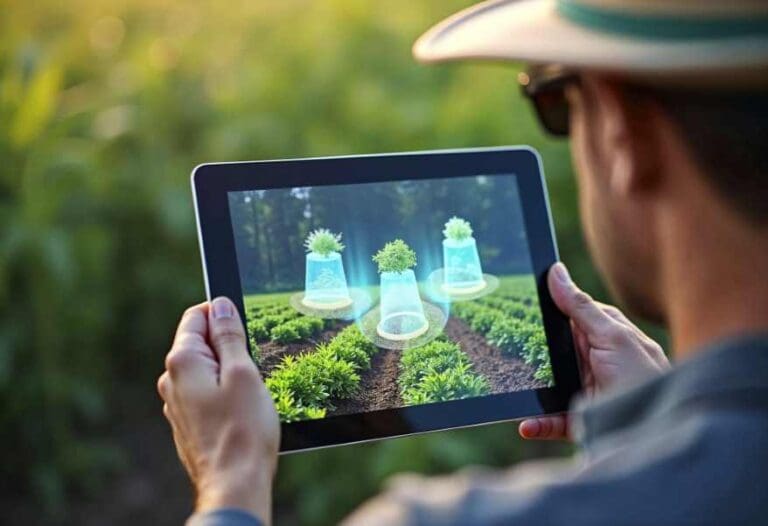
Environmentally extended input-output models in agriculture review

Sweet Potato Research Mapping for Sustainable Food Systems

Soil Organic Carbon Strategies in Semi‑Arid Agricultural Systems


Bacillus as Biocontrol Agents in Sustainable Agriculture: Mechanisms
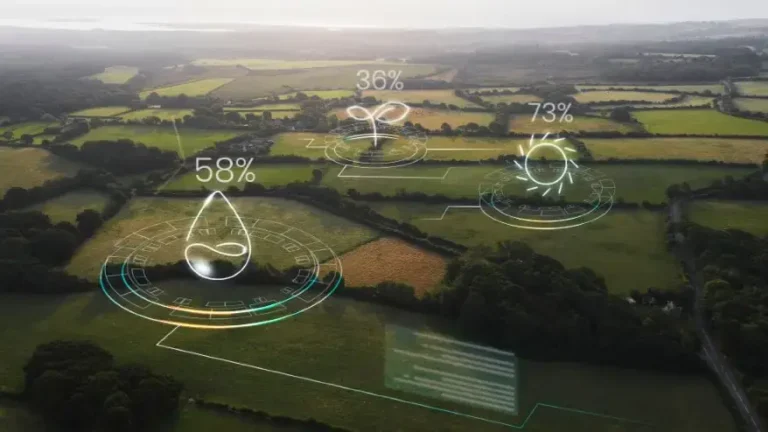
From Space to Soil: The Role of Satellite Monitoring in Sustainable Industrial Farming
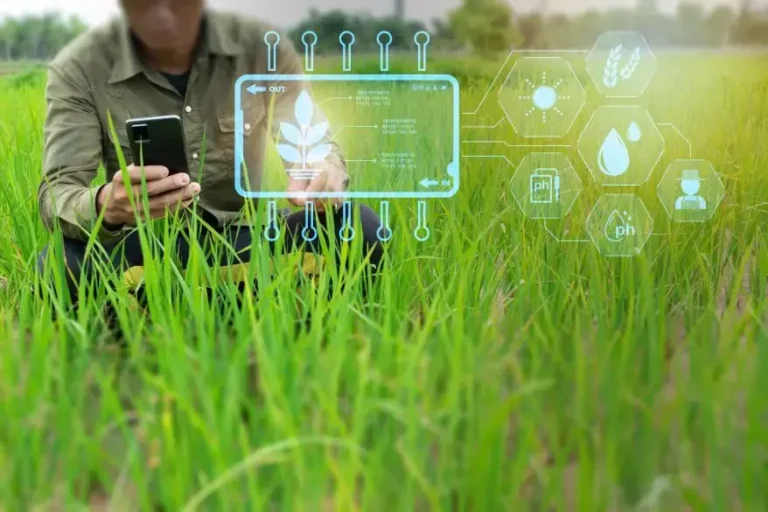
Smart Fields: Technological Role in Crop Scouting
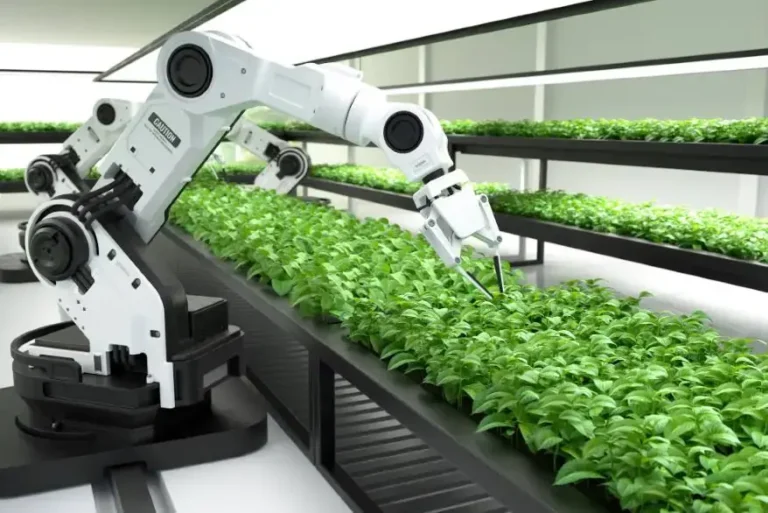
Revolutionary Touch Robot Identifies Plants with 97.7% Accuracy!
Agricultural engineering applies engineering science and technology to solve problems in agriculture, food production, and natural resource management. This multidisciplinary field combines mechanical, civil, electrical, chemical, and biological engineering principles to improve farming efficiency, enhance food security, conserve natural resources, and develop sustainable agricultural systems that can feed a growing global population.
The profession addresses challenges across the entire agricultural value chain, from crop production and livestock management to postharvest handling, food processing, and environmental protection. Agricultural engineers design machinery that plants and harvests crops, develop irrigation systems that conserve water while maximizing yields, create storage facilities that preserve grain quality, and implement precision agriculture technologies that optimize resource use while minimizing environmental impact.
Founded as a distinct profession in the early 20th century—with the American Society of Agricultural Engineers (now the American Society of Agricultural and Biological Engineers, or ASABE) established in 1907—agricultural engineering has continuously evolved to meet changing agricultural needs. Today’s agricultural engineers integrate advanced technologies including robotics, artificial intelligence, remote sensing, and data analytics to transform traditional farming into highly efficient, technology-driven operations.
Agricultural engineering encompasses several interconnected specializations, each addressing specific challenges in food production and resource management.
Power systems and machinery design focuses on developing and optimizing agricultural equipment. This includes tractors, harvesters, planters, and specialized machinery for various crops. Modern agricultural machinery incorporates GPS guidance systems, automated controls, and sensors that enable precision operations. Engineers work to improve fuel efficiency, reduce soil compaction, enhance operator safety, and develop autonomous systems capable of performing complex tasks with minimal human intervention.
Precision agriculture and digital farming leverages technology to monitor and manage field variability. Using GPS, remote sensing, variable rate technology, soil sensors, and drone imagery, farmers can apply water, fertilizer, and pesticides precisely where needed rather than uniformly across entire fields. This targeted approach reduces input costs, minimizes environmental impact, and increases yields. Agricultural engineers develop the hardware and software systems that collect, analyze, and act on agricultural data in real time.
Soil and water engineering addresses irrigation, drainage, and conservation challenges. Engineers design irrigation systems ranging from center pivot systems to sophisticated drip irrigation networks that deliver water directly to plant roots. They develop drainage systems that prevent waterlogging while protecting water quality, and create erosion control measures that preserve valuable topsoil. With agriculture consuming approximately 70 percent of global freshwater withdrawals, efficient water management represents a critical engineering challenge.
Structures and environment involves designing farm buildings, greenhouses, livestock facilities, and controlled environment agriculture systems. Engineers must ensure proper ventilation, temperature control, waste management, and animal welfare while optimizing energy efficiency. Modern livestock facilities incorporate automated feeding systems, climate control, and waste treatment technologies that maintain animal health while minimizing environmental impact.
Food and bioprocess engineering focuses on postharvest handling, processing, and preservation. Agricultural engineers develop drying systems for grain, design storage facilities that maintain quality and prevent losses, and create processing equipment for converting raw agricultural products into food. Since postharvest losses can reach 20-40 percent globally—especially in developing countries—improving storage and processing technologies offers substantial opportunities to enhance food availability without requiring additional production.
Agricultural engineering directly impacts global food systems and rural economies. In crop production, GPS-guided tractors operate with centimeter-level accuracy, reducing overlaps and gaps during planting, spraying, and harvesting. Variable rate fertilizer application systems adjust nutrient delivery based on soil conditions and crop needs, improving efficiency while reducing excess nitrogen that could contaminate groundwater.
Irrigation technology developed by agricultural engineers enables productive agriculture in arid regions while conserving water resources. Drip irrigation systems can reduce water usage by 30-50 percent compared to traditional methods while maintaining or improving yields. Smart irrigation systems use soil moisture sensors and weather data to determine optimal watering schedules automatically, preventing both under- and over-irrigation.
In postharvest operations, properly designed drying and storage systems can reduce grain losses from 50-60 percent down to 1-2 percent, according to research published by ASABE. This improvement matters enormously in developing countries where inadequate storage infrastructure leads to massive food waste. Temperature-controlled storage facilities, hermetically sealed containers, and scientifically designed warehouses preserve grain quality and prevent pest damage.
Autonomous agricultural robots represent emerging applications. These machines can identify individual plants, distinguish weeds from crops, and perform targeted interventions such as precision spraying or mechanical weeding. Some robots use lasers or targeted herbicide doses to control weeds, dramatically reducing chemical usage compared to broadcast applications.
Agricultural engineering continues evolving to address contemporary challenges in food security, climate change, and environmental sustainability. Sustainable agriculture technologies aim to maintain productivity while reducing environmental footprints. This includes developing electric or hybrid farm equipment, implementing renewable energy systems on farms, and creating circular economy approaches that convert agricultural waste into valuable products like biofuels or animal feed.
Controlled environment agriculture—including vertical farms and advanced greenhouses—applies engineering principles to create optimized growing conditions independent of external weather. These systems use LED lighting, hydroponic or aeroponic growing methods, climate control, and automated monitoring to produce food year-round in urban settings or challenging environments. While energy intensive, they can dramatically reduce water usage and eliminate pesticide needs.
Artificial intelligence and machine learning increasingly inform agricultural decisions. Computer vision systems identify plant diseases, estimate crop yields, and guide robotic harvesting. Predictive models optimize planting schedules, forecast irrigation needs, and detect equipment failures before they occur. Agricultural engineers develop the sensor networks, data platforms, and decision support systems that make precision agriculture practical at commercial scale.
Biotechnology integration represents another frontier. Agricultural engineers collaborate with plant scientists to develop equipment and protocols for handling genetically improved crops, implementing biological pest control methods, and processing novel agricultural products. This includes developing specialized machinery for new crop varieties and creating processing systems for alternative proteins and bio-based materials.
Despite technological advances, agricultural engineering faces significant obstacles. Economic constraints limit technology adoption, particularly among smallholder farmers in developing countries. Precision agriculture systems, autonomous machinery, and advanced irrigation infrastructure require substantial capital investment that many farmers cannot afford. Agricultural engineers must develop affordable, appropriate technologies that deliver value across diverse economic contexts.
Technical complexity poses adoption barriers. Modern agricultural systems integrate multiple technologies requiring technical expertise to operate and maintain. Farmers need training and ongoing support to effectively use precision agriculture tools, interpret sensor data, and troubleshoot equipment problems. Rural areas may lack the technical infrastructure—including reliable internet connectivity—needed for data-intensive precision agriculture.
Environmental concerns extend beyond conservation to include unintended consequences of agricultural intensification. While technology can reduce some environmental impacts, mechanized agriculture also contributes to soil compaction, fossil fuel consumption, and electronic waste. Agricultural engineers must consider full life-cycle impacts when developing new technologies.
Scale differences create challenges. Technologies proven effective on large commercial farms may not translate well to small-scale or subsistence agriculture dominant in many developing regions. Agricultural engineers must adapt solutions to diverse farming systems, crops, climates, and socioeconomic conditions rather than assuming one-size-fits-all approaches.
Agricultural engineering fundamentally enables modern food systems. Without engineered machinery, irrigation systems, and storage facilities, contemporary agricultural productivity would be impossible. The field’s innovations allow fewer farmers to feed more people than at any point in human history, freeing labor for other productive activities while improving food security.
Beyond food production, agricultural engineering contributes to rural development, natural resource conservation, and climate change mitigation. Efficient irrigation conserves increasingly scarce freshwater resources. Precision agriculture reduces fertilizer and pesticide runoff that degrades water quality. Renewable energy systems on farms contribute to decarbonization efforts. Processing technologies create value-added products that strengthen rural economies.
The profession addresses one of humanity’s most fundamental challenges: sustainably feeding a global population projected to reach nearly 10 billion by 2050. Agricultural engineers develop the technologies, systems, and practices that can increase food production while preserving natural resources for future generations.
ENTECH brings students and STEM enthusiasts comprehensive coverage of agricultural engineering innovations, from autonomous farm machinery to precision irrigation systems and sustainable food processing technologies. Our articles connect agricultural engineering with broader STEM disciplines including robotics, environmental science, computer science, data analytics, and materials engineering. Whether you’re interested in how GPS guides tractors with centimeter accuracy, how sensors optimize irrigation, or how engineers are developing the smart farms of tomorrow, ENTECH offers technically accurate content that makes complex agricultural technologies accessible and engaging for future engineers and innovators.