Plants not only detect drought, viruses, or pests but also it act before any damage happens.
Plant Communication: Revolutionizing Agriculture

Imagine a world where farmers can “talk” to plants by understanding The hidden language of plants. Scientists have discovered that plants communicate through various signals. Understanding these signals could revolutionize agriculture. Surely, there are the potential benefits for crop yields. Plants not only detect drought, viruses, or pests but also it act before any damage happens. New technology helps decode plant communication in crops. Studies show that plants release volatile organic compounds (VOCs) as distress signals.
Key Takeaways
- Plants release gases when stressed.
- Satellites read these signals quickly.
- Plants receive and responds it through various types of signals
- Plant communication in crops plays a key role in crop yields.
- In effect, this saves many crops.
Types of Plant Signals
Chemical Signals
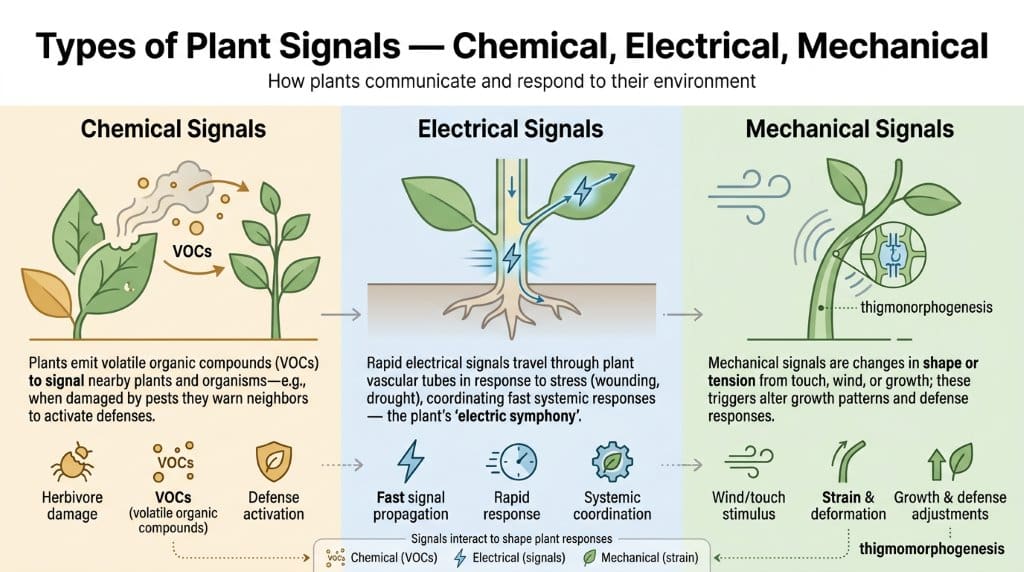
Plants send messages using chemical signals called volatile organic compounds (VOCs). These VOCs help plants share details about their surroundings. For example, a plant hit by a pest gives off some VOCs. Nearby plants detect these signals and turn on their defenses. This chemical talk lets plants fight pests better and boosts their health.
Electrical Signals
Plants use electrical signals to talk to each other. These signals move through the plant’s tubes. When a plant meets stress, like dry soil or cuts, it makes electrical signals. The signals travel fast. They tell other parts of the plant to act. Scientists name this the “Electric symphony” of plants. Experts keep studying how plants get these signals to know more about them.
Mechanical Signals
Mechanical signals are changes in a plant’s shape or size. Wind or touch strains a plant, and it creates these signals. The signals cause many reactions, such as shifts in growth and the launch of Défense. Knowing these signals shows how plants adjust to their surroundings.
How Plants Perceive and Respond to Signals
Signal Reception Mechanisms of Plant Communication in Crops
Plants have special sensors. They spot chemical, electrical, and mechanical signals. In fact, these sensors sit on plant cell surfaces. When a signal hits a sensor, it starts a chain of cell reactions. This helps the plant notice and understand the new information.
Signal Transduction Pathways
Once a plant gets a signal, it alters the signal. Signal change paths use a series of molecule steps. These paths boost the first signal and send it to other plant parts. This complex web helps the plant react well to many triggers. Knowing these paths can improve farming methods.
Response Mechanisms
Plants respond to signals in many ways. For example, when chemicals signal that bugs are eating them, plants create Défense chemicals. When electrical signals signal dry conditions, plants shut small leaf holes to save water. These responses help plants survive and grow in hard places.
The Role of Plant Communication in Crop Yields
Enhancing Growth and Development
At first, plants communicate using special chemicals. For the most part, they release VOCs. These act as invisible warning signs. As an illustration, sick plants emit distinct smells. Electronic noses detect these subtle changes. As a result, farmers spot insect attacks early. By and large, this prevents massive crop loss. What’s more, healthy plants absorb more nitrogen. Good nutrition creates larger plant leaves. In due time, this boosts grain sizes. All things considered, plant chatter increases harvests. Nature and tech work very well together. In fact, this supports healthy food.

Optimizing Nutrient Uptake
Plants send chemical signals to each other to get nutrients better. These signals let plants find out if nutrients are in the soil. Plants near each other share facts about spots with lots of nutrients. This secret way plants talk helps them take in nutrients well. Farmers can use this idea to grow more crops. Understanding plant communication in crops can lead to better fertilization practices. This reduces the need for excessive fertilizer use.
Improving Photosynthesis Efficiency
If you know the plant communication in crops then you can understand how well they make food from sunlight. Chemicals help a lot in this. Nearby plants tell each other about the best light spots. This lets plants turn their leaves to catch more light. Better food-making means faster growth and more crops. Farmers can use this to space plants right. In the end, crops get enough sun.
Stress Resistance and Resilience of Agricultural Plant
Crops face extreme weather and pests. Space tools help build strong resilience against these harms. To explain, sensors spot water limits and heat damage early. As a result, farmers fix problems before plants die. Smart systems read hidden warning signs from plant leaves. In fact, exact data creates a powerful stress defense. All in all, technology keeps our global food supply safe. New methods protect vital agriculture for our future generations. In short, healthy soil sustains strong and reliable crop growth. With this in mind, farms survive very harsh natural conditions.

Drought Tolerance
Plants share stress signals in many ways. A plant sends out electrical signals during drought. These signals warn nearby plants to save water. This sharing boosts drought resistance in the group. Farmers can track these signals with new sensors. This helps them water crops on time to stop harm. Knowing how plants share can cut water use on farms.
Pest and Disease Resistance
Plants share warnings about bugs and sickness using chemical signs. Gases called VOCs send out cries for help. Plants nearby pick up these gases and turn on their defences. This hidden talk lets plants fight back against bugs and sickness. Farmers can use this idea to make natural ways to control pests. This cuts down on using chemical sprays. Good ways for plants to talk can guard crops and keep harvests healthy.
Practical Applications of Plant Communication in Agriculture
Monitoring Plant Health using Plant Communication Data
Farmers use space tech daily. Satellites observe large fields from high above. To explain, they track early signs of crop stress. As a result, growers stop harmful disease outbreaks quickly. Cameras measure evapotranspiration to check plant water levels. In fact, this prevents severe plant dehydration. What’s more, smart sensors map soil moisture deeply. All things considered, these tools save massive crop yields. In short, technology guarantees a safe global food supply. Then again, drones also fly to spot bug damage. In conclusion, farmers protect nature using detailed data.
To list, here are key plant monitoring uses:
- Tools measure chlorophyll to assess overall leaf health.
- By all means, drones spot dangerous pest invasions.
- Thermal cameras find areas needing urgent irrigation.
- Farmers apply exact fertilizer using detailed soil maps
Using Sensors and Technology to Understand Plant Communication in Crops
Farmers can now use advanced sensors to check plant health. These sensors pick up electrical signals that plants send when stressed. Vivent, a Swiss company, created tech that measures these signals. The tech lets farmers spot problems like drought or pests soon. Spotting issues early helps them act fast. This stops damage to crops.
Hortiya, a German company, uses large language models (LLMs) to figure out plant actions. These models work like AI tools such as ChatGPT. They look at data from sensors to read plant signals. This reading gives key facts about plant health. Farmers can then choose smart steps to boost crop output.
Data Analysis and Interpretation
Data analysis helps us understand how plants communicate. Sensors collect lots of data from plants. This data includes electrical signals, VOCs, and other stress signs. Furthermore, advanced algorithms analyse this data to identify patterns and trends. Consequently, these patterns help farmers understand how plants respond to different stressors.
Reading this data needs skill in farming and tech. Farmers can work with scientists to understand this plant code. This teamwork gives a true reading of plant signs. A true reading helps with better ways to handle crops. Better crop handling brings more output and less use of supplies.
Implementing Plant Communication-Based Strategies
Precision Agriculture
Precision farming uses how plants talk to improve growing crops. Farmers check data from sensors to decide exactly when to water, add fertilizer, or spray pesticides. They learn from plant signs to cut waste of supplies. This way, plants get just what they need.
Precision farming also tracks smells plants give off. These smells warn of problems like bugs. Farmers use this to fight pests in exact spots. Such steps cut down on chemical sprays. This leads to stronger plants and a cleaner world
Sustainable Farming Practices Based on Plant Communication in Crops
Reading plant messages helps our modern farming improve. Farmers watch these signals to guide their daily work. As a result, they grow more food using fewer supplies. Plants share hidden messages to help each other survive. To explain, roots send chemicals to share vital soil data. All in all, watching these signs stops major crop threats. This knowledge builds strong agriculture that lasts for years. Nature ensures a greener future.
Key points about plant communication. These methods protect our environment and boost crop yields
- New farm tools read these needs very quickly.
- Take the case of electrical signals showing urgent water needs.
- Farmers add water fast to stop any waste
- Roots share chemicals to help nearby plants eat.
- Root sharing creates much better soil.
STEM Careers in Agricultural Plant Communication
Here are detailed insights into these STEM careers. First, let us explore the specific roles. Then, we will look at the future scope.
Synthetic Biologists
Synthetic biologists do great work now. They change plant DNA. They make crops send clear messages about needs. For example, they add parts to plants that make them glow. Satellites spot the glow fast. Farmers see when plants have problems. They fix issues before sickness spreads. They also change plants to take in certain wastes. Synthetic biology makes strong food sources. These experts make living sensors for the environment. They change how we grow food.
Chemical Engineers
Chemical engineers make new wearable sensors for plants. They build tiny silk needles. They add special chemical films. These find plant dryness early. They check pH shifts in plant parts. Farmers get drought alerts soon. They make bendy electronic patches. They stick patches on leaves. The patches watch plant health all the time. They spot plant chemicals fast. Their tools save crops from big harm.
Machine Learning Experts
Machine learning experts help a lot. They study plant sensor data. They teach smart computer programs. The programs handle large data sets. Thereafter, they read hidden chemical signs from plants. For example, they name certain plant chemicals. They spot plant stress right away. Models guess sickness before signs show. They use methods like Random Forest. They tell good plants from bad ones. Thus, their programs help make exact farm choices
Agricultural Technologists
Agricultural technologists build smart farm systems now. They put out sun-powered sensors in fields worldwide. They set sensors in far-off farms. The systems get key weather and soil info. They use small gas checkers. They test plant gases quick in fields. This builds exact farming setups. They make auto data boxes. Farmers check crops without harm. Their systems help use farm stuff well. They keep farming green worldwide.
Plant Electrophysiologists
Plant electrophysiologists look at hidden electric plant signs. They check
- bioelectric cell work.
- watch quick replies to bug attacks.
- note plant electric bursts.
- follow slow wave changes. find the hidden plant talk code.
- use tiny electrodes for exact checks.
- see how plants feel hurt.
Future Scope in Understanding Plant Communication in Crops
These experts know stress paths inside plants. Their work boosts crop strength worldwide.
Real-Time Crop Monitoring
Real-time crop monitoring is our near future. Soon, farmers will check plant health easily. First, wearable sensors will give steady data. Next, these tools will spot hidden plant problems. Also, this tech stops diseases early. For example, sensors find bad drought fast. They spot problems days before signs show. As a result, farmers act right on time. Also, special patches will check heat and moisture. In the end, this cuts big crop losses.
Reduced Chemical Use
Reducing chemical use is a big goal for farms. At present, farmers use too much chemicals. In fact, smart plants will show exact spots for pesticides. Next, sensors will find areas that need fertilizer. Also, this ends broad, random spraying. As a result, farms get greener and cleaner. Also, exact use saves farmers money. Then, poison flow to rivers drops a lot. In the end, tech builds a balanced farm system. So, the world gets healthier.
Living Plant Sensors
Living plant sensors bring great gains for the environment. First, scientists change plants to find bad pollutants. Next, these plants will detect air viruses. Also, they show clear signs of toxins. For example, leaves may turn color fast. As a result, plants guard human spaces. Also, they work as ongoing check points. Then, they offer natural tracking. In the end, this links lab biology to daily farming. So, plants turn into green watchers.
Advanced Digital Agriculture
Advanced digital farming changes our food systems. First, future farms will rely on cloud data. Next, programs will study farm results. Also, this change helps secure world food. But we must guard farmer data well. Presently, big companies use many data tools. As a result, farmers fear for privacy and control. Also, leaders must make firm data rules. Actually, a fair digital farming helps small growers. So, trust in tech matters for wins ahead.
Additionally, to stay updated with the latest developments in STEM research, visit ENTECH Online. Basically, this is our digital magazine for science, technology, engineering, and mathematics. Furthermore, at ENTECH Online, you’ll find a wealth of information.
References
- G, U. (2025). The global food system and its environmental impact: A call for sustainable transformation. Food Science & Nutrition Technology, 10(1), 14. https://doi.org/10.23880/fsnt-16000356
- Kahraman, A., et al. (2023). Evaluation of dry bean farming in konya region and its importance for sustainable agriculture. Selcuk Journal of Agricultural and Food Sciences. https://doi.org/10.15316/sjafs.2023.027
Frequently Asked Questions on Plant Communication in Crops
How do plants communicate with each other?
Plants use a “hidden language” of chemical signals (Volatile Organic Compounds), electrical impulses through their vascular systems, and even mechanical signals like touch or wind to share information.
What are VOCs in agriculture?
Volatile Organic Compounds (VOCs) are airborne chemicals plants release when stressed by pests or drought. In fact, these signals warn neighboring plants to activate their own natural defense mechanisms.
How does understanding plant signals help farmers?
By decoding these signals, farmers can detect crop stress (like thirst or disease) days before physical signs appear. This allows for precision agriculture, reducing the need for excessive water and pesticides.
What technology is used to “talk” to plants?
Companies like Vivent and Hortiya use advanced sensors and AI (including Large Language Models) to monitor and interpret the electrical and chemical data emitted by crops in real-time.
Can plant communication in crops improve crop yields?
Yes. Leveraging plant signals helps optimize nutrient uptake and photosynthesis efficiency. As a result, it leads to more resilient crops that can better survive environmental stressors like drought and pest attacks.
- Author
- Latest Posts

Ashwini Darade-Kakad
Transforming ideas into impactful digital stories through strategy, creativity, and data-driven insights.
I am a digital marketer and author currently working at ENTECH Online Magazine. With a background in Computer Science and an MBA in HR from Pune University, I understand both technology and how to promote ideas and products effectively. My interest in digital growth and meaningful content guides my work. I use planning, creativity, and information to turn ideas into digital stories that reach people.
Through my experience at Growone Enterprises and Credence Research Europe LTD, I have worked on practical digital marketing tasks such as keyword research, improving websites for search engines, managing WordPress content, and creating online content strategies. I have also written and optimized articles on platforms like Medium and Substack to improve reach and engagement.
In my current role at, I write articles that are simple, clear, and easy to understand. I research topics in depth to explain complex digital and technical concepts in a way that is useful for a wide audience.
I continuously focus on learning and improving my skills. Certifications like Google’s Digital Marketing & E-Commerce course help me stay updated with the latest trends in the digital space.
As a writer, I focus on both content quality and search visibility. I enjoy simplifying complex ideas and combining creativity with structured thinking to deliver impactful content. Outside of work, I explore new marketing trends and continue developing my writing skills.