This Plastic-Boron Mix Blocks Deadly Neutrons — and It Could Change Nuclear Safety Forever
Fast neutrons are among the trickiest to stop. They zoom through most materials easily.
This Plastic-Boron Mix Blocks Deadly Neutrons — and It Could Change Nuclear Safety Forever
Tiny Nuclear Battery Promises Decades of Uninterrupted Power
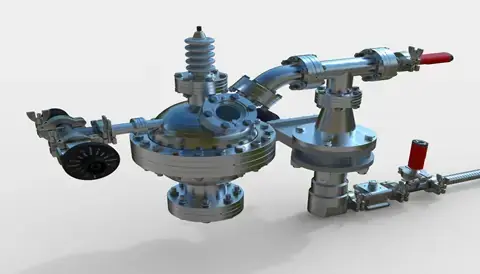
Nuclear Fusion Reactor Built by a 17 year-old: Cesare Mencarini
The ITER’s Fusion Project Hits a Milestone: Long Road Ahead
The Rise of HALEU: Fueling the Future of Nuclear Power

World’s Largest Solar Power Plant
Terrapower Reactor: Next-Generation Nuclear Technology
The Dual Nature of Fusion Reactors: Clean Energy vs. Nuclear Weapon Risks
Why Choose Nuclear Engineering? How to Become a Professional
Nuclear science has transformed the way we generate energy, understand matter and develop technologies for healthcare, industry and scientific research. From electricity generation to medical imaging and cancer treatment, nuclear technology has applications across several important fields.
Nuclear Engineering is the branch of engineering that applies principles of nuclear physics, radiation science, thermodynamics, materials science and engineering to the design, operation and safety of nuclear systems. It focuses on understanding nuclear reactions, developing energy systems, managing radiation and ensuring that nuclear technologies are used responsibly.
Nuclear engineers work on technologies that require specialised scientific knowledge and careful safety management. Their work contributes to energy production, medical applications, industrial processes and research.
At ENTECH STEM Magazine, this category introduces students and STEM enthusiasts to the science, engineering principles and career opportunities associated with nuclear technology.
Nuclear Engineering applies engineering and scientific principles to systems involving atomic nuclei, nuclear reactions and ionising radiation.
One of its major areas is nuclear energy, where controlled nuclear reactions are used to generate heat and produce electricity. However, the discipline extends beyond power generation. It also includes radiation measurement, nuclear medicine, radiation protection, nuclear materials and radioactive waste management.
Nuclear engineers study how nuclear systems behave, how radiation interacts with matter and how specialised equipment can operate safely. Their work combines theoretical knowledge, computer modelling, laboratory research and engineering design.
Nuclear physics provides the scientific foundation for Nuclear Engineering. It studies atomic nuclei, nuclear structure, radioactivity and the interactions that occur during nuclear reactions.
Students explore concepts such as radioactive decay, nuclear fission, nuclear fusion and radiation interactions with matter. These principles help engineers understand how nuclear technologies work and how radiation can be measured and managed.
Nuclear reactor engineering focuses on the systems used to produce controlled nuclear energy. Engineers study reactor physics, heat transfer, fluid flow, reactor materials, instrumentation and safety systems.
Different reactor designs use different technologies and engineering approaches. Understanding their operating principles helps engineers evaluate performance, reliability and safety.
Nuclear power plants use energy released through controlled nuclear reactions to produce heat. This heat is used to generate steam, which drives turbines connected to electrical generators.
Nuclear engineers contribute to the design, operation, monitoring and maintenance of nuclear power systems. They also study how these facilities can operate reliably while meeting strict technical and safety requirements.
Materials used in nuclear systems must meet specialised performance requirements. They may experience high temperatures, radiation exposure, pressure and demanding operating conditions.
Nuclear materials engineering studies the properties and behaviour of these materials. Nuclear fuel technology examines the materials and processes involved in preparing and managing fuel for nuclear energy systems.
This area connects Nuclear Engineering with Metallurgy and Materials Engineering.
Radiation cannot always be detected using ordinary human senses. Specialised instruments are therefore used to measure and analyse it.
Radiation detection and measurement involve technologies that identify radiation, estimate its intensity and help assess exposure. These methods are important in research laboratories, medical facilities, industrial applications and nuclear installations.
Radiation protection focuses on understanding radiation exposure and applying appropriate measures to protect people and the environment.
Nuclear safety involves engineering systems, operating procedures, risk assessment and regulatory requirements designed to prevent accidents and manage potential hazards.
Safety is an essential part of nuclear engineering education and professional practice. Engineers must consider reliability, monitoring, emergency preparedness and responsible management throughout the life of a nuclear facility.
Some nuclear technologies produce radioactive waste that requires specialised handling and long-term management.
Radioactive waste management examines how waste is characterised, treated, stored and disposed of according to applicable safety and regulatory requirements. Engineers also study methods to reduce waste and improve the management of nuclear materials.
Nuclear facilities use specialised instruments and control systems to monitor operating conditions and support safe operation.
This area combines sensors, measurement technologies, automation, electronics and control engineering. It connects Nuclear Engineering with Instrumentation and Control Engineering and Electrical Engineering.
Nuclear technology supports several important areas beyond electricity generation.
Nuclear power plants provide electricity through controlled nuclear energy systems. Nuclear engineers work on reactor technology, plant systems, performance monitoring and safety.
Nuclear techniques are used in medical imaging, diagnosis and certain treatments. Radioisotopes and radiation-based technologies support procedures such as diagnostic imaging and targeted medical treatments.
Nuclear engineers contribute to the development and maintenance of specialised equipment and radiation-related systems used in healthcare.
Radiation technologies support industrial inspection, material testing, measurement and process monitoring. For example, industrial radiography can help examine components without damaging them.
Nuclear techniques have applications in agricultural research, crop improvement, pest management and food irradiation. These applications are developed and used under relevant scientific and safety standards.
Nuclear science contributes to research in physics, chemistry, materials science and other disciplines. Specialised research facilities use nuclear techniques to investigate matter and study scientific phenomena.
Research and technological development continue to create new opportunities in Nuclear Engineering.
Students interested in Nuclear Engineering can explore undergraduate and postgraduate programmes in nuclear engineering, nuclear technology, nuclear science and related disciplines.
The field combines mathematics, physics, chemistry, thermodynamics, fluid mechanics, materials science and computer-based analysis. Students also study nuclear systems, radiation measurement, safety principles and engineering applications.
Career opportunities may include:
Professionals may work in energy organisations, research institutions, healthcare technology, industrial testing, government agencies and nuclear regulatory environments. Some roles require specialised postgraduate education, professional training or regulatory qualifications.
Nuclear Engineering brings together physics, mathematics, materials science and advanced engineering to address some of the most complex technological challenges.
From electricity generation and medical applications to radiation research and advanced energy systems, this discipline offers a wide range of opportunities for scientific exploration and innovation.
Explore ENTECH STEM Magazine for educational articles, engineering concepts, emerging technologies and career insights related to Nuclear Engineering. Discover how nuclear science is applied in modern technology and how engineers contribute to its safe and responsible development.