Blockchain Beyond Cryptocurrency: Real-World Applications in 2026
Blockchain Technology Powering Healthcare, Finance, and Supply Chains

Blockchain Beyond Cryptocurrency: Real-World Applications in 2026
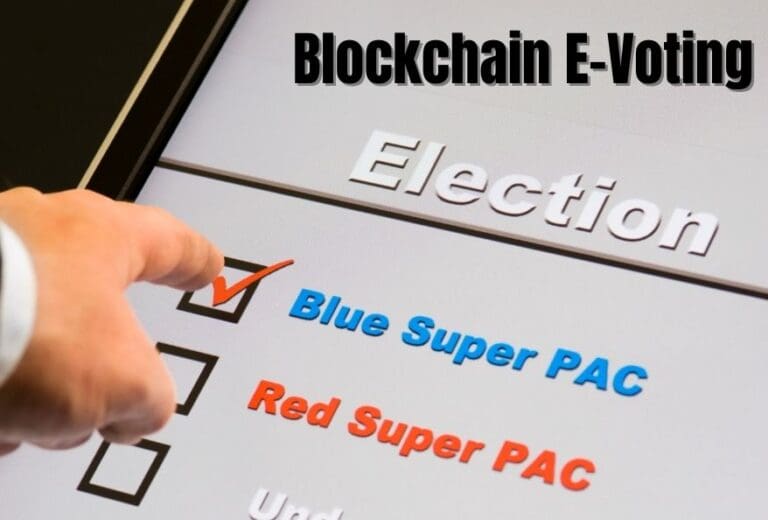
Blockchain E-Voting: The Future of Elections

Career Opportunities in Blockchain: Jobs and Salary Insights

The Future of Blockchain: Trends and Innovations

Subjects and Skills Needed to Build a Career in Blockchain in Blockchain

Complete Introduction to Blockchain Technology: A Beginner’s Guide

The Regulatory Framework for Distributed Ledger Technologies
Blockchain is a distributed ledger technology that allows information and transactions to be recorded across a network of computers. It uses cryptographic techniques and consensus mechanisms to help participants maintain a shared record without relying entirely on a central authority.
The technology first gained widespread attention through cryptocurrencies. However, its applications now extend to areas such as digital identity, supply chain management, data management, financial technology, and decentralised applications.
Blockchain is also closely associated with Web 3.0, commonly referred to as Web3. This concept describes a vision of a more decentralised internet in which users have greater control over their digital identities, data, and online interactions. Blockchain can provide some of the infrastructure needed to support this vision.
At ENTECH STEM Magazine, this category explores Blockchain, Web 3.0, distributed systems, digital infrastructure, and the technologies influencing the future of the internet.
Blockchain is a type of distributed ledger in which information is organised into groups called blocks. Each block contains records and a cryptographic reference to the previous block, creating a connected sequence.
Copies of the ledger are maintained across participating computers, known as nodes. Network participants follow established validation and consensus rules to agree on which records should be added.
Several technologies work together to support blockchain systems:
Together, these components support shared digital records that are designed to be tamper-evident and resistant to unauthorised changes.
Distributed Ledger Technology (DLT) refers to systems in which records are shared and maintained across multiple network participants.
Blockchain is one type of DLT. However, not every distributed ledger uses a blockchain structure.
These systems can support applications that require shared records, transaction tracking, and coordination between organisations. Their usefulness depends on factors such as network design, governance, performance, and security requirements.
Smart contracts are computer programs deployed on supported blockchain networks. They execute predefined instructions when specified conditions are met.
For example, a smart contract can manage the rules of a digital agreement or update records when a valid transaction occurs.
Smart contracts can support decentralised applications and automated processes. However, their execution depends on the accuracy of their code and the reliability of the information supplied to them.
Cryptography helps protect blockchain transactions and verify digital information. Hash functions, digital signatures, and public-key cryptography are among the techniques used in blockchain systems.
Consensus mechanisms allow network participants to agree on the state of a shared ledger. Different networks use different approaches, including Proof of Work and Proof of Stake.
The choice of mechanism can influence a network’s security model, performance, energy requirements, and participation structure.
Blockchain networks can be designed with different access and participation models.
Public blockchains allow participants to access and interact with the network according to its protocol rules.
Private blockchains restrict participation to authorised users or organisations.
Consortium blockchains are governed by a group of organisations that share responsibility for operating the network.
Each model has different considerations involving transparency, governance, access control, privacy, and performance.
Web 3.0, often written as Web3, describes a vision for a more decentralised and user-centric internet.
The traditional web has evolved through several broad stages:
Blockchain is an important technology in many Web3 projects. It can support digital ownership, shared transaction records, and decentralised application infrastructure.
However, Web3 is broader than Blockchain. Its development also involves technologies such as peer-to-peer networks, cryptography, decentralised storage, and digital identity systems.
Decentralised applications, commonly called dApps, are applications that use decentralised infrastructure or blockchain-based smart contracts for some of their functions.
Unlike conventional applications that depend entirely on centralised servers, dApps may distribute parts of their data management or execution across a network.
They can be explored in areas such as digital identity, online communities, digital asset management, and decentralised services.
Decentralised identity systems aim to give individuals greater control over how their identity information is managed and shared.
These approaches can involve decentralised identifiers and verifiable credentials. They allow users to present selected information to services without necessarily relying on a single identity provider.
However, the level of privacy and control depends on the system’s design and implementation.
A Decentralised Autonomous Organisation, or DAO, is an organisation that uses blockchain-based systems and programmed rules to coordinate activities and decision-making.
Depending on its design, a DAO may allow members to participate in proposals, voting, and resource allocation.
These systems introduce new questions about governance, accountability, participation, and legal recognition.
Tokenisation involves representing assets, rights, or other forms of value through digital tokens.
Blockchain networks can maintain records of token ownership and transfers. This approach is explored in areas such as digital collectibles, asset management, and the representation of certain real-world assets.
However, owning a digital token does not automatically establish legal ownership of the physical asset or intellectual property it represents.
Decentralised storage systems distribute data across multiple computers rather than depending entirely on a single storage provider.
Peer-to-peer networks allow connected participants to exchange information directly.
These technologies can contribute to decentralised internet infrastructure and may work alongside blockchain networks in Web3 applications.
Blockchain and related decentralised technologies have potential applications across several industries.
Supply chain management: Shared digital records can help organisations track products, record transactions, and improve visibility across supply chains.
Digital identity: Decentralised identity technologies can support systems that allow users to manage and present verifiable digital credentials.
Healthcare data management: Blockchain-based systems can be explored for maintaining shared records and tracking data-related activities. However, privacy, access control, and regulatory requirements remain essential.
Financial technology: Distributed ledgers and smart contracts support research into digital payments, asset representation, and other financial applications.
Education: Digital credentials and verification systems can help institutions issue and validate academic records.
Digital content and intellectual property: Blockchain-based records can support experiments involving content ownership, licensing, and digital asset management.
These applications are still evolving. Their suitability depends on technical requirements, costs, governance, privacy, and the availability of more practical alternatives.
Blockchain connects with several other technology areas, but each has a distinct role.
These technologies may complement one another. For example, blockchain can provide shared transaction records, IoT devices can generate data, and cloud platforms can provide supporting computing infrastructure.
Blockchain and Web 3.0 offer new approaches to digital infrastructure, but their adoption involves important challenges.
Scalability: Some blockchain networks face limitations in transaction capacity and processing speed. Researchers are exploring different network architectures and scaling approaches.
Energy consumption: Energy requirements vary significantly between consensus mechanisms. Some systems require substantial computational resources, while others use alternative approaches.
Security: Blockchain networks and their applications can face vulnerabilities involving smart contracts, software, cryptographic implementations, and user interfaces.
Privacy: Public blockchain records can create challenges when transactions or associated information are visible to network participants. Privacy-preserving technologies continue to be an important research area.
Interoperability: Different blockchain networks may use incompatible protocols and standards. Improving communication between systems remains an important technical challenge.
Regulation and governance: Questions involving digital ownership, data protection, accountability, and legal responsibility continue to influence the development of decentralised technologies.
Future research may focus on improved scalability, privacy-preserving systems, interoperability, decentralised identity, and more efficient network architectures.
Blockchain and Web 3.0 demonstrate how cryptography, distributed computing, and decentralised networks can influence the way digital information and online services are managed.
These technologies create opportunities for students interested in computer science, cybersecurity, financial technology, software engineering, and digital infrastructure.
Explore ENTECH STEM Magazine for articles on Blockchain, Web 3.0, smart contracts, decentralised applications, distributed ledger technology, and emerging innovations shaping the future of the internet.