Blockchain Technology Powering Healthcare, Finance, and Supply Chains
Blockchain Beyond Cryptocurrency: Real-World Applications in 2026
Blockchain applications are not just for cryptocurrency anymore. Applications in the real world will emerge by 2026. First, blockchain is used to track goods in supply chains. For example, companies track food from farms to stores. Keeps food fresh and safe to eat. Then, healthcare uses blockchain to store patient records. Doctors share data securely and quickly. This time is saved, and errors are avoided. Governments are also using blockchain to vote. Citizens vote in their homes. The system tallies all the votes, and it does not cheat. This ensures fair and transparent elections. Artists also use blockchain to prove ownership of their art. They sell digital art directly to buyers. This removes the intermediaries and means more money for artists. Schools are also issuing diplomas using blockchain. Employers verify credentials quickly.
Key Takeaways
- The first applications of blockchain were for the tracking of goods. For example, companies track food from farms to stores. This keeps food fresh and safe for all to enjoy.
- Healthcare, in contrast, uses blockchain to store patient records. In fact, doctors can share data fast and securely. It saves valuable time and avoids errors.
- Governments also use blockchain for secure voting. The citizens can vote from home. This means that every vote is counted fairly and there is no cheating.
- Artists also use blockchain to prove ownership of their work. They sell digital art directly to buyers. This removes the intermediaries and gives artists more control and more money.
- Schools are also looking at blockchain to issue digital diplomas. Easy, fast credential verification for employers. This is why fake degrees don’t cause issues.
- Finally, banks use blockchain to accelerate payments. Money crosses borders in seconds. For instance, people can pay bills or send cash to family without waiting long.
- To summarize, a blockchain powers a lot more than just coins. It builds trust, cuts waste, and makes life easier for all of us.
Why Blockchain Matters in 2026
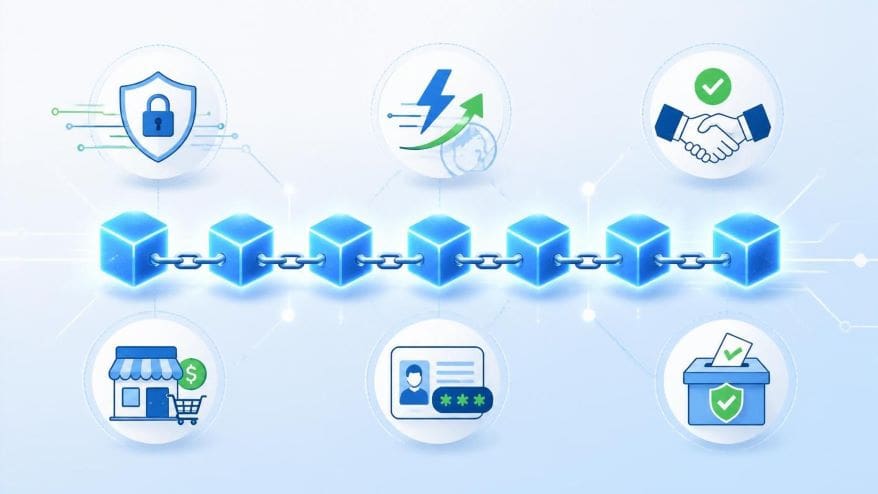
The applications of blockchain matter in 2026 for many simple reasons. First, it protects your data and privacy. For example, you are the only one who can share your personal information when requested. This feature will stop hackers from stealing your blockchain. Blockchain speeds up transactions and reduces transaction costs. You can actually send money to someone across the world within seconds. No banks, no delays to get in your way. Moreover, blockchain builds trust between people. For example, when you buy something, the system logs every single step. You see the same facts that the seller sees. This prevents arguments and cheating.
Blockchain in Healthcare Data Management
Blockchain can help manage healthcare data in smart and simple ways. For a start, it keeps patients safe and private. For example, only you and your doctor can see your health information. Hackers can’t edit or change it. Now, blockchain applications make it easy for doctors to share data. In fact, when you go to a new hospital, they can pull up your records quickly. This saves time and prevents repeat testing. And blockchain prevents medical errors. The system will keep your allergy list and medication history accurate and up to date. This will help the doctor to treat you correctly every time.
Patients also control their data. You decide who can see your records and for how long. It gives you more control over your health. And blockchain records the medicine from the factory to the pharmacy. For example, you can make sure your pills are real and safe. This prevents you from getting fake drugs. In the end, blockchain speeds up insurance claims. Your health records can only be submitted once. Quicker system checks pay you. That means less red tape, less waiting.
To summarize, by 2026, blockchain will make healthcare safer, faster, and fairer for patients and doctors alike.
Cross-Border Payments and Financial Services

In 2026, cross-border payments and financial services are changing rapidly. First, it’s easier to send money to another country. You can send money to family abroad in seconds. No banks and no long waiting times slow you down. Next, fees are less than before. In fact, you can keep more of your money because companies charge less. This helps people get more support for their loved ones.
Moreover, payments are protected and transparent through blockchain applications. Every transaction is logged. You and the receiver see the same information. This prevents errors and cheating. And small businesses are benefiting, too. For example, a shop in one country can quickly pay a supplier in another country. There is no need to wait days for bank approval. It helps businesses grow and trade more freely.
And even people without bank accounts can join the system. They send and receive money using simple apps on their phones. This brings financial services to more people. Finally, companies use intelligent contracts to automate payments. For example, a worker in another country is paid as soon as a task is completed—no need to remind or approve.
To summarize, cross-border payments and financial services are faster, cheaper, and fairer for everyone in 2026
Blockchain for Government and Public Services
One of the applications of blockchain in 2026 is to enhance the functioning of governments and public services. First, it makes voting secure and fair. For example, citizens can vote from home with a simple app. The system records every vote, and no one can interfere with or delete it. It stops cheating and builds confidence in elections.
Then, blockchain makes public records safe and easy to find. For example, a secure digital ledger stores birth certificates, marriage licenses, and land titles. Individuals can quickly access their records without waiting in line at a government office. It saves a lot of time and paperwork. In addition, blockchain applications help distribute government benefits fairly. For instance, money for food or housing goes directly to the right people. Nobody can steal or block these funds. This means aid reaches the people who need it most.
Governments also use blockchain to monitor public spending. Taxpayers know where their money is spent. This gives budgets clarity and honesty. In fact, it cuts waste and corruption at the root. Blockchain also simplifies registering a business. For example, a new company can register online in minutes. The system checks all the data and approves it quickly. This allows entrepreneurs to get to work faster.
Lastly, all citizens are secured by digital IDs on the blockchain. People reveal who they are without revealing private things. It helps protect personal data from hackers. To summarize, in 2026, blockchain will make government services faster, safer, and fairer for everyone.
Blockchain in Real Estate and Property Records
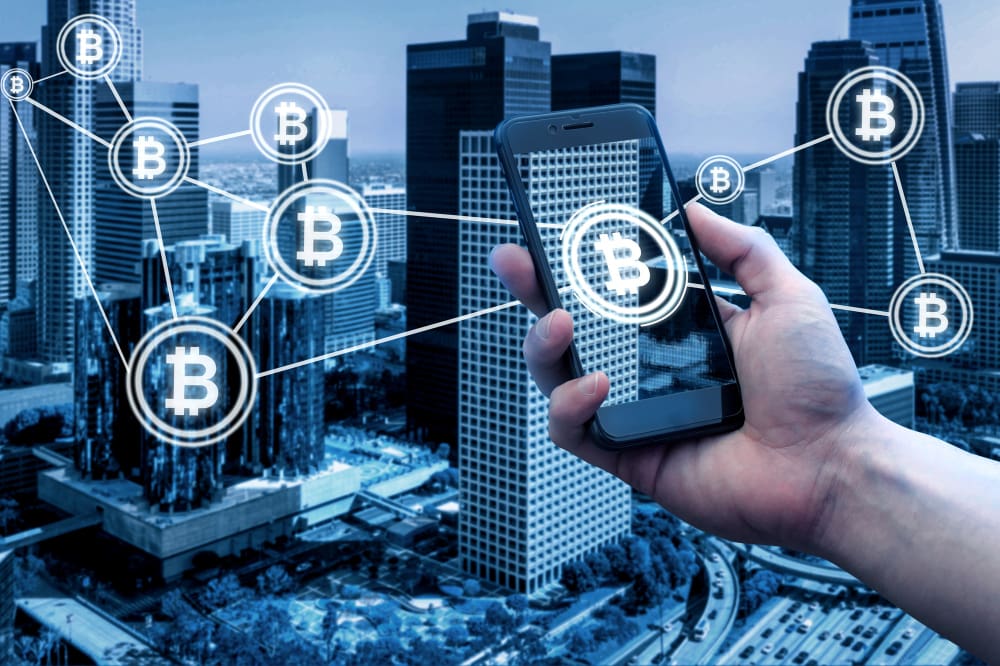
Application of Blockchain: To make real estate and property records easier and more secure in 2026. It first records ownership on a secure digital ledger. So, for example, if you buy a house, the system records your name as the owner. No one can modify or delete this record. This prevents fraud and confusion about property ownership.
Then, it accelerates the buying and selling of homes. In fact, the whole process can be completed in days, not weeks. Buyers and sellers use smart agreements to close deals automatically. For example, ownership is transferred immediately upon payment—no need to involve banks or lawyers to approve each step.
Blockchain also eliminates intermediaries and reduces costs. For example, you won’t have to pay the high fees charged by agents or title companies. This saves you thousands of dollars. Property records also stay clean and easy to verify. Anyone can look up a house’s history, including previous owners and sale prices. This creates trust between buyers and sellers.
Blockchain in Rental Agreements
Blockchain helps renters as well. For example, the ledger keeps rental agreements. Landlords and tenants see the same terms. There are no disputes over deposits or late fees. Finally, you can buy property across borders more easily. You can buy a house in another country with blockchain. The system verifies your identity and sends money instantly. This puts global real estate markets within reach of more people.
That’s it. That’s blockchain making real estate faster, cheaper, and safer for everyone in 2026.
Challenges Limiting Large-Scale Blockchain Adoption
Blockchain has many great uses, but some problems still hold it back from getting big in 2026. The first one is speed. For example, some blockchain networks can only process a handful of transactions per second. Traditional systems, in contrast, process thousands at a time. This makes blockchain too slow for large-scale use.
Then there is the huge challenge of energy use. Some blockchains, for example, need a lot of electricity to run. This is bad for the environment and increases costs. So companies look for greener alternatives. Furthermore, the rules and laws are not yet clear. For example, different countries have different rules on blockchain. Some governments support it, some ban it, and some limit it. This confuses businesses wanting to use it worldwide. Also, blockchain is not user-friendly. In fact, the technology is confusing to many people. It can be difficult to get a wallet together or understand private keys. This barrier prevents average users from joining.
Privacy and other Implementations Hurdles
Privacy can also be a challenge. For example, blockchain secures the data, but the transaction details are visible to everyone. This technology isn’t for private business deals—or personal finances. Companies need improved privacy tools.
Finally, old systems are costly and slow to change. For example, banks and governments have been using the same software for years. Switching to blockchain takes time, money, and training. Many organizations are delaying the move. In short, blockchain still has issues with speed, energy consumption, governance, usability, privacy, and cost. Tackling these challenges will make it even bigger in the future.
Frequently Asked Questions
What is blockchain technology beyond cryptocurrency?
Blockchain is a secure way to store data across many computers simultaneously. And by 2026, people will use it for many things, not just digital money. For example, hospitals use it to protect patient records. Stores use it to track food from the farm to the store. People also use it to prove who they are online. They use it to write down who owns a house. Businesses use it to run their daily operations more smoothly. To summarize, life is better and safer because of blockchain.
How does blockchain improve supply chain management?
Blockchain provides a transparent and secure record of every step a product takes. For instance, companies can follow goods from a factory to a store. This helps them identify problems quickly. It also prevents fraud, as no one can alter or hide the records. So buyers know they’re authentic products. To summarize, a blockchain makes supply chains honest, simple, and trustworthy for everyone.
Why is blockchain important for digital identity?
Blockchain allows people to securely own and verify their digital identities. For instance, you can prove your identity without giving your full name or address. That keeps identity theft at bay because no one can steal or forge your info. Plus, no one else gets to see your personal info. This makes logging into websites or apps faster and more secure. Simply put, blockchain makes digital identity safer, easier, and more reliable for all.
Reference
Alar, T., Bharathy, G., Batra, U., & Prasad, M. (2026). Ziraai SSI: A blockchain-based self-sovereign identity model for agricultural supply chains. International Journal of Advanced Computer Science and Applications, 17(2). https://doi.org/10.14569/IJACSA.2026.0170241
Patel, D., & Sharma, R. (2026). Blockchain’s beyond crypto. International Journal of Engineering Development and Research (IJEDR), 14(1). https://rjwave.org/ijedr/papers/IJEDR2601698.pdf