Compare classroom projects, senior subject choices and school visits to find a Hong Kong international school that fits your child's interests and needs.
How to Evaluate STEM Programs at Hong Kong International Schools
Estimated reading time: 5 minutes
A school tour can show you new laboratory benches, a 3D printer and also competition certificates without revealing what your child would do there on an ordinary Tuesday. Ask to see the lessons as well as student work in STEM programs behind the displays.
Key Takeaways: STEM Programs in School
- Inspect real work. Ask for a typical student’s project, including drafts and feedback.
- Check subject progression. Trace the route from this year’s classes to senior subject choices.
- Confirm everyday access. Find out who can use the labs, join the clubs and get support.
Ask to See Everyday Learning
STEM generally stands for science, technology, engineering and mathematics. Schools attach this label to different programs. GreatSchools cautions that a STEM label alone does not establish a program’s depth or challenge, so use it as a starting point for questions.
Follow one project.
Ask to see a typical student’s project from start to finish. Imagine a class testing which material slows heat loss from a cup of warm water. Look for the student’s question, recorded temperatures, unsuccessful attempts, teacher feedback and revisions. A well-built science poster starts with the graph and the main question, not the cover image. During a visit, look at the measurements and ask how they support the student’s conclusion.
Look for the reasoning.
To start with, ask which mathematical ideas the project used. Specifically, did the students calculate an average, plot a graph or compare rates of change? The connection between the hands-on task and the math behind it helps you assess what students learned.
Check the ordinary timetable.
Find out how often practical work happens in a normal week, how long sessions last and how the teacher checks each child’s understanding during group tasks.
Check the Route Into Senior Subjects
If your child is in upper primary or early secondary, ask how this year’s classes prepare them for later subject choices.
Ask for the next steps.
Request the mathematics and science sequence from your child’s current year to the final year. Check what a student must complete before joining advanced classes and when those decisions are made.
Check the available subjects.
Senior routes vary across Hong Kong. Hong Kong International School describes its Advanced Placement courses as modelled on comparable college courses. Kellett says Sixth Form students normally study three A-Level subjects over two years. Among the international schools Hong Kong families shortlist for an American route with IB options, Stamford American School Hong Kong pairs an inquiry-based approach with access to IB courses for students aged 5 to 18, teaching Grades 9 to 12 at a separate West Kowloon campus.
Confirm which courses will run for your child’s cohort, whether they meet entry requirements and whether timetable clashes limit combinations. Level matters too. The IB specifies 150 teaching hours for a standard-level subject and 240 for higher level across the STEM program. These are total program hours, not weekly lesson allocations.
Confirm the current syllabus.
The revised IB Diploma computer-science course has its first assessment scheduled for May 2027 and includes a topic on machine learning. Ask which version applies to your child’s year group.
Also Read: Blueprint for Building a Successful Student-Led STEM Club
Test the Fit on a School Visit
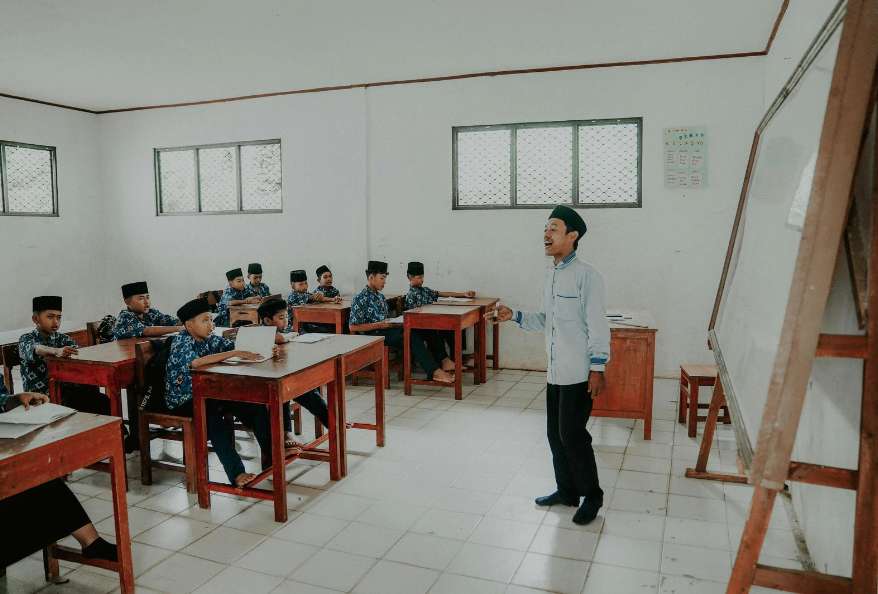
Use a visit to check whether your child could take part in the opportunities described on the website.
Meet the people teaching your child.
NAIS suggests asking whether teachers hold degrees in the subjects they teach. Ask how they support a newcomer who has missed a topic and how they stretch a pupil who is ahead.
Find out what happens in clubs.
If clubs feature in the tour, ask what students actually do in them. Strong clubs give members real leadership responsibilities rather than token roles. Ask which decisions students make and which tasks they manage at the school you are visiting.
Check access and support.
Find out who can use the laboratories outside lessons, whether practical sessions are supervised and whether language or learning support is available for your child’s year.
If a school names its STEM programme, ask to see how that approach appears in work from your child’s year group, and confirm the appropriate campus and visit session with admissions.
Ask how long after-school clubs run, how your child would get home afterwards and whether activities carry extra charges. For fees, request a current, itemised quotation in HK$ for your child’s grade.
Record the evidence.
Use this checklist to keep your notes comparable across schools.
| What to check | Evidence to request | Still to confirm |
| Regular practical work | Timetable and a typical project | Frequency for your child’s year |
| Subject progression | Maths and science sequence | Which courses run and any clashes |
| Teacher feedback | Comments and revisions on student work | How individual understanding is checked |
| Access | Arrangements for labs, clubs and support | Campus, transport and extra costs |
Once you have notes on projects, subject progression, clubs and support, compare the senior pathways as carefully as the facilities. Record which subjects are available, when choices are made and what prerequisites apply, and check how each route lines up with the science career options your child is curious about.
Conclusion: STEM Programs in School
Review your notes with your child after each visit. Follow up with the school on any unanswered questions before deciding.
FAQs: STEM Programs in School
Does my child need to be good at coding already?
Check the entry requirements for your child’s year and the support offered to beginners. Compare these with your child’s current experience.
Are impressive laboratories enough for STEM Programs?
Laboratories need to be part of regular learning in STEM Programs. Ask how often students in your child’s year use them and request examples of work from those sessions.
Should I focus on examination results?
Consider results alongside the teaching you observed, the support available and information about the STEM Programs behind those results. Ask how the school would support your child’s needs.
What should I bring to a visit?
Bring your child’s questions, a short list of your family’s priorities and the checklist above, so you record the same information at every school.
Reviewed by Jaya Ghosh on October 16, 2026Edited by Juveriya Khan
Note: The article includes external links to third-party services; readers should independently evaluate any referenced platforms before engaging.
- Author
- Latest Posts

Deven Nandapurkar is a Software Engineer, Project Lead; working at the strategic intersection of software engineering, productivity science, and emerging technologies. Driven by a core philosophy of “building things worth building,” he leads cross-functional teams and drives end-to-end technical strategy—from early-stage conceptualization through production-grade deployment.
A Computer Engineering graduate from Pune University, Deven brings a sharp systems-thinking approach to technical leadership, honed by years of managing high-stakes engineering projects and leading teams to top placements in national and international hackathons, including the NASA Space Apps Challenge and the Peerlist GenAI Hackathon.
Deven explores how human cognition and emerging technology converge. He regularly writes about cognitive performance optimization, attention management, AI integration, and the evolving dynamics of the modern workforce – offering actionable frameworks for professionals seeking to maximize their productivity and thrive alongside intelligent systems.