Learn how to implement cyber deception in 8 steps, from deploying decoys and honeytokens to SIEM integration, and detect attackers already inside your network.
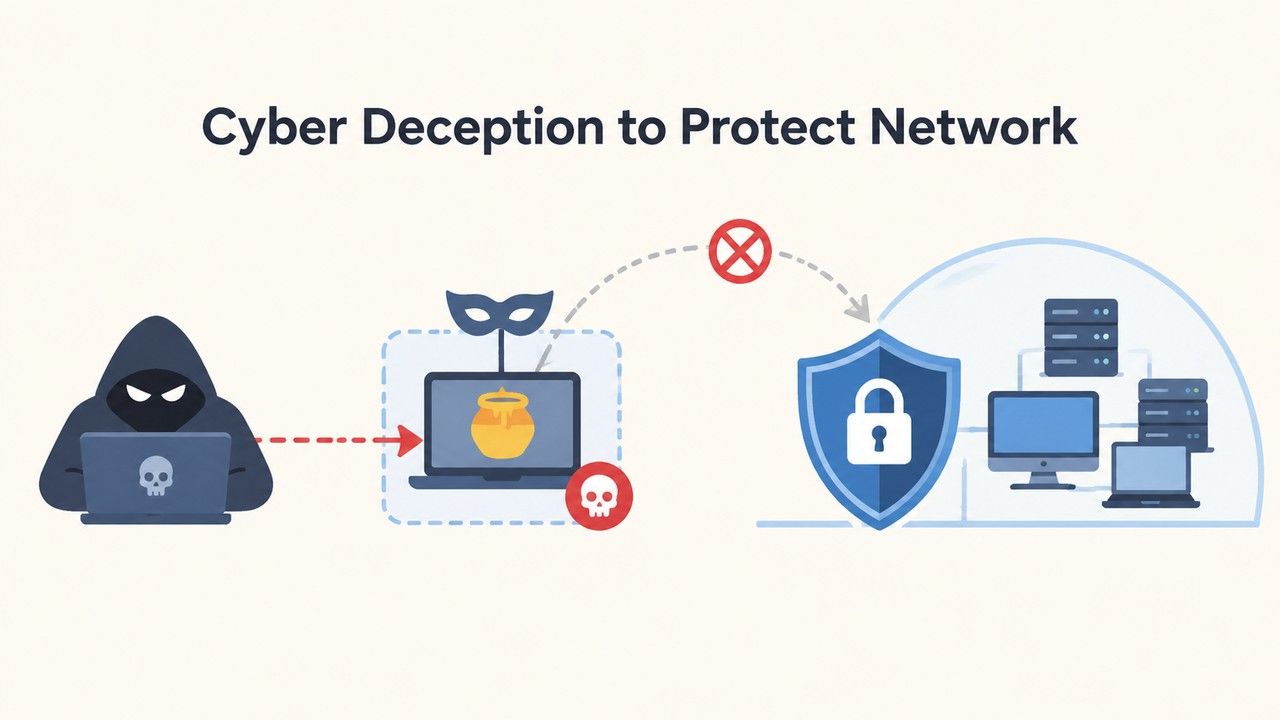
Firewalls, antivirus, and endpoint protection are essential, but they’re built to keep attackers out. Once someone gets in through stolen credentials, a phishing link, or an unpatched system, they can move laterally, escalate privileges, and exfiltrate data, often without being noticed. Cyber deception helps close that gap. In fact, NIST recognizes deception as a cyber resiliency technique that slows attackers and limits their lateral movement. It places realistic decoys, honeypots, and honeytokens (fake credentials, files, and API keys) across your network. Legitimate users have no reason to touch these assets, so any interaction is a high-confidence sign of an intruder. Your security team gets early warning and insight into how the attacker operates, with very few false positives.
Doing this well takes more than dropping a few honeypots. The eight steps below show how to implement cyber deception, from mapping your critical assets to integrating alerts with your security tools and refining your setup over time.
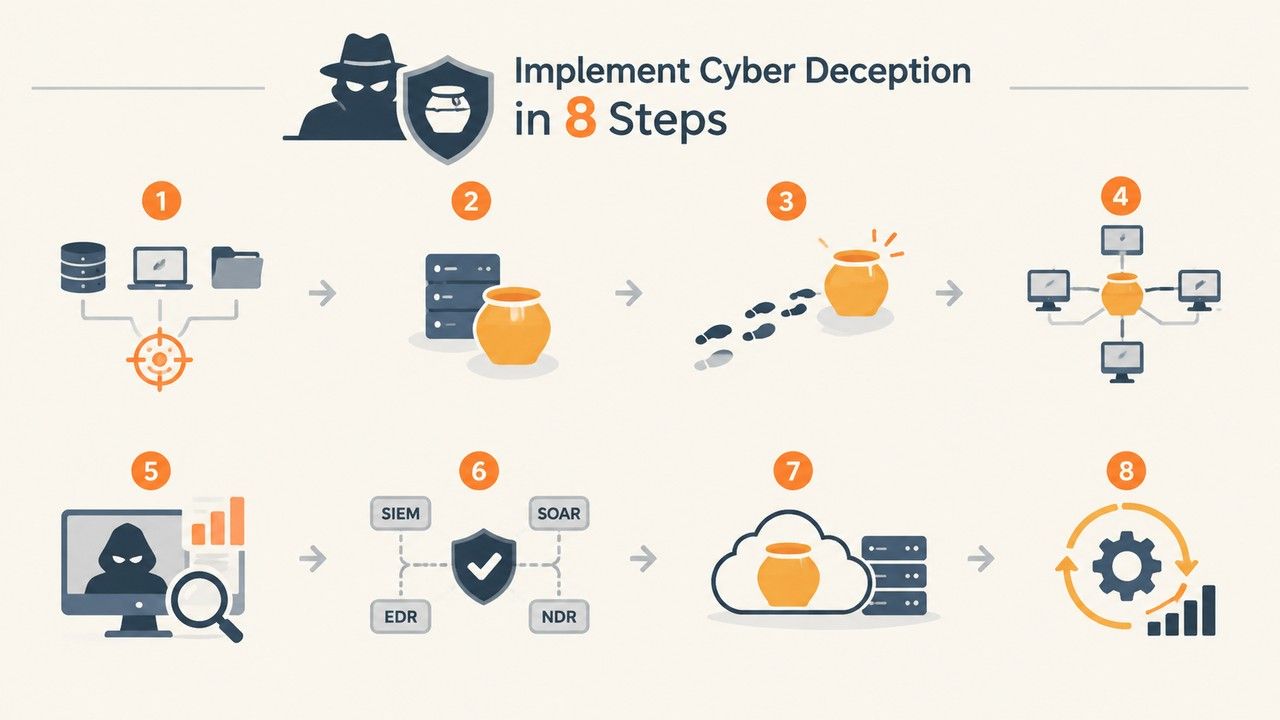
To implement cyber deception, map your critical assets, deploy realistic decoys and honeytokens, lure attackers toward them, and connect every alert to your security tools. Here are the eight steps:
Fig. 1: 8 steps to implement Cyber Deception (illustration – AI Generated)
Identify critical assets and likely attack paths
Deploy decoys and honeypots across your network
Plant breadcrumbs and honeytokens to lure attackers
Use network-based deception to detect lateral movement
Monitor attacker interactions and analyze threat intelligence
Integrate deception alerts with SIEM, SOAR, EDR, and NDR
Extend deception to cloud and hybrid environments
Continuously test, tune, and optimize your deception strategy
1. Identify Critical Assets and Likely Attack Paths
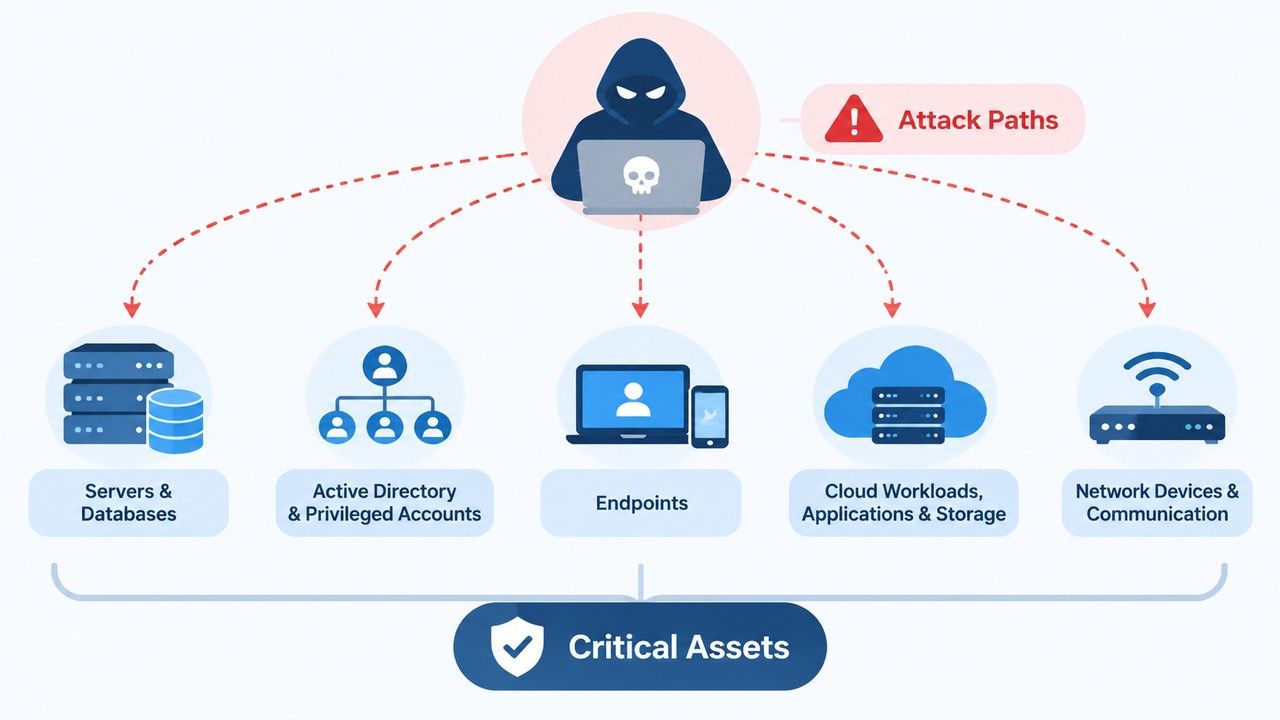
Before implementing cyber deception, understand what you need to protect. First, map your network infrastructure from end to end. Then, list the high-value assets that attackers will most likely target. These often include servers and databases that hold sensitive business data. Attackers also go after Active Directory and privileged accounts. In addition, include employee endpoints, cloud workloads, and storage environments. Finally, add network devices and communication channels to your list.
Fig. 2: Potential Network Attack Paths (illustration – AI Generated)
Next, trace the attack paths an intruder could follow. Think about how they might gain initial access to your network. After that, consider how they could steal credentials and escalate privileges. Above all, look for routes that allow lateral movement toward critical systems. This attack path analysis shows you where deception technology will offer the most visibility.
For example, suppose Active Directory sits at the core of your infrastructure. In that case, you can create decoy accounts that mimic real privileged users. You can also plant honeytokens, such as fake admin credentials, on key endpoints. Legitimate users have no reason to touch these assets. As a result, any attempt to use them triggers a high-confidence alert. Your security team can then investigate before the attacker reaches real data. In short, a clear asset map makes your cyber deception strategy far more precise.
2. Deploy Decoys and Honeypots Across Your Network
Once you map your assets, deploy decoys and honeypots in strategic locations. Decoys mimic real network assets, such as servers, databases, and applications. Honeypots, on the other hand, imitate specific systems or services to invite attacks. Both serve as traps within your cyber deception strategy.
Fig. 3: Decoys and Honeypots (illustration – AI Generated)
You can choose decoy types based on your network architecture. For instance, server decoys look like your production infrastructure. Similarly, database decoys hold realistic but fabricated records. Likewise, endpoint decoys mimic employee workstations that attackers try to compromise. In addition, application decoys imitate business apps and login portals. Finally, network decoys simulate devices and segments to expose reconnaissance and lateral movement.
For example, you can deploy a decoy file server with fake financial records. An attacker exploring the network may open it. Then, your deception technology sends an alert to your security team. Since no employee needs this server, the alert carries high confidence. As a result, your team can investigate before the attacker reaches real data.
However, decoys only work if they look convincing. Give them believable hostnames, operating systems, and data that match your environment. At the same time, isolate every decoy from your production systems. Otherwise, an attacker could use a poorly isolated honeypot as a pivot point. In short, effective cyber deception attracts attackers without adding risk to your network.
3. Plant Breadcrumbs and Honeytokens to Lure Attackers
Decoys only work if attackers can find them. That’s why cyber deception also relies on breadcrumbs. Breadcrumbs are deceptive clues that guide attackers toward your decoys. You place them across endpoints, servers, and network environments. Many breadcrumbs are honeytokens, such as fake credentials, files, or API keys. Each honeytoken triggers an alert the moment someone uses it.
Fig. 4: Breadcrumbs and Honeytokens (illustration – AI Generated)
Breadcrumbs come in many forms. For instance, you can plant fake usernames and passwords on employee workstations. Similarly, you can add fake application credentials and API keys to scripts. In addition, misleading configuration files can point attackers toward decoy servers. You can also create fake network shares and database references. Finally, simulated access tokens can expose attackers who target cloud or application sessions. To an attacker, these breadcrumbs look legitimate and valuable. However, they lead only to decoys you control.
For example, imagine an attacker compromises an employee laptop. They search the device for stored credentials and connection details. Soon, they find a configuration file with a database connection string. In reality, the string points to a decoy database. As soon as the attacker tries to connect, your deception technology raises an alert. Your security team can then investigate possible credential theft or lateral movement. Because no real user needs that connection string, the alert is highly reliable.
Above all, place breadcrumbs where attackers naturally look. Think of saved sessions, scripts, credential stores, and recently opened files. Also, match breadcrumbs to your naming conventions and environment. As a result, each breadcrumb creates another chance to detect an attacker across your network. In short, breadcrumbs and honeytokens extend cyber deception far beyond individual decoys.
4. Use Network-Based Deception to Detect Lateral Movement
Attackers rarely stop after they compromise a single endpoint. Instead, they explore the network and look for connected systems. Next, they hunt for privileged accounts and valuable data. Finally, they move laterally to reach your most critical assets. Network-based deception helps you catch them during this stage. It also extends cyber deception from single decoys to your entire network.
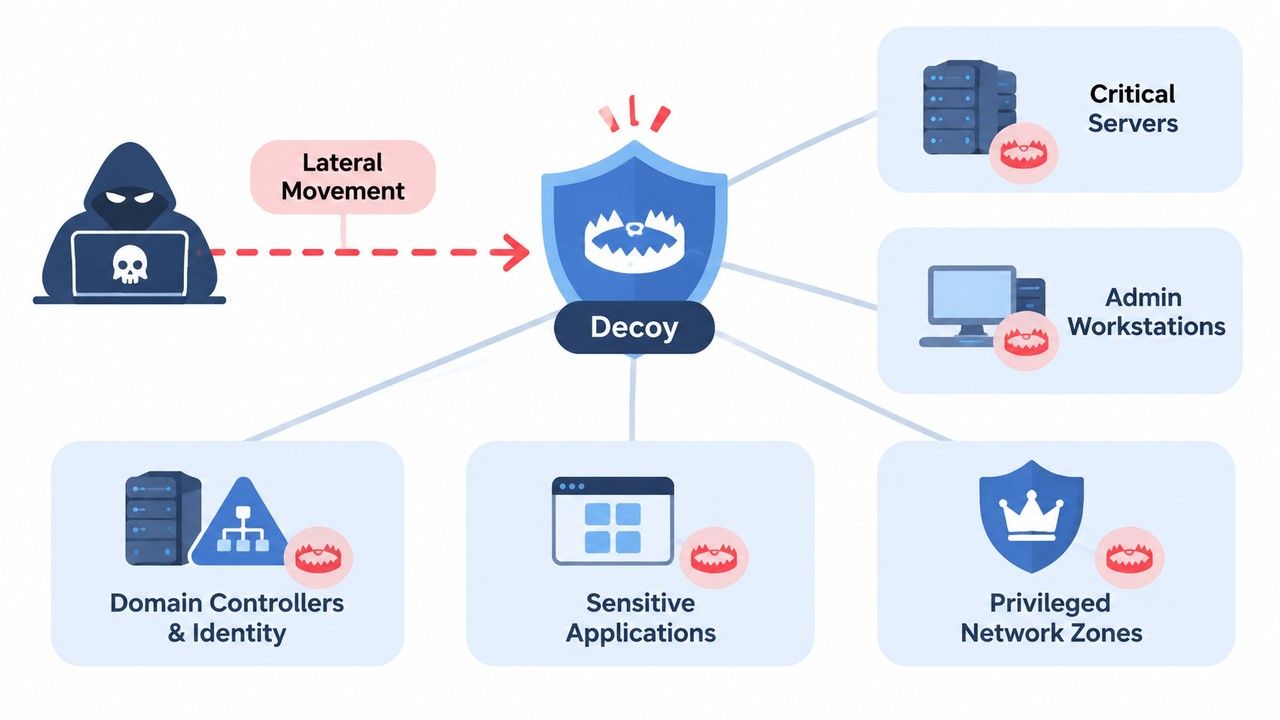
Fig. 5: Detecting Lateral Movement (illustration – AI Generated)
With network-based deception, you deploy decoy segments, endpoints, services, and communication channels. Together, they resemble your legitimate infrastructure. For instance, suppose an attacker compromises an employee workstation. From there, they scan the network to find other systems. Soon, they spot a decoy endpoint that looks like an admin workstation. As soon as they try to connect, your deception technology raises an alert. Because no legitimate user connects to that endpoint, the alert carries high confidence. Your security team can then trace the attacker’s path back to the compromised workstation.
However, where you put decoys matters as much as how real they look. Above all, put network decoys where attackers naturally travel. For example, place them near critical server segments and administrative workstations. Similarly, surround domain controllers and identity infrastructure with decoys. In addition, cover sensitive application environments and zones with privileged access. These areas sit on the most common lateral movement paths. Also, add decoy services that attackers often probe, such as RDP and SMB. Use the attack paths you mapped in Step 1 to guide placement.
As a result, you gain visibility into attacker movement across your network. Your team can also stop suspicious activity before it affects production systems. In short, cyber deception turns lateral movement into an early warning signal.
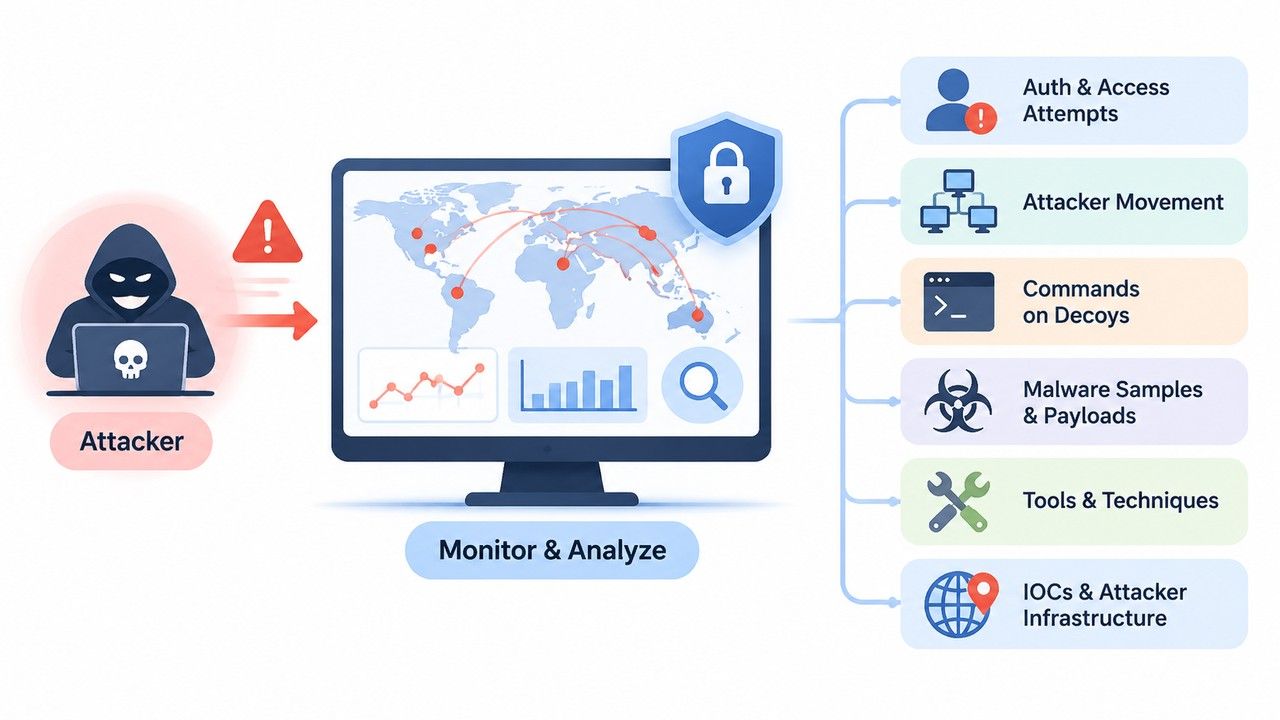
5. Monitor Attacker Interactions and Analyze Threat Intelligence
Deploying decoys and breadcrumbs is only half the job. Next, you must monitor every interaction with your deceptive assets. Then, you need to analyze the threat intelligence those interactions produce. Without this step, cyber deception becomes a set of silent traps.
Fig. 6: Monitor and Analyze (illustration – AI Generated)
Deception technology can capture rich detail about each attacker. For instance, it logs every authentication and access attempt against your decoys. It also tracks how the attacker moves between network resources. In addition, it records the commands they run on decoy systems. Some platforms even collect malware samples and payloads for analysis. Furthermore, you can observe the tools and techniques the attacker uses. Finally, you can extract indicators of compromise (IOCs) and attacker infrastructure details.
Together, this data shows how the attacker got in. It also reveals what they wanted and what they planned to do next. Moreover, you can map their behavior to the MITRE ATT&CK framework. As a result, your team can describe the attack in a common language.
For example, suppose someone keeps trying to use the same decoy credentials. This pattern may point to credential harvesting or lateral movement. In that case, investigators can trace the endpoint where the attempts started. After that, they can review authentication logs across the environment. This shows whether the attacker has also compromised legitimate accounts.
Above all, use deception intelligence to drive proactive threat hunting. Analysts can search for the same IOCs and behaviors on real systems. Consequently, they may uncover hidden activity that other tools missed. In short, cyber deception turns every attacker interaction into actionable threat intelligence.
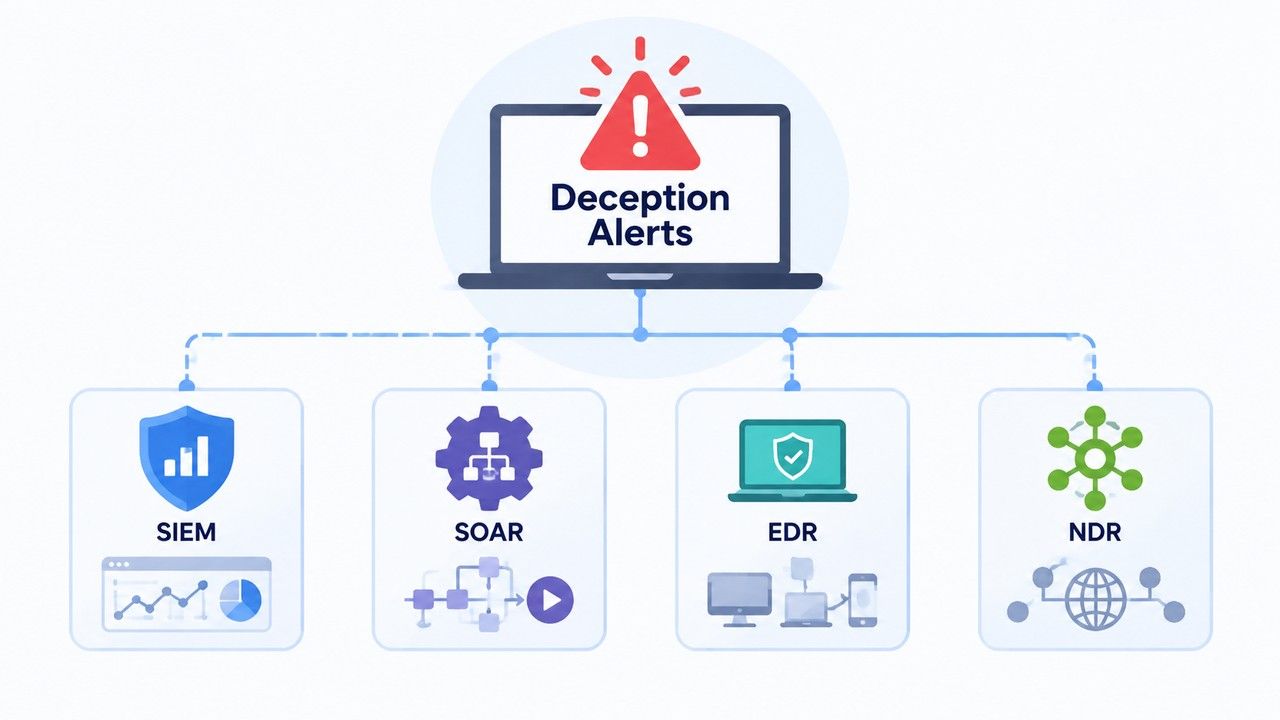
6. Integrate Deception Alerts With SIEM, SOAR, EDR, and NDR
Cyber deception works best when it connects to your existing security tools. On its own, a decoy alert tells you that someone is inside. However, it doesn’t show the full scope of the attack. That’s why you should integrate deception alerts with your wider security stack.
Fig. 7: Deception Alerts (illustration – AI)
First, send deception alerts to your Security Information and Event Management (SIEM) platform. Your SIEM puts these alerts in one place with your other security events. As a result, analysts can see more of the environment at once. Also, tag deception alerts as high priority in your SIEM. Next, connect your Security Orchestration, Automation, and Response (SOAR) platform. SOAR automates investigation and response workflows based on deception alerts. In addition, use Endpoint Detection and Response (EDR) for endpoint-level visibility. EDR helps you investigate the device that interacted with a decoy. Finally, add Network Detection and Response (NDR) for network-level context. NDR reveals suspicious connections, communication patterns, and lateral movement.
For example, suppose an attacker tries to access a decoy server. Your deception technology immediately sends a high-confidence alert to the SIEM. Then, analysts correlate the alert with endpoint and network telemetry. This shows how far the suspicious activity has spread. At the same time, SOAR playbooks can respond automatically. For instance, they can isolate the affected endpoint and block malicious connections. They can also launch a deeper investigation, where your tools support it. Because decoy alerts produce few false positives, you can automate responses with confidence.
In short, combining deception with traditional security tools changes how your team works. Instead of chasing isolated alerts, analysts get a complete picture of each threat. Ultimately, cyber deception becomes part of a complete threat detection and response strategy.
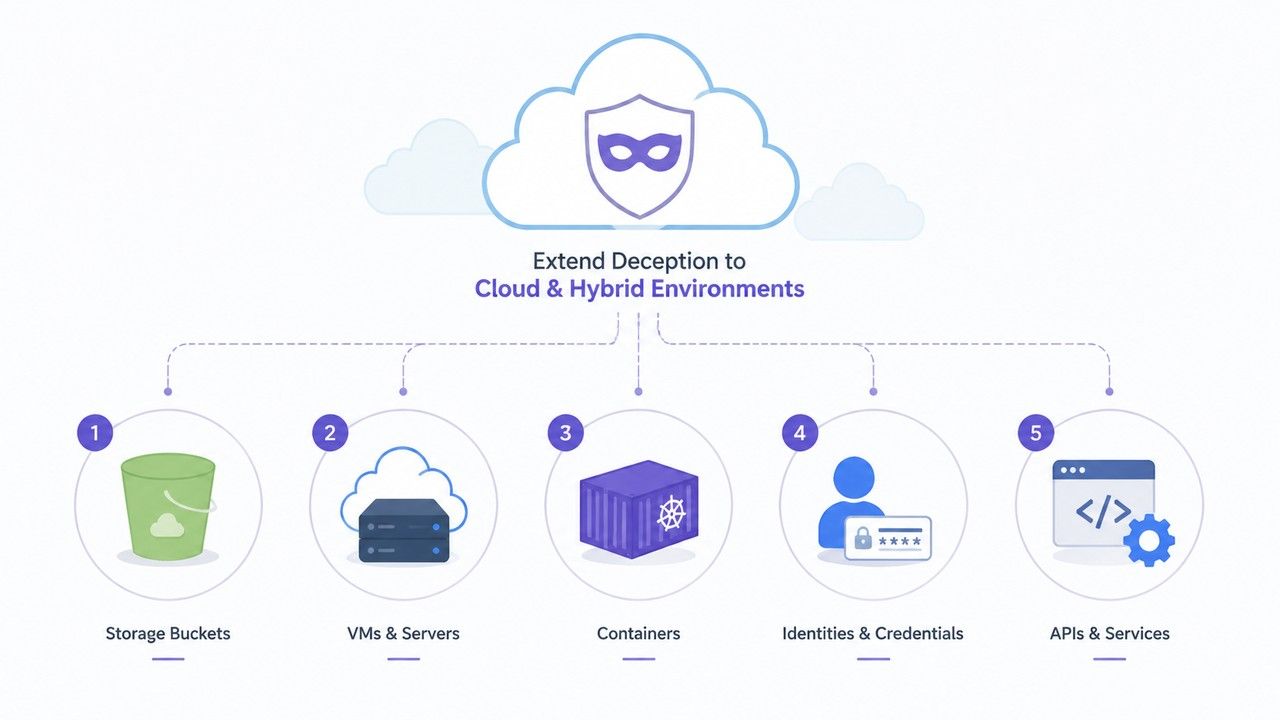
7. Extend Deception to Cloud and Hybrid Environments
Today’s enterprise networks reach far beyond the private data center. Most organizations now run cloud platforms, virtual machines, and containers. Many also rely on distributed applications and APIs. As a result, attackers have more places to hide. That’s why cyber deception must extend to cloud and hybrid environments. Otherwise, you leave blind spots that attackers can exploit.
Fig. 8: Cyber Deception in Cloud and Hybrid Environments (illustration – AI Generated)
You can deploy cloud decoys that resemble your real cloud assets. For instance, fake cloud storage buckets can attract attackers who hunt for exposed data. Similarly, decoy virtual machines and cloud-hosted servers can mimic your production workloads. In addition, you can run fake containerized applications inside your container environments. Cloud identities and access credentials also make effective honeytokens. For example, you can plant fake access keys or decoy IAM roles. Finally, decoy APIs and application services can expose attackers who probe your integrations.
To illustrate, consider a business with a hybrid cloud setup. First, it deploys fake storage resources that look like backup archives. Then, it plants decoy cloud credentials on an on-premises server. Later, an attacker finds these credentials and tries to use them. Immediately, your deception technology raises a high-confidence alert. This activity may point to credential abuse or cloud reconnaissance. Because no legitimate user needs these credentials, your team can act fast. Moreover, the alert shows how the attacker moved from on-premises systems to the cloud.
Above all, use one consistent deception strategy across on-premises and cloud environments. Use the same naming conventions, alert rules, and response workflows. Also, send cloud deception alerts to the same SIEM from Step 6. Furthermore, update cloud decoys as your teams spin up new resources. Cloud environments change quickly, so outdated decoys stand out. In short, cyber deception gives you visibility across your entire hybrid network.
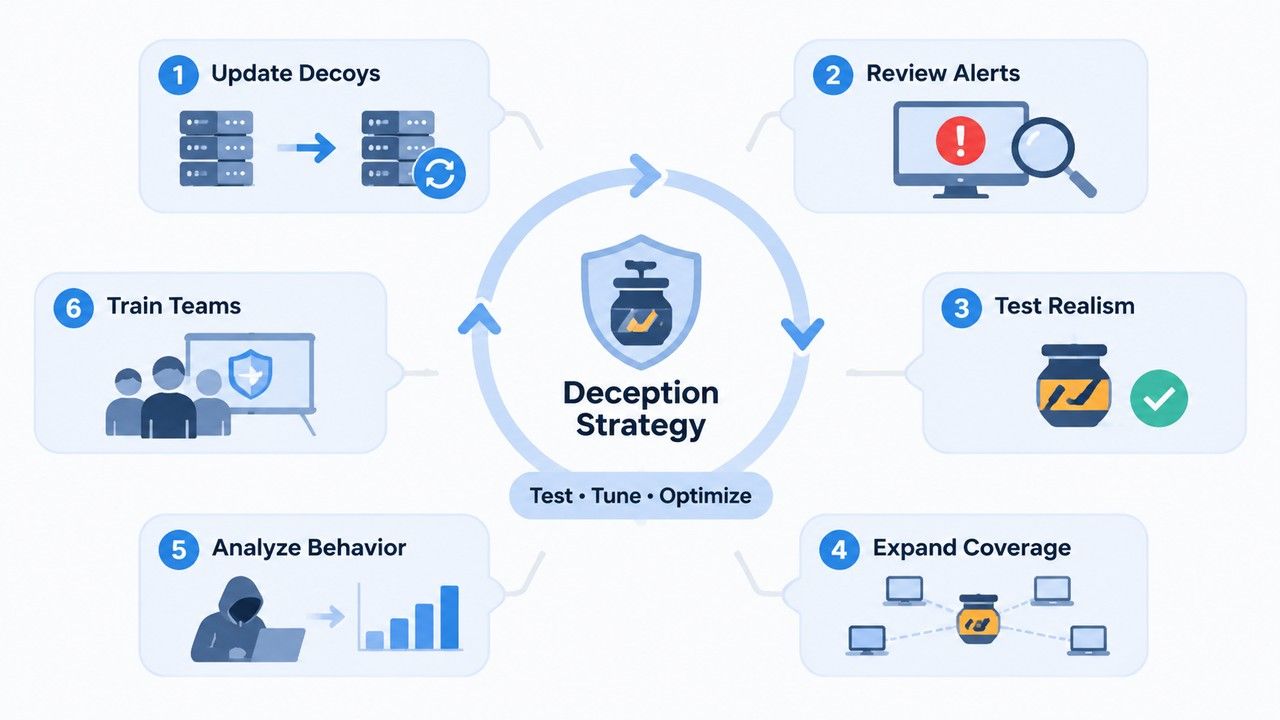
8. Continuously Test, Tune, and Optimize Your Deception Strategy
Cyber deception is not a one-time deployment. Your network changes as teams add servers, users, and cloud resources. At the same time, attackers keep refining their techniques. Consequently, decoys that looked real last year may stand out today. That’s why you should review and optimize your deception strategy regularly.
First, update your decoys whenever your network infrastructure changes. For instance, rename decoys when you adopt new naming conventions. Next, expand deception coverage as your teams add new assets. Then, test whether your decoys remain realistic and discoverable. A red team exercise or penetration test works well here. If testers ignore a decoy or spot it easily, refine it. Otherwise, skilled attackers will likely avoid it too.
In addition, review alert quality on a regular schedule. Investigate every unexpected interaction with your deceptive assets. Sometimes, legitimate tools touch decoys by accident. For example, vulnerability scanners and IT inventory tools often scan every system. Allowlist these known sources so they don’t trigger false alarms. As a result, your deception alerts stay high-confidence and easy to trust.
Above all, create a clear response protocol for deception alerts. This protocol helps your team confirm alerts quickly. It also guides analysts as they investigate compromised systems. Moreover, it helps them contain threats before they spread. Furthermore, train your security team to interpret deception alerts correctly. Analysts should also review attacker behavior after each incident. Then, they can update detection strategies based on what they learn.
Finally, measure the effectiveness of your deception program. Track key metrics such as mean time to detect (MTTD). Similarly, monitor investigation time and mean time to respond (MTTR). Also, count how many interactions your team confirms as malicious. Over time, these metrics show where your deception strategy needs work. In short, continuous testing keeps cyber deception effective as threats evolve.
Challenges to Consider When Implementing Cyber Deception
Cyber deception delivers high-confidence threat detection. However, it also brings some practical challenges. Plan for them early to get the most from your deception program.
Maintaining Realistic Decoys
Skilled attackers can spot decoys that look fake or outdated. Once they do, they simply avoid them. Therefore, match your decoys to real naming conventions, operating systems, and data. Also, refresh them whenever your environment changes.
Keeping Decoys Isolated From Production
A poorly isolated honeypot can create new risk. In fact, attackers may use it as a pivot point into real systems. That’s why you should separate every decoy from your production networks. In addition, block outbound connections from high-interaction honeypots.
Managing Deployment at Scale
Large, distributed, and hybrid networks can include thousands of assets. Maintaining decoys by hand across all of them quickly becomes impractical. For this reason, choose a deception platform with automation and centralized management. As a result, you can deploy and update decoys from one place.
Integrating Deception With Security Workflows
On their own, deception alerts show only part of the picture. Your team also needs endpoint and network context to investigate fully. Hence, connect your deception platform to your SIEM, SOAR, EDR, and NDR tools. This way, analysts can correlate every alert with existing security telemetry.
Tuning Alerts and Reducing Operational Overhead
Deception generates far fewer false positives than most security tools. Still, vulnerability scanners and IT tools can touch decoys by accident. Without tuning, these events create unnecessary investigation work. However, allowlisting known sources keeps your alerts clean and trustworthy.
Ensuring Compliance and Privacy
Deception tools record every interaction, including commands and credentials. Some of this data may involve employees or personal information. Consequently, you need clear policies for how you collect, store, and use it. Also, confirm that your program meets applicable privacy and regulatory requirements.
Developing Internal Expertise
Deception produces rich threat intelligence. However, analysts need the right skills to use it well. They must interpret attacker interactions and analyze the data they collect. Above all, invest in regular training and hands-on exercises.
In short, addressing these challenges helps you build a stronger deception strategy. As a result, cyber deception complements your existing security controls instead of adding complexity.
Final Thoughts on Implementing Cyber Deception
Cyber deception takes more than dropping fake assets on your network. Instead, it works best as a planned, ongoing program. Start by mapping your critical assets and likely attack paths. Then, place realistic decoys, breadcrumbs, and honeytokens where attackers look. Next, connect deception alerts to your existing security tools. Finally, extend coverage to the cloud and keep improving your setup.
With the right approach, cyber deception turns your network into a trap for intruders. As a result, you can detect attackers early and learn how they operate. You can also respond before they reach critical assets.
Frequently Asked Questions About Cyber Deception
What is cyber deception?
Cyber deception places realistic decoys, honeypots, and honeytokens across your network. Because legitimate users never touch these traps, any interaction signals an intruder.
What is the difference between a honeypot and a decoy?
In cyber deception, a decoy mimics a real asset, like a server or database. In contrast, a honeypot imitates a specific system or service to invite attacks.
What are honeytokens?
Honeytokens are fake credentials, files, or API keys that look valuable to attackers. As soon as someone uses one, your deception technology triggers an alert.
Does cyber deception replace firewalls and other security tools?
No, cyber deception adds a layer of defense rather than replacing existing controls. Instead, it works best alongside your SIEM, SOAR, EDR, and NDR tools.
How does cyber deception detect lateral movement?
With cyber deception, you place decoy endpoints and credentials along common attack paths. As a result, attackers moving laterally soon trigger an alert.
References:
Morić, Z., Dakić, V., & Regvart, D. (2025). Advancing Cybersecurity with Honeypots and Deception Strategies. Informatics, 12(1), 14. https://doi.org/10.3390/informatics12010014
Beltrán-López, P., Pérez, M. G., & Nespoli, P. (2025). Cyber Deception: taxonomy, state of the art, frameworks, trends, and open challenges. IEEE Communications Surveys & Tutorials, 28, 1520–1556. https://doi.org/10.1109/comst.2025.3594788
Gaurang Shukla holds a B.Tech in Computer Engineering from Vishwakarma Institute of Information Technology (VIIT), Pune, and has earned the Google Cybersecurity Professional Certificate. His technical background centers on network security, encryption, access control, and risk management.
During his internship at Marchmind Technologies, Gaurang applied data privacy principles to sanitize personally identifiable information from a machine learning dataset of approximately 70,000 plant images. His hands-on technical work includes building a Python chat application connected across separate networks via Cloudflare Tunnel and conducting network traffic analysis and vulnerability assessments using Kali Linux, Nmap, and Wireshark. Passionate about making digital safety accessible, he translates complex security concepts—such as phishing verification, metadata privacy, and data protection—into practical, everyday habits for readers.
Beyond computer engineering, Gaurang is a state- and national-level karate medalist who trained in Japan and now serves as a karate instructor and CISCE competition judge. He has also competed in under-17 state-level cricket and performed as a drummer, winning first place in a Battle of the Bands competition.
Area of Focus: Computer Engineering & Cybersecurity