Astronomers detected the first radio signal from the interstellar comet 3I/ATLAS as it sped past the Sun, sparking excitement among scientists worldwide.
First Radio Signal From Interstellar Comet 3I/ATLAS Amazes Astronomers
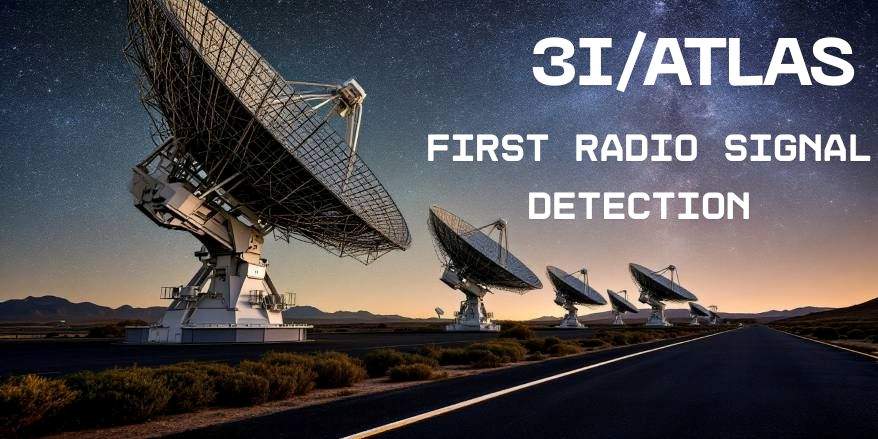
Historic Moment for Space Science
Astronomers spotted the first radio signal from the interstellar comet 3I/ATLAS. This remarkable event occurred in late October, right as the comet sped past the Sun. Consequently, scientists worldwide turned their telescopes towards this cosmic visitor. Moreover, excitement grew quickly throughout the astronomy community.
What Is 3I/ATLAS?
Interstellar visitors are rare but fascinating. 3I/ATLAS is no ordinary comet. It comes from beyond our solar system. Its journey through space tells us about distant stars. So, learning about it helps us understand the cosmos better.
Third Visitor From Deep Space
3I/ATLAS is the third-known interstellar object ever found. It was first seen in July 2025 using the ATLAS telescope in Chile. The comet comes from far outside our solar system. Studies suggest it journeyed from another star, travelling through the Milky Way for billions of years. Its discovery captured the imagination of both scientists and the public.
The Science Behind the Interstellar Comet Radio Signal
Radio waves from 3I/ATLAS show water molecules breaking down near the Sun. This confirms natural comet activity, not alien technology.
Rare Radio Waves Detected
The MeerKAT radio telescope in South Africa detected a unique signal from 3I/ATLAS. Scientists confirmed the signal was not a message; instead, it was an absorption pattern caused by hydroxyl molecules (OH) in the comet’s cloud. These molecules form when sunlight breaks apart water in the comet. Such signals mark key moments in comet research, helping scientists understand how comets change close to the Sun.
What Does It Mean?
This radio signal’s origin is natural. It confirms cometary activity. Water jets out from the nucleus, splits into smaller molecules, and gets picked up by sensitive instruments. The radio waves measured at 1.665–1.667 GHz reveal chemical clues. “This detection is solid proof of water breakdown as 3I/ATLAS reached its closest approach to the Sun,” explained Dr. Naledi Moyo, project scientist at MeerKAT. In fact, this evidence clearly demonstrates the natural processes occurring within the comet.
Also Read https://entechonline.com/interstellar-comet-3i-atlas-a-visitor-from-deep-space/
Why Does It Matter?
This find improves our knowledge of interstellar objects. It confirms these comets behave like those in our solar system.
Insights Into Interstellar Visitors: The Interstellar Comet Radio Signal
This detection offers a fresh look at what happens when interstellar objects enter our solar system. Each observation builds on our knowledge. Scientists now know 3I/ATLAS acts just like a normal comet. Although strange behaviors, like changes in color and brightness, sparked alien theories, experts point out everything fits nature’s rules.
- First radio signal ever caught from an interstellar comet.
- Shows how sunlight affects ancient deep-space material.
- Aids study of chemistry inside icy bodies from distant stars.
Meanwhile, new discoveries keep happening. The next window for observation begins as 3I/ATLAS moves away from the Sun. Meanwhile, other telescopes and space missions will track its fading trail. As a result, this news gives researchers a rare chance to study interstellar chemistry in real time.
“Every interstellar object opens a window to the stars. 3I/ATLAS marks a breakthrough in radio detection from the edge of the galaxy,” Dr. Naledi Moyo.
interstellar comet radio signal :The Journey Continues
Even after passing the Sun, 3I/ATLAS travels fast. It heads back to deep space, never to return. Still, the data collected will endure. Each observation lays the groundwork for future missions. The comet’s adventure inspires us all to watch the skies.
Interstellar Comet’s Fate
After its swing near the Sun, 3I/ATLAS now speeds away at over 130,000 mph. It remains on a hyperbolic path—a direct shot back into deep space. Scientists confirm it will not return. As a result, this one-time event inspires space fans to watch the skies and dream of more surprises.
Additionally, to stay updated with the latest developments in STEM research, visit ENTECH Online. Basically, this is our digital magazine for science, technology, engineering, and mathematics. Also, at ENTECH Online, you’ll find a wealth of information.
Reference
- The Astronomer’s Telegram. (n.d.). The Astronomer’s Telegram. November 12, 2025, https://www.astronomerstelegram.org/?read=17473
- Author
- Latest Posts

Ashwini Kshirsagar holds a graduate degree in Chemistry and a postgraduate degree in Environmental Science from Shivaji University, Kolhapur. With a strong foundation in scientific principles and a creative flair, she blends her expertise in environmental science with skills in technical writing, graphic design, and video editing. Proficient in Adobe software, Ashwini excels at transforming complex scientific concepts into clear, engaging, and visually compelling content. Her unique ability to merge science and storytelling allows her to create impactful communication materials that are both informative and accessible to a wide audience.