NASA's High Performance Spaceflight Computing (HPSC) processor delivers AI-ready, radiation-hardened computing power that could transform future Moon, Mars, and deep-space missions.
How NASA’s HPSC Processor Could Revolutionise Space Exploration
Estimated reading time: 8 minutes
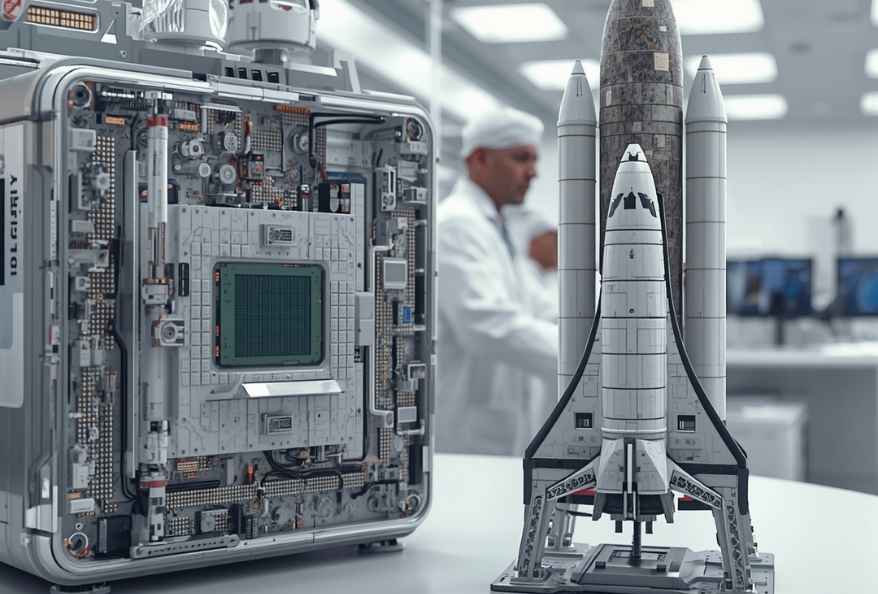
Space travel is moving forward fast. However, the need for High Performance Spaceflight Computing has become clear as many spacecraft still use computers built years ago. These systems are reliable. Yet they do not have the power needed for future missions.
As missions travel farther from Earth, new challenges appear. For example, spacecraft must process huge amounts of data. They must also make quick decisions without waiting for instructions from Earth.
Because of this, NASA is building a new computer system called High Performance Spaceflight Computing (HPSC).
The HPSC processor is faster, smarter, and more powerful than current space computers. At the same time, it can survive the harsh conditions of space.As a result, this technology could change how future spacecraft explore the Moon, Mars, and beyond.
ENTECH STEM Magazine has included this research in its list of Top 10 STEM Discoveries and Innovations of May 2026.
Key Takeaways on HPSC Processor
- HPSC stands for High Performance Spaceflight Computing.
- NASA created it for future space missions.
- It can be more than 100 times faster than current space processors.
- Some tests showed up to 500 times better performance.
- It can support artificial intelligence and machine learning.
- The processor is designed to handle space radiation.
- It may also help improve technologies on Earth.
What Is High Performance Spaceflight Computing?
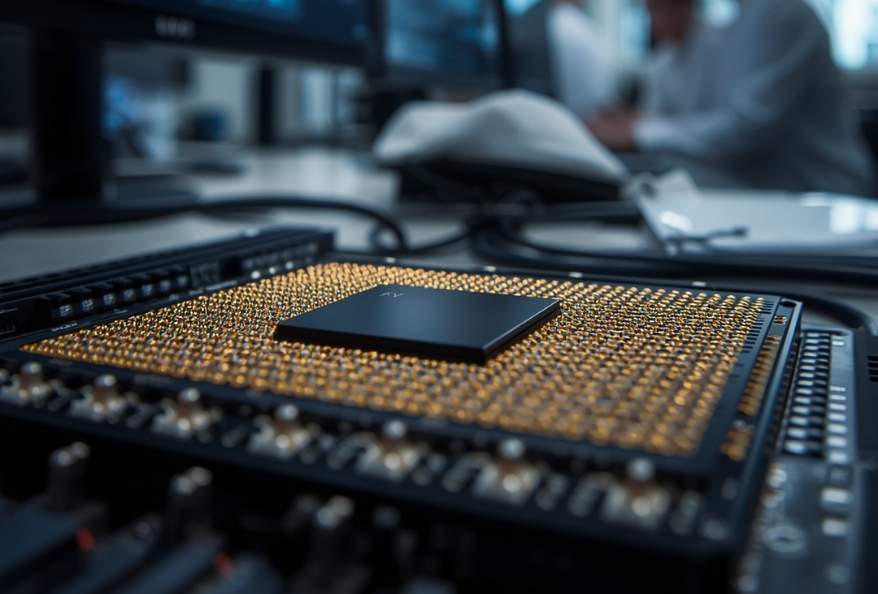
High Performance Spaceflight Computing, or HPSC, is NASA’s next-generation space processor. Think of it as the brain of a spacecraft. The processor handles data, runs software, and supports important mission tasks.
Unlike regular computer chips, HPSC is designed for space. Therefore, it can work in places with high radiation and extreme temperatures.
In addition, it is much faster than today’s space processors. Because of this, future spacecraft will be able to do more work on their own.
Why Does NASA Need a New Space Processor?
Current space computers are dependable. However, many of them were designed long ago.Today’s missions need much more computing power.
For example, future spacecraft must:
- Navigate on their own
- Process images quickly
- Analyze science data
- Control robots
- Support astronauts
- Use artificial intelligence
At the same time, missions are traveling farther from Earth. As a result, communication delays become longer. A signal sent to Mars can take several minutes to arrive. Therefore, spacecraft cannot always wait for instructions from Earth.
They must think and react on their own. This is why NASA created the HPSC processor.
What Makes HPSC Processor Special?
The biggest advantage is simple. HPSC combines speed and reliability. Usually, space computers focus on reliability. However, they often sacrifice performance. NASA wanted both.
Much Faster Performance
HPSC can deliver more than 100 times the computing power of current space processors.In some tests, performance improved by up to 500 times. As a result, spacecraft can process information much faster.
Ready for Artificial Intelligence
Artificial intelligence is becoming essential for future space missions. As a result, NASA designed the HPSC processor to support advanced AI tasks and help spacecraft operate more independently.
Therefore, HPSC was built to support:
- AI systems
- Machine learning
- Image analysis
- Object detection
- Smart decision-making
Because of this, future spacecraft can operate with less human support.
Built for Harsh Space Conditions
Space is a difficult environment.Radiation can damage electronics. However, HPSC includes special protection features. These features help prevent errors and improve reliability.As a result, missions become safer.
Uses Less Power
Power is limited in space.Therefore, HPSC can reduce power use when full performance is not needed. This helps spacecraft save energy.
Benefits of HPSC Processor
Faster Science
Spacecraft collect huge amounts of data every day. However, sending all that information back to Earth takes time. With HPSC, spacecraft can process much of the data onboard. As a result, scientists can receive important findings faster and make quicker decisions about missions.
Smarter Spacecraft
Future missions will travel farther from Earth than ever before. Therefore, spacecraft must become more independent. HPSC gives them the computing power needed to analyze information and make decisions without waiting for instructions from mission control.
Better Safety
Space is a harsh and unpredictable environment. Because of this, reliable computing systems are essential. HPSC includes advanced protection features that help reduce errors and system failures. As a result, future missions can operate more safely and efficiently.
Stronger AI Capabilities
Artificial intelligence is becoming a key part of modern space exploration. For example, AI can identify objects, analyze images, and support navigation. Therefore, HPSC provides the performance needed to run advanced AI applications in space.
Support for Future Astronauts
Future Moon and Mars missions will depend on powerful computing systems. HPSC can help astronauts manage equipment, process mission data, and support critical operations. As a result, human exploration missions may become safer and more productive.
Why This Matters for Students
The HPSC project is important for students because it combines several fast-growing fields into one exciting technology. Students interested in the following areas can learn valuable lessons from this innovation:
- Computer Science
- Artificial Intelligence
- Aerospace Engineering
- Electronics Engineering
- Robotics
- Data Science
In addition, HPSC shows how advanced computers are designed to work in extreme environments. Students can also see how AI is being used beyond Earth to solve real-world challenges.
As space exploration continues to expand, these technical skills will become increasingly valuable. Therefore, students who study these subjects today may help build the next generation of spacecraft tomorrow.
The Future of HPSC Processor
The future of High Performance Spaceflight Computing looks very promising. As space missions become more ambitious, the need for powerful onboard computing will continue to grow.
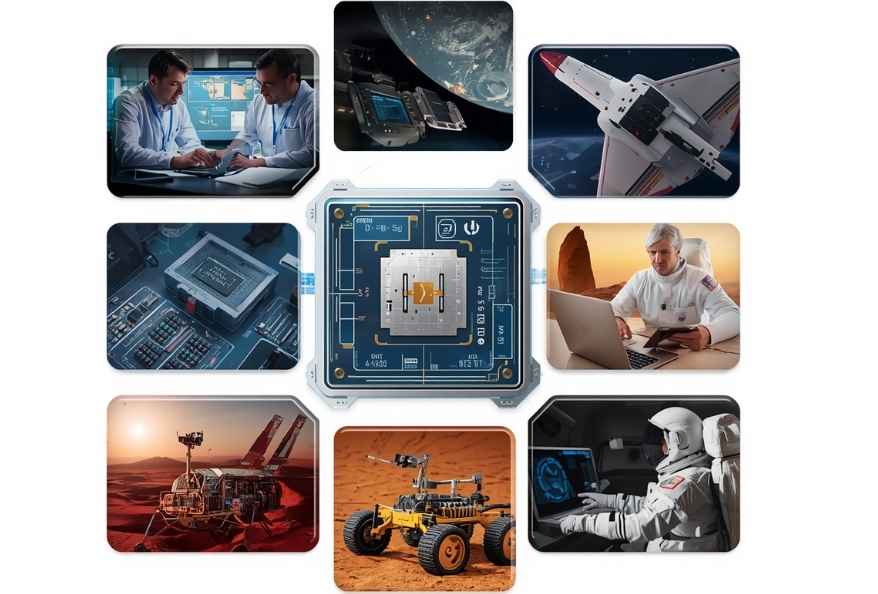
NASA plans to use HPSC in a variety of future missions, including:
- Moon exploration missions
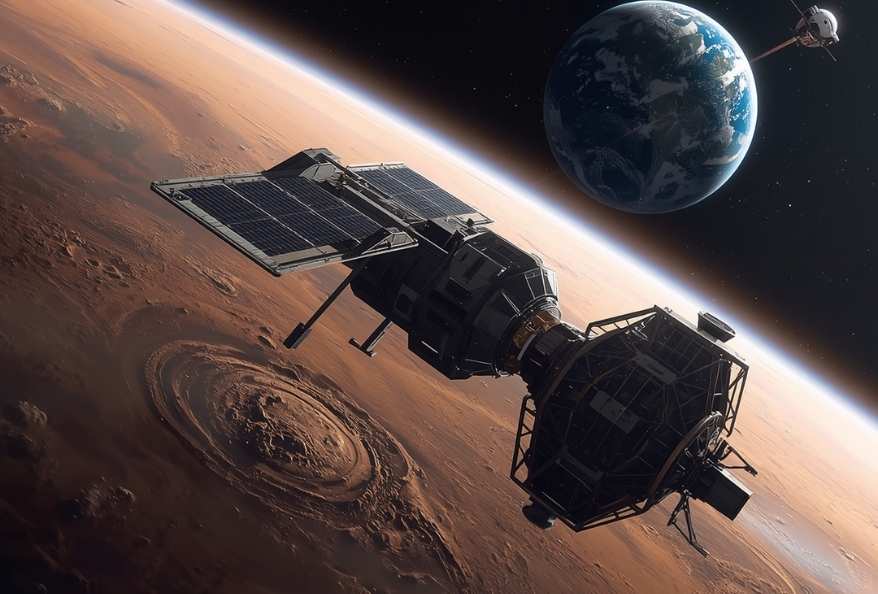
- Mars exploration missions
- Deep-space probes
- Space habitats
- Autonomous robotic explorers
Furthermore, the benefits of HPSC may extend beyond space exploration. NASA expects the technology to influence several industries on Earth as well.
For example, HPSC could help improve:
- Aviation systems
- Medical devices
- Self-driving vehicles
- Industrial robots
- Advanced AI systems
As a result, the technology may have an impact far beyond spacecraft and satellites. Ultimately, HPSC could help shape the future of both space exploration and advanced computing here on Earth.
Conclusion on High Performance Spaceflight Computing
High Performance Spaceflight Computing is a major step forward for space technology. It gives spacecraft more speed, more intelligence, and more independence.
At the same time, it remains reliable enough for harsh space environments. As missions travel farther from Earth, powerful onboard computers will become essential.
Because of this, the HPSC processor could play a key role in the future of space exploration. From Moon missions to Mars missions, this technology may help power the next generation of discovery.
Additionally, to stay Updated with the latest developments in STEM research, visit ENTECH online. Basically, this is our digital magazine for science, technology, engineering, and mathematics. Further, at ENTECH online, you’ll find a wealth of information.
Frequently Asked Questions
What is High Performance Spaceflight Computing (HPSC)?
High Performance Spaceflight Computing (HPSC) is NASA’s next-generation processor for space missions. Unlike older space computers, it offers much higher performance while remaining reliable in harsh space environments. As a result, future spacecraft can process data faster and operate more independently.
Why is the HPSC processor important for future space missions?
Future missions will travel farther from Earth. Therefore, communication delays will become longer. Because of this, spacecraft must make more decisions on their own. The HPSC processor helps solve this challenge by providing the computing power needed for autonomous operations and real-time data analysis.
How is the HPSC processor different from current space computers?
Current space processors are reliable but have limited performance. In contrast, the HPSC processor can deliver more than 100 times the computing power of many existing systems. Moreover, it supports artificial intelligence, machine learning, and advanced image processing capabilities.
Can the HPSC processor support artificial intelligence in space?
Yes, it can. In fact, one of the main goals of HPSC is to support AI-powered space missions. For example, spacecraft can use artificial intelligence to analyze images, detect objects, and make decisions without waiting for instructions from Earth.
Will HPSC technology benefit industries on Earth?
Yes. Although NASA designed HPSC for space exploration, the technology could have applications on Earth as well. For instance, it may improve aviation systems, medical devices, autonomous vehicles, and advanced robotics. Consequently, its impact could extend far beyond space missions.
References
- Carney, S. (2026, May 12). Hello Universe: NASA’s Next-Gen space processor undergoes testing – NASA. NASA. https://www.nasa.gov/technology/hello-universe-nasas-next-gen-space-processor-undergoes-testing/
- Bruhn, F. C., Tsog, N., Kunkel, F., Flordal, O., & Troxel, I. (2020). Enabling radiation tolerant heterogeneous GPU-based onboard data processing in space. CEAS Space Journal, 12(4), 551–564. https://doi.org/10.1007/s12567-020-00321-9
- Author
- Latest Posts

Kottauppari Venkat Raghava
I am an Information Technology graduate (B.Tech) and a technology writer specialising in artificial intelligence, robotics, automation, and space technologies. I analyse complex scientific research and convert it into clear, practical insights for students, tech enthusiasts, and professionals. My work bridges the gap between academic research and real-world understanding by simplifying findings from peer-reviewed journals into engaging, easy-to-follow content. Alongside my writing, I have hands-on experience developing real-world projects, showcased on my GitHub, including an Expense Tracker web application for managing and visualising spending, and a Simple Video Summariser that generates concise insights from video content using automation techniques. I also produce research-driven articles on topics such as AI-powered corrosion detection, deep learning in engineering, and advanced automation systems. I follow a research-driven approach, ensuring every article is grounded in verified sources, industry knowledge, and practical applications. My goal is to make advanced technology accessible and meaningful, helping readers stay informed about innovations shaping the future.