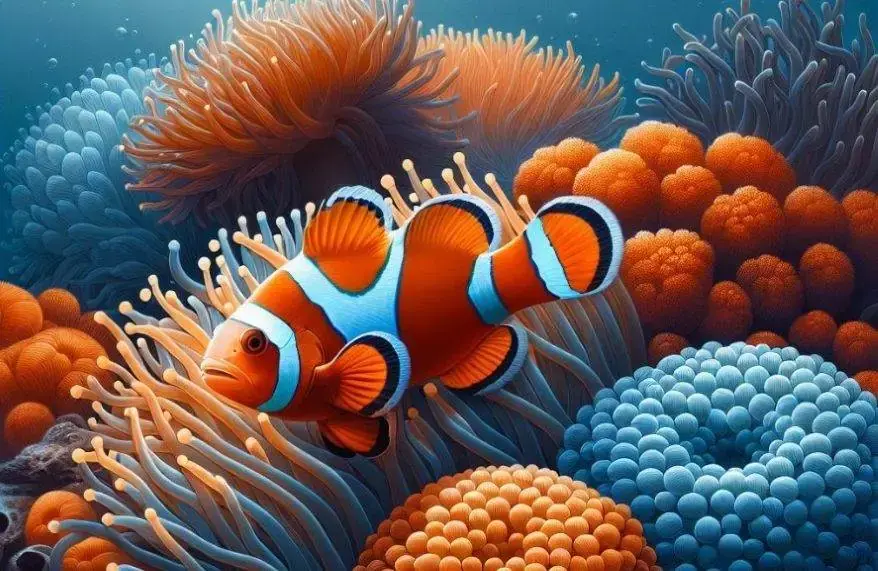
Clownfish, those iconic orange and white striped fish made famous by the movie Finding Nemo, are facing a surprising challenge: they're shrinking!
How Clownfish Shrink to Survive Marine Heatwaves
Most animals grow bigger as they get older, but recent research reveals a fascinating exception: clown anemonefish can shrink during marine heatwaves! Scientists studied 134 wild clownfish living in coral reefs near Papua New Guinea during one of the recorded hottest marine events. Over five months, they measured the fish’s length every month and noticed something incredible—many of these fish got smaller when water temperatures soared.
This discovery is important because it challenges what we usually think about animal growth. Shrinking helps clownfish save energy when their environment becomes tough, such as during a marine heatwave. Interestingly, not only do some fish shrink, but those that shrink more also show stronger catch-up growth afterward. This means they can bounce back faster once conditions improve.
How Size and Social Rank Affect Shrinking?
The ability to shrink depends on two key factors: the size of the fish and their position in their social group. Clown anemonefish live in groups made up of a dominant female (rank 1), her breeding male partner (rank 2), and other smaller subordinates. The dominant females tend to shrink only if they are quite large, while males start shrinking at smaller sizes. This relationship shows how social roles influence how these amazing fish respond to heat stress.
Clownfish Adapt to Rising Temperatures
During a severe marine heatwave in 2023, they observed a striking phenomenon: a significant portion of the clownfish population experienced a considerable decrease in both weight and length. Furthermore, this wasn’t a one-time event; a remarkable 75% of the fish shrank at least once during the heatwave.
The Link Between Shrinking and Growth Recovery
Some clownfish shrank once, while others shrank multiple times during the heatwave. Those that shrank several times surprisingly grew more than their counterparts during periods without shrinking. This shows a powerful form of growth plasticity, meaning these fish can flexibly adjust their size to survive challenging conditions.
The Science Behind Shrinking and Survival
Shrinking is not random—it helps clownfish survive by reducing energy needs in warmer, stressful water. Additionally, pairs that coordinated when to shrink showed better chances of surviving the heat event together. Temperature spikes combined with social factors create complex pressures that shape how these animals grow or shrink. A leading researcher on the study explains that this adaptation likely helps them survive heat stress. By shrinking, the fish require less food and become more efficient at using oxygen. This could involve the absorption of fat and bone, a process observed in other animals facing environmental stress. Further laboratory studies will be necessary to confirm this hypothesis.
Why This Matters for Our Oceans’ Future
Marine heatwaves are becoming more frequent due to climate change, affecting coral reefs worldwide where species like clown anemonefish live near their temperature limits. Understanding this shrinking response provides new clues about how fish populations might adapt or struggle with future ocean warming. How different species adapt – or fail to adapt – is crucial for effective conservation strategies. Moreover, it highlights the complex interplay between climate change, species adaptation, and ecosystem stability. The findings offer valuable insights for developing tailored conservation measures to protect vulnerable species and their habitats.
Reference
- Versteeg, M. A., MacDonald, C., Bennett-Smith, M. F., Buston, P. M., & Rueger, T. (2025). Individual clown anemonefish shrink to survive heat stress and social conflict. Science Advances, 11(21). https://doi.org/10.1126/sciadv.adt7079
Additionally, to stay updated with the latest developments in STEM research, visit ENTECH Online. Basically, this is our digital magazine for science, technology, engineering, and mathematics. Furthermore, at ENTECH Online, you’ll find a wealth of information.
- Author
- Latest Posts

Neha Adikane holds a Master’s degree in Environmental Science from Pune University, bringing a unique blend of scientific expertise and creative writing skills to her craft. She specializes in creating engaging, insightful, and impactful content across various niches. With a passion for translating complex ideas into simple, relatable narratives, she excels at crafting blogs, articles, website content, and social media posts that captivate readers and drive engagement. Neha’s background in environmental science adds depth to her writing, allowing her to effectively cover topics related to sustainability, eco-awareness, and scientific innovations.