Sustainability in denim dyeing is gaining momentum as the industry faces environmental challenges.
How Denim Fabric Is Made from Cotton to Finished Textile
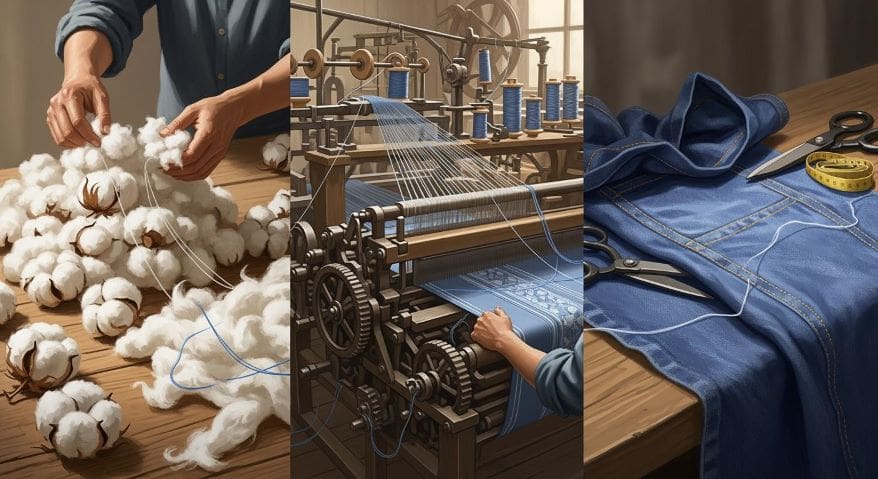
Cotton’s journey from the field to fabric starts with picking. Farmers use big machines to gather cotton bolls when they’re soft and ready. Even though these machines work well, they can also grab things like leaves and twigs. This is where the cool ginning process helps out. Ginning separates the fluffy cotton from its seeds and cleans out those tiny bits of stuff we don’t want. Today’s gins do a great job, making sure the cotton is nice and clean for what comes next!
Key Takeaways
- Denim fabric begins with cotton. The cotton is picked, cleaned, and spun into yarn. This makes the fabric strong and tough.
- Indigo dyeing gives denim its famous blue color. The dye lets the fabric fade in special ways as it is worn.
- Weaving methods like 3×1 twill make denim strong. These methods also give denim its special look. The type of loom changes the fabric’s quality.
- Finishing steps like washing and treatments make denim softer and more stylish. Stone washing can make denim look old and worn.
- Quality control is very important in making denim. Workers check the fabric for strength, color, and looks before it becomes clothes.

Spinning the Yarn
Once the cotton is ginned, the next step is transforming these pure fibers into yarn. This is achieved through a process known as spinning. The fibers are first carded, which aligns them into parallel strands. After carding, the cotton is drawn and twisted into thin strands. Spinning frames then stretch and spin these strands into yarn. The quality of the yarn hinges on the fiber’s strength and length. Spinning is a critical step, as it affects the durability and texture of the final denim fabric.
Selecting the Right Cotton
Before any of this processing begins, a crucial decision is made: selecting the right type of cotton. There are various cotton species, but not all are suitable for denim production. High-quality denim typically requires long-staple cotton due to its strength and softness. Choosing the right cotton impacts the fabric’s quality, influencing its comfort, durability, and appearance. This selection often involves assessing factors such as fiber length, color, and cleanliness. Superior cotton leads to denim that withstands wear while offering a pleasant feel. Attention to detail in selecting the cotton sets the stage for creating durable and stylish denim textiles.
Weaving The Denim Fabric
Understanding Twill Weaving
Twill weaving forms the backbone of denim fabric production. In this technique, the yarns are interlaced to create a diagonal pattern, which gives denim its signature look. The diagonal ribbing not only adds texture but also contributes to the fabric’s durability. Twill weaving generally involves a structure where the weft yarn passes over one or more warp threads, then under two or more warp threads, creating a distinctive diagonal line. This method enhances strength, making the fabric resistant to tearing and wear, which is why denim is often used in rugged clothing such as jeans and workwear.

The Role of Warp and Weft
In the weaving process, understanding the interaction between warp and weft yarns is essential. The warp yarns run vertically and are often dyed with indigo to give denim its characteristic blue color. These threads remain under tension throughout the weaving process. Conversely, the weft yarns run horizontally and are usually left white. This arrangement results in the classic denim appearance: a blue exterior contrasted by a softer inside. Together, the warp and weft form a tight weave that contributes to the fabric’s robustness and flexibility, ensuring that denim remains a popular choice for casual and outdoor wear.
Types of Denim Weaves
Denim comes in various weave types, each offering a unique texture and character. The most common type is the 3×1 weave, where the weft goes under one warp thread and over three, producing a dense, strong fabric. There are also 2×1 weaves, which are lighter and more flexible. Some specialty denims, like broken twill, feature a zigzag pattern, reducing the traditionally seen diagonal lines. Each weave type offers different levels of durability, texture, and aesthetics, providing designers and consumers with a range of options for different apparel needs.
Dyeing Techniques for Denim
Indigo Dyeing Process
Indigo dyeing is central to producing the classic blue denim look we all recognize. This process starts with scouring, which involves cleaning the cotton yarn to remove natural oils and impurities. Once clean, the cotton is ready for dyeing. The yarn is repeatedly dipped in a vat of indigo dye, a natural dye traditionally derived from plants, though synthetic indigo is widely used today. Each dip oxidizes the indigo, turning the yarn a deeper shade of blue. It’s a fascinating process that involves meticulous timing and skilled craftsmanship to achieve the right hue. The final color of denim is determined by the number and duration of these dips. After dyeing, the yarns are washed and then woven into denim fabric.

Sustainability in Denim Dyeing
Sustainability in denim dyeing is gaining momentum as the industry faces environmental challenges. Traditional indigo dyeing can use a lot of water and chemicals, which has prompted the development of eco-friendlier methods. One popular alternative is the use of pre-reduced liquid indigo, which minimizes waste and reduces water usage. Moreover, some companies are exploring plant-based dyes and closed-loop systems, which aim to recycle water and reduce chemical runoff. Advanced technologies such as laser finishing and ozone fading are also being employed to reduce water and chemical use. Brands are increasingly aware of their environmental footprint and are making strides toward more responsible production methods. The shift toward sustainable practices not only helps reduce the environmental impact but also meets growing consumer demand for eco-conscious fashion. By investing in these new technologies, the denim industry is working towards a more sustainable future while retaining the rich heritage of its iconic fabric.
The Role of Finishings in Denim
Finishing processes in denim play a crucial role in defining the look, feel, and durability of the fabric. From adding a soft touch to ensuring jeans last years without signs of wear, these finishings are key to transforming raw denim into the loved staple we know today.
Types of Fabric Finishes
Fabric finishes for denim vary widely, each serving a unique purpose. Mechanical finishes include processes like calendering, which involves pressing the fabric between heated rollers to create a smooth, glossy surface. Chemical finishes involve treatments like mercerization, which enhances the fabric’s luster and strength by treating it with caustic soda.
Another popular chemical finish is sanforization. This process controls shrinkage, ensuring that jeans fit perfectly wash after wash. Then there’s the aesthetic aspect: denim can be coated with resins or silicones to achieve various effects, from a glossy sheen to a soft, smooth hand feel. Stonewashing, while technically a part of the finishing process, gives denim its characteristic faded look. This not only impacts the appearance but also adds a broken-in softness.
Enhancing Denim Durability
Finishings do more than enhance appearance—they significantly boost the lifespan of denim. Treatments like antimicrobial finishes prevent bacterial build-up, keeping the fabric fresh and reducing wear over time. Water-repellent coatings make denim resilient against spills and stains, prolonging its life. Additionally, enzyme washes can soften denim while preventing fraying, ensuring fibers remain intact.
Choosing the right finishing processes impacts whether a pair of jeans will become a timeless wardrobe staple or quickly lose its luster. As consumer preferences evolve, manufacturers continue to innovate, developing eco-friendly finishes that maintain quality while reducing environmental impact. This balance ensures denim remains both fashionable and functional.
Inspecting Quality and Consistency
Quality Control Measures
Every piece of denim fabric undergoes rigorous quality control to ensure it meets the high standards expected by both manufacturers and consumers. The process begins with inspecting raw cotton fibers for any impurities or defects. These fibers must be clean, strong, and uniform to ensure the consistency of the denim.
As the cotton transforms into yarn, it is crucial to maintain precise tension during the spinning process. Tension affects the yarn’s diameter, which can influence the fabric’s texture and strength. Quality control teams frequently test yarn samples to confirm they meet specific standards. They check for uniformity in thickness and absence of knots or weak spots.
For the weaving stage, inspectors monitor machines to prevent errors, like skipped threads or pattern distortions. After weaving, denim stretches and undergoes a wash test to determine if the fabric will retain its shape and size over time. Any denim that fails these tests gets rejected or recycled.
Ensuring Textile Strength
An essential aspect of denim quality is its strength and durability. Ensuring this requires a combination of controlled processes and thorough testing. Tearing strength tests assess how much force denim can withstand before ripping, giving an indication of its toughness.
Additionally, abrasion tests simulate wear and tear by rubbing the fabric with various materials. This reveals how denim will fare during prolonged use. Assessing colorfastness is another critical step. These tests determine whether the dye will bleed or fade during washing, confirming the fabric’s longevity.
Overall, the meticulous quality control measures and strength assurance tests ensure that denim fabric maintains its esteemed reputation for durability and style, offering a product that consumers can trust to last and perform well.
Innovative Technologies in Denim Production
Laser Technology in Denim
Laser technology has revolutionized the way denim is finished. In the past, achieving a worn or distressed look involved numerous wash cycles and harsh chemicals, which were not environmentally friendly. Now, lasers can etch intricate patterns onto the fabric’s surface with precision, using light beams instead of water or chemicals. This process not only reduces the environmental footprint, but also allows for unique and customizable designs.
Waterless Dyeing Techniques
Old ways of dyeing denim use huge amounts of water. This causes big waste. Waterless dyeing techniques, such as foam dyeing, have emerged as sustainable alternatives. These methods minimize water usage by replacing the conventional water bath with a mix of dyes and foaming agents. This saves water and cuts energy used in drying. It helps make denim that is kind to the environment.
Smart Textiles and Denim
The integration of smart textiles into denim marks a leap forward in both fashion and technology. Smart textiles are fabrics that react to environmental conditions or user input, enhancing functionality. In the world of denim, this could include temperature-regulating jeans or fabric embedded with sensors that monitor physical activity. Such innovations push the boundaries of what denim can do, blending style with practicality.
By embracing these technological advancements, the denim industry is on a path to becoming more sustainable and creative. Each of these innovations not only improves the efficiency of production but also offers new possibilities for consumer interaction and experience with denim products. As these technologies continue to develop, they promise exciting changes for the future of denim fashion.
The Future of Denim Manufacturing
Trends Towards Sustainability
Denim manufacturing is experiencing a shift towards more sustainable practices, responding to the rising consumer demand for eco-friendly products. Traditionally, denim production involved resource-intensive processes, including large quantities of water and energy. Now, companies are innovating with new techniques that significantly reduce waste and environmental impact. One popular approach is using laser and ozone technologies to distress denim, minimizing water usage and chemical runoff. These methods not only preserve natural resources but also protect workers by reducing exposure to harmful substances.
Furthermore, the adoption of organic cotton has become more prevalent. Organic cotton farming eliminates the use of synthetic fertilizers and pesticides, promoting biodiversity and soil health. Brands employing these materials can appeal to environmentally-conscious consumers while ensuring that their practices align with sustainable principles. Additionally, some manufacturers are crafting “closed-loop” systems to enhance recycling and reduce waste, where every stage, from material sourcing to post-consumer reuse, is optimized for sustainability.
The Rise of Recycled Denim
Recycled denim is gaining traction as a significant trend in the industry, driven by an increased awareness of textile waste. Traditional denim production often results in significant leftover fabric and discarded garments. Recycling addresses this by transforming old denim into new products, giving materials a second life. Advanced recycling methods allow for the combination of cotton fibers with other materials to produce sturdy yet comfortable denim fabric.
These initiatives also include the collection and processing of consumer-donated denim. Brands are establishing programs encouraging consumers to return old jeans, fostering circular fashion by keeping materials in use longer. This method keeps waste out of landfills. It also uses less raw material. So it saves natural resources.
Embracing recycled denim allows both manufacturers and consumers to participate in more responsible, sustainable fashion practices.
FAQ
What makes denim different from other fabrics?
You see denim has a twill weave. This weave gives denim strength and a unique look. Indigo dye helps denim fade over time. You notice denim feels heavier than most fabrics.
How does indigo dye affect denim?
Indigo dye covers the outside of the yarn. You see denim fade in special patterns. The dye does not soak deep. You get a blue color that changes as you wear denim.
Why do denim jeans feel stiff at first?
You notice denim jeans feel stiff because of the tight weave and sizing. Washing and wearing denim makes it softer. Over time, denim fits your body better.
Can you recycle denim fabric?
You can recycle denim. Factories shred old denim and spin it into new yarn. You help the environment when you recycle denim. Many brands use recycled denim in new products.
What is selvedge denim?
Selvedge denim comes from special looms. You see a clean edge that does not fray. Selvedge denim is strong and lasts long. Many people like selvedge denim for its quality.
References
Choudhary AK, Sheena B. Influences of elastane content, aesthetic finishes and fabric weight on mechanical and comfort properties of denim fabrics. J Textile Eng Fashion Technol. 2018;4(1):36-42. DOI: 10.15406/jteft.2018.04.00119
Admin. (2024, March 28). What is twill fabric ? DortrenkTextile. https://dortrenktextile.com/blog/twill-fabric/
- Author
- Latest Posts

Charudatta Pathak was a student at St. Aloysius High School in Bhusawal, established in 1874, making it one of India’s oldest convent institutions. He earned his bachelor’s degree in mechanical engineering from SSVPS College of Engineering, Dhule in 1995, demonstrating exceptional academic achievement. Thereafter, he launched his career as a CNC programmer in a toolroom. He has utilized FANUC, Deckel, Maho, and Mikron controllers to operate 2-axis and 3-axis machines for the fabrication of jigs, fixtures, dies, and molds. He commenced his career as an academic in 1996, when he assumed the role of lecturer at SSVPS College of Engineering, Dhule. Additionally, he earned his post-graduate degree in CAD/CAM from L. D. College of Engineering, Ahmedabad, in 2000, and then acquired a Ph.D. from COEP in 2011 while concurrently engaged in teaching. Until 2023, he occupied many academic roles, including lecturer, assistant professor, professor, dean, principal, director, and vice chancellor at both public and private universities throughout India. From 2008 to 2010, he served as the project lead in the CAE department of a European multinational firm. During his 28-year professional tenure, he identified a need for dependable books targeted at students in grades 8 to 12, particularly for nascent career planning. He founded ENTECH Digital Magazine, a free monthly publication available on entechonline.com and magzter.com. Teens with a strong interest in Science, Technology, Engineering, and Mathematics (STEM) who aspire to pursue careers in these fields may find ENTECH Digital Magazine beneficial.