Hydrogen-powered trains use clean fuel cell technology to deliver zero-emission rail transport without the need for electrified tracks.
No Smoke, No Pollution: The Train Technology Changing Everything
Estimated reading time: 6 minutes
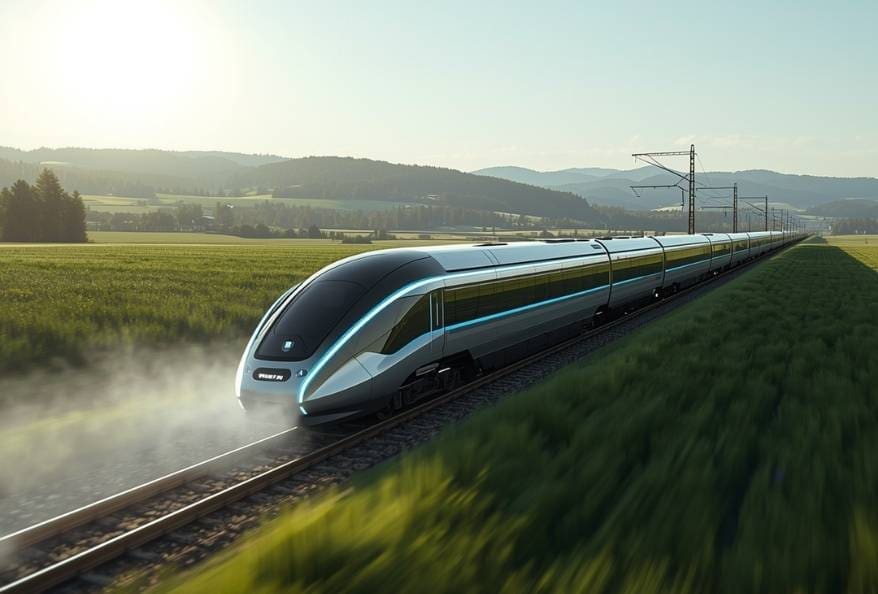
Hydrogen-powered trains are becoming a common sight. While this idea might sound like a story from the future, engineers already use this technology in the real world.
The engineering company Siemens Mobility is building 12 electric trains that run on hydrogen – these trains are clean because they only let out water vapor instead of exhaust. They are a good replacement for diesel trains that create pollution – this technology is a great example of the chemistry and physics you learn about in school.
Key Takeaways on Hydrogen Powered Train Technology
- This is the first hydrogen train fleet in the region.
- Siemens Mobility will deliver 12 hydrogen-powered trains.
- The trains use the Mireo Plus H platform.
- Each train reaches a top speed of 120 km/h.
- Seating includes 131 fixed seats and 5 folding seats.
- The trains will start service in 2029.
- The contract includes 15 years of maintenance.
How do Hydrogen Powered Train Technology work?
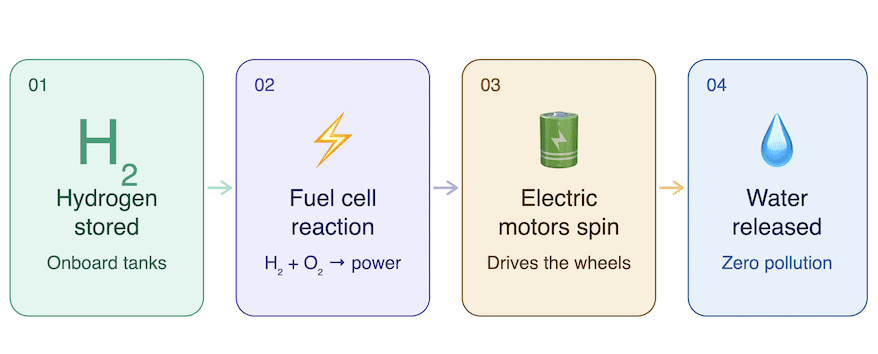
A hydrogen train uses a fuel cell to make electricity – This is related to the study of how chemicals create electrical energy.Trains store hydrogen gas in onboard tanks. The system feeds this gas into a fuel cell, where it combines with oxygen from the air. This reaction generates electricity and produces only water.
The electricity powers the motors that move the train. The system burns no fuel and releases no polluted air. The chemical equation is:
2H₂ + O₂ → 2H₂O + Energy
This is the same reaction you see in your textbooks, but here it powers a very large vehicle.
Why people like hydrogen trains
There are five main reasons these trains are becoming popular
- No pollution
They only release water. - Existing tracks
They can run on regular tracks without needing expensive power lines above them. - Quiet
The engines make much less noise than diesel engines. - Efficient
Fuel cells are very good at turning fuel into movement with little waste. - Versatile
This technology can also work for buses, large trucks and ships.
Why not just use electric trains?
You might ask why we don’t just use electric trains with overhead wires. The reason is that putting those wires over hundreds of miles of track is very expensive and takes a long time. Many train routes do not have the wires yet. Hydrogen trains are helpful because they can run on those tracks without new construction. They are a smart middle ground between diesel and electric systems.
How physics helps
Physics is also a part of how these trains work, especially when it comes to how heat affects metal. Tracks are made of metal – they get longer when they are hot and shorter when they are cold. Engineers leave gaps in the tracks so they don’t bend or break. Designers must also think about this when they build the train wheels and the body of the train to keep everything safe.
Features of the Mireo Plus H
The Mireo Plus H is built to be comfortable for people traveling between towns. The seats are arranged to give everyone enough room. Because the train goes 120 km/h, it is good for middle length trips.
Operators can also hook two trains together if there are a lot of passengers. There are screens and speakers that tell you exactly where the train is and when it will arrive. The train also has safety computers to prevent accidents.
Smart features on Hydrogen Powered Trains
These trains use a lot of high tech tools
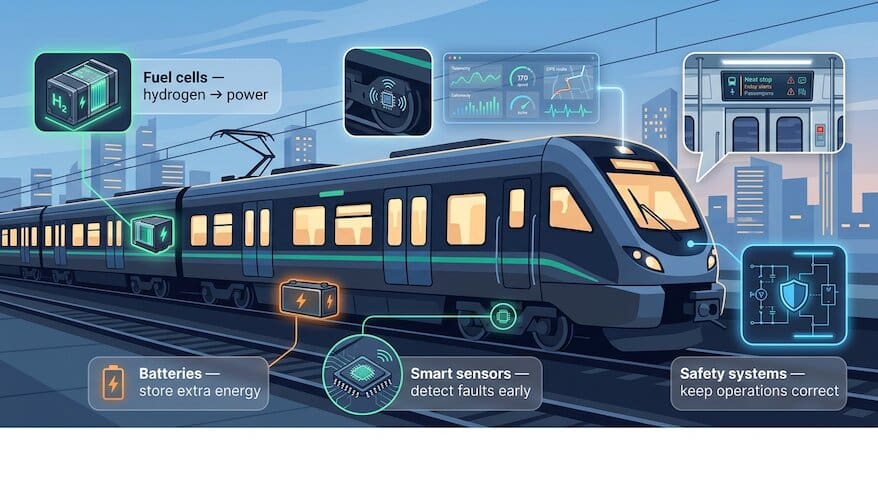
- Fuel cells
These turn hydrogen into power. - Batteries
These save extra energy to use later. - Smart sensors
These find problems before they cause a breakdown. - Live tracking
Computers watch how the train is performing every second. - Digital updates
Screens show passengers information automatically. - Safety systems
These keep the train running correctly.
Using data to keep trains running
Maintenance is easier because these trains use computers to predict when parts might wear out. Sensors watch the parts all the time. If something looks like it might break, engineers get a message to fix it early – this keeps the trains moving and prevents delays.
Helping the economy
This project helps create jobs because the trains need to be fixed and cleaned by local workers. New buildings will be built to take care of the fleet – this helps the local area grow while also improving travel.
Helping the planet
The best part about the trains is that they are better for the earth. Diesel engines release gases that make the planet warmer and the air dirtier. Hydrogen trains help keep the air fresh. They are also much quieter for individuals who live near the tracks.
What this means for the future
Hydrogen is a big part of how we will travel in the future – As it becomes easier to make “green” hydrogen, these trains will become even better for the environment. They are a great choice for places where putting up electric wires is too hard. In short, these trains are clean, quiet and a very practical way to get around using the science you learn in school.
Final Thoughts on Hydrogen Powered Trains
In conclusion, hydrogen-powered trains offer a clean and efficient alternative to traditional rail systems. They produce zero emissions, reduce noise, and work on existing tracks.
Furthermore, as technology improves and investment grows, hydrogen trains are becoming a reliable and scalable solution. Clearly, they are no longer experimental—they are part of the future of transportation.
Additionally, to stay updated with the latest developments in STEM research, visit ENTECH Online.
Frequently Asked Questions about Hydrogen Powered Train Technology
What is a hydrogen-powered train?
A hydrogen-powered train is an advanced type of rail transport that, instead of relying on diesel fuel or overhead electricity, uses hydrogen fuel cells to generate power. Essentially, these fuel cells convert hydrogen into electricity, which then drives the train’s motors. As a result, the only byproduct released is water vapor, making it a much cleaner alternative.
How do hydrogen trains produce zero emissions?
To understand this, it’s important to look at the process inside the fuel cell. When hydrogen reacts with oxygen, it generates electricity through a chemical reaction rather than combustion. Consequently, no carbon dioxide or harmful pollutants are produced—only water vapor and heat—thereby ensuring truly zero emissions at the point of use.
Are hydrogen trains better than diesel trains?
In many ways, yes. While diesel trains burn fossil fuels and release greenhouse gases, hydrogen trains operate much more cleanly. In addition, they are quieter, more energy-efficient, and capable of running on tracks that are not electrified. Therefore, they offer a practical and sustainable alternative, especially in regions where installing overhead electric lines is costly.
What are the challenges of hydrogen train technology?
However, despite their advantages, hydrogen trains do face several challenges. For instance, the cost of producing and storing hydrogen is still relatively high. Moreover, the lack of widespread refueling infrastructure can limit their deployment. Nevertheless, as technology advances and investment increases, these challenges are gradually being addressed.
References
- Temiz, M. S., Boynuegri, A. R., & Yigit, H. (2026). Optimization-Based Sizing of Battery–Fuel Cell Hybrid Propulsion Systems for Hydrogen-Powered High-Speed Trains. Electronics, 15(8), 1633. https://doi.org/10.3390/electronics15081633
- Niakolas, D. K., Daletou, M., Neophytides, S. G., & Vayenas, C. G. (2015). Fuel cells are a commercially viable alternative for the production of “clean” energy. Ambio, 45(Suppl 1), S35–S48. https://www.ncbi.nlm.nih.gov/pmc/articles/PMC4678121/
- Author
- Latest Posts

Kottauppari Venkat Raghava
I am an Information Technology graduate (B.Tech) and a technology writer specialising in artificial intelligence, robotics, automation, and space technologies. I analyse complex scientific research and convert it into clear, practical insights for students, tech enthusiasts, and professionals. My work bridges the gap between academic research and real-world understanding by simplifying findings from peer-reviewed journals into engaging, easy-to-follow content. Alongside my writing, I have hands-on experience developing real-world projects, showcased on my GitHub, including an Expense Tracker web application for managing and visualising spending, and a Simple Video Summariser that generates concise insights from video content using automation techniques. I also produce research-driven articles on topics such as AI-powered corrosion detection, deep learning in engineering, and advanced automation systems. I follow a research-driven approach, ensuring every article is grounded in verified sources, industry knowledge, and practical applications. My goal is to make advanced technology accessible and meaningful, helping readers stay informed about innovations shaping the future.