Let's explore the different stages of pilot certification and their age requirements.
Minimum Age to Start Pilot Training
Estimated reading time: 4 minutes
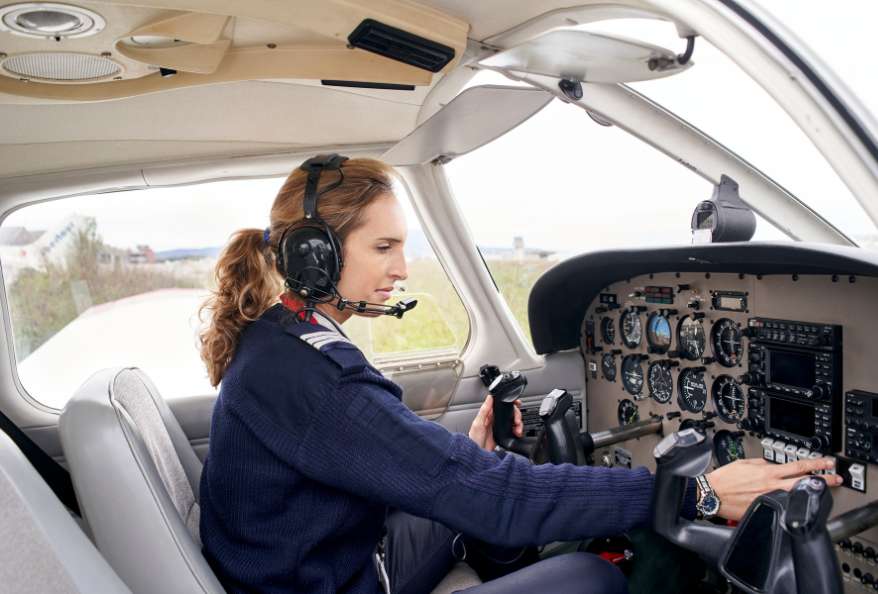
Flying a plane is a popular dream among people. Flying through the skies interests young people and older ones too. But you must know the rules. This includes the youngest age to start pilot training. Start at the right age. This helps you follow all rules and get ready for duties.
Knowledge of this aids aspiring aviators in their journey planning. Understanding the minimum age for pilot training helps set realistic timelines. Also, it helps to prepare for each milestone in the aviation career path. Let’s explore the different stages of pilot certification and their age requirements.
Understanding the Basics for Pilot Training
The process of training to become a pilot consists of multiple phases that each come with different requirements. These steps consist of getting a student pilot certificate, a private pilot license, and possibly a commercial and airline transport pilot certificate. Aspiring pilots should be clear on the age requirements for each level.
Student Pilot Certificate
It all starts with a student pilot certificate. It enables people to commence training under the supervision of a certified instructor. You need to be at least 16 years old to get a student pilot certificate. Starting this early means there is a chance to build fundamental skills and knowledge needed for future training. Getting an early start allows these young aviators to begin familiarizing themselves with the concepts of aviation.
Private Pilot License
From here, you move on to your private pilot license (PPL). This license enables a person to pilot an aircraft for personal use with no payment involved. There is a minimum age of 17 years for a PPL. Pilots in training are generally mature enough at this age to bear the responsibility of all the elements associated with flying an airplane. It covers both the theory and practical flying skills required to fly solo and navigate cross-country.
Also Read: How to join Flying Branch of Indian Air Force.
Commercial Pilot License
The commercial pilot license (CPL) is necessary for people who are interested in an aviation career. This allows pilots to get paid for flying. The minimum age for a CPL is 18 years. Now the training is scaled up in terms of difficulty, where the student pilot practices more advanced skills, such as safety procedures and operation of complex aircraft. According to the Federal Aviation Administration, pilots at this level must demonstrate proficiency in various operational scenarios. At this stage, pilots are trained to be able to work for charter companies or be involved in other commercial operations.
Airline Transport Pilot Certificate
The highest aircraft rating a pilot can obtain is the airline transport pilot certificate (ATP). One needs this certificate to fly big passenger planes as the main pilot. The minimum age for ATP is 23 years. This is the highest certification, requiring a significant amount of training and flight time. Pilots operating at this level are expected to exercise exemplary decision-making as well as flying skills.
Also Read: Air Turbulence: Why it Happens?
Why Age Matters for Pilot Training
Age limits in pilot training certainly make sense. They help make sure pilots have enough maturity, good judgment, and skill when they fly. The younger someone is, the less life experience they will have to make key decisions in critical moments. Thus, age limits help ensure that both the pilot and passengers stay safe.
Training and Preparation for Pilot Training
Future pilots can start preparation before meeting the minimum age requirements, such as studying aviation theory, taking introductory flight lessons, or joining aviation clubs. These activities build foundational knowledge and skills. Also, physical fitness matters. The licensing process tests pilots to check if they can fly. They must pass these tests for a new license and maintain them throughout their career.
Financial Considerations
Flight training can be expensive, so financial planning is essential. Aspiring pilots ought to think about saving funds for training or looking for available scholarships and student loans. Understanding the costs involved in obtaining each type of certification allows for realistic financial planning and goal setting.
Pilot Training: Conclusion
Becoming a pilot is not only thrilling, but also challenging. However, understanding the minimum age for each phase of training is critical to planning effectively. You can start preparing for your journey as early as your high school years. Good health and clear financial goals can pave your way to success. With dedication and commitment, the dream of flying becomes a reality. Building an aviation career is a journey, and every phase will take you closer to your goals.
Additionally, to stay updated with the latest developments in STEM research, visit ENTECH Online. Basically, this is our digital magazine for science, technology, engineering, and mathematics. Further, at ENTECH Online, you’ll find a wealth of information.
- Author
- Latest Posts

A driven and dedicated IT professional specializing in web development and research. Backed by a strong academic foundation and extensive hands-on experience at Coneixement INDIA, I consistently deliver innovative, high-quality digital solutions that enhance user experience and drive measurable business growth.
With a passion for continuous learning and advancing my technical expertise, I am eager to take on new challenges in dynamic, larger organizations where I can contribute to transformative projects, optimize digital strategies at scale, and help elevate the company’s online presence. My commitment to excellence, combined with a results-oriented approach, makes me a valuable asset ready to support business objectives and future-proof digital initiatives in competitive markets.