Artificial intelligence continues to transform modern society, yet its rapid growth places heavy pressure on energy systems. Large data centres and advanced AI models consume massive computational resources, which increases electricity demand and carbon emissions.…
How Photonics Is Changing Computing for a Greener Future
Estimated reading time: 4 minutes
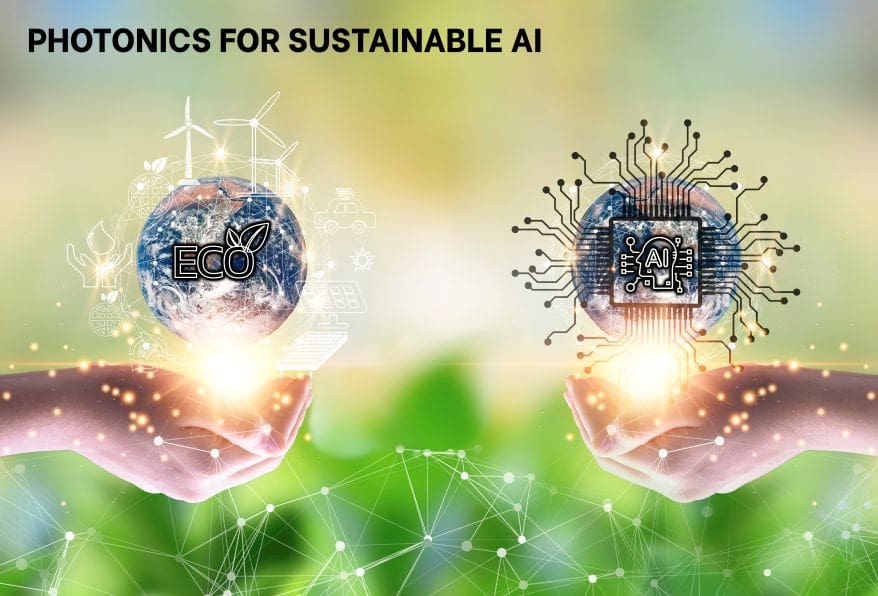
Artificial intelligence continues to transform modern society, yet its rapid growth places heavy pressure on energy systems. Large data centres and advanced AI models consume massive computational resources, which increases electricity demand and carbon emissions. Traditional electronic hardware struggles to scale efficiently while maintaining sustainability goals. Because of this challenge, researchers are now exploring alternative computing approaches that can support AI growth with lower environmental impact. Photonics for sustainable AI, which uses light instead of electricity to process information, offers a promising path toward energy-efficient and climate-aware computing systems.
Researchers Farbin Fayza, Cansu Demirkiran, Satyavolu Papa Rao, Darius Bunandar, Udit Gupta, and Ajay Joshi conducted the study and published it under the title “Photonics for sustainable AI” in October 2025.
ENTECH STEM Magazine has included this research in its list of Top 10 Technology Innovations of 2025.
Their work explains how photonic computing can reduce both operational and manufacturing-related carbon emissions in AI hardware. They analyze how optical components perform complex computations with reduced energy loss compared to electronic circuits. As a result, their research highlights photonics as a viable option for building sustainable AI infrastructure.
The Rise of Photonics in Sustainable Artificial Intelligence
Photonics represents a shift in how computing systems handle data-intensive tasks. Instead of relying solely on electronic signals, photonic systems transmit and process information using light waves. This approach reduces resistance losses and limits heat generation. As AI workloads grow larger, traditional processors require more energy to maintain performance. In contrast, photonic systems handle matrix operations and parallel processing more efficiently. Because of this efficiency, photonic computing supports high-performance AI while keeping energy use under control.
Researchers Shaping Photonics for Sustainable AI
Innovation in photonic AI systems depends on close collaboration across disciplines. Physicists design optical components that guide and manipulate light accurately. Engineers integrate these components with electronic control systems to ensure reliable performance. At the same time, computer architects optimize algorithms to run efficiently on photonic hardware. This collaborative approach ensures that photonic systems remain practical, scalable, and aligned with real-world computing demands. As research progresses, these combined efforts move photonic AI closer to large-scale deployment.
Real-World Applications of Photonic AI Systems
Photonics may appear specialized, yet its impact reaches everyday digital services. Data centers that support cloud computing, streaming platforms, and online communication rely heavily on AI processing. By integrating photonic accelerators, these centers can lower electricity consumption while maintaining fast response times. In addition, photonic systems support real-time image recognition, speech processing, and data analytics. As a result, users experience faster and more reliable digital services without a corresponding increase in environmental cost.
Progress Toward Commercial-Scale Photonic Computing
Photonic computing systems already demonstrate strong performance in research and pilot environments. Hybrid designs that combine photonic and electronic components show improved carbon efficiency over extended operation periods. However, challenges remain in manufacturing scalability, system integration, and cost reduction. Researchers continue refining fabrication techniques and system architectures to overcome these barriers. With continued investment and collaboration, photonic AI hardware could enter broader commercial deployment later this decade, particularly in large data centers.
Academic and Career Pathways in Photonic AI Research
Photonics for sustainable AI opens diverse career opportunities for students and early researchers. Learners can specialize in optical engineering, materials science, or integrated photonic design. Others may focus on AI hardware architecture, energy modelling, or carbon footprint assessment. Interdisciplinary training becomes especially valuable, as future systems require knowledge of physics, computing, and sustainability. These research paths prepare students for roles in academia, industry, and policy institutions focused on responsible technology development.
Building a Sustainable Future for AI Computing
As AI continues expanding across industries, sustainable computing solutions become increasingly important. Photonic systems offer a way to balance performance growth with environmental responsibility. By reducing energy consumption and embedded carbon emissions, this innovation supports global climate goals. Over time, photonics may redefine how society builds and operates intelligent systems. Through continued research and responsible adoption, photonic AI can help shape a more sustainable digital future.
Additionally, to stay updated with the latest developments in STEM research, visit ENTECH Online. Basically, this is our digital magazine for science, technology, engineering, and mathematics. Also, at ENTECH Online, you’ll find a wealth of information.
Reference
Fayza, F., Demirkiran, C., Rao, S. P., Bunandar, D., Gupta, U., & Joshi, A. (2025). Photonics for sustainable AI. Communications Physics, 8(1). https://doi.org/10.1038/s42005-025-02300-0
- Author
- Latest Posts

Ashwini Kshirsagar holds a graduate degree in Chemistry and a postgraduate degree in Environmental Science from Shivaji University, Kolhapur. With a strong foundation in scientific principles and a creative flair, she blends her expertise in environmental science with skills in technical writing, graphic design, and video editing. Proficient in Adobe software, Ashwini excels at transforming complex scientific concepts into clear, engaging, and visually compelling content. Her unique ability to merge science and storytelling allows her to create impactful communication materials that are both informative and accessible to a wide audience.