Researchers have recently discovered that the rabies virus uses a protein...
Rabies’ Method of Cellular Takeover
Estimated reading time: 4 minutes
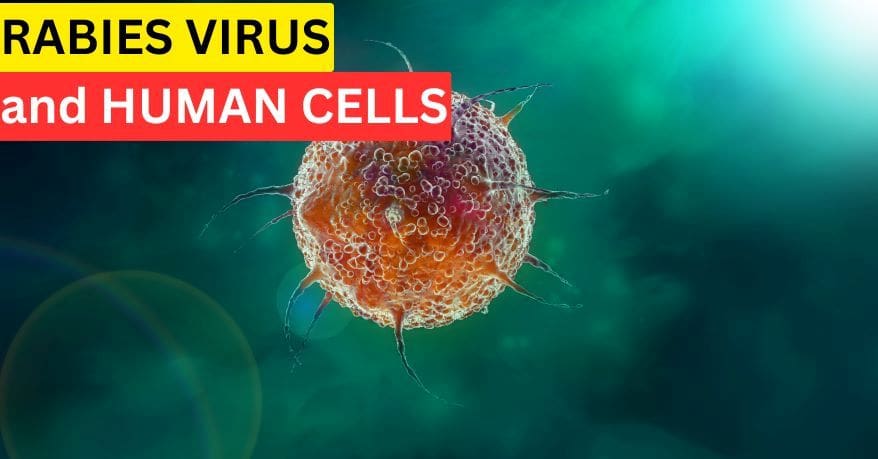
Rabies, spread by Rabies virus, is a deadly viral disease that affects the nervous system of mammals, including humans. It is typically transmitted through the bite or scratch of an infected animal, like dogs, bats, raccoons, skunks, and foxes. Rabies is almost always fatal once clinical symptoms appear. However, it is treatable if the person receives prompt post-exposure prophylaxis (PEP) – a series of vaccinations and rabies immunoglobulin. Researchers have recently discovered that the rabies virus uses a protein called viral P protein. This protein can change its shape to influence essential cell functions. By doing so, it can hijack RNA. The viral P protein can also switch between different physical ‘phases’ inside the cell by targeting RNA systems.
Stephen M. Rawlinson, et al carried out the study and published it under the title “Conformational Dynamics, RNA Binding, and Phase Separation Regulate the Multifunctionality of Rabies Virus P Protein” in December 2025.
ENTECH STEM Magazine has included this research in its list of the Top 10 Biology Discoveries of 2025.
Potential Benefits with Rabies Virus Protein Research
Improved Rabies Prevention and Treatment
- Understanding how the rabies virus manipulates cellular processes is important. It could lead to more effective preventive measures. It could also improve treatments for rabies
- This knowledge could help in designing better vaccines. It could also guide the development of antiviral drugs or other interventions. These would target the viral protein and its interactions with the host cell’s RNA systems.
Broader Applicability to Viral Diseases
- The insights gained from rabies virus research may help us understand how other viruses operate. They could reveal the strategies viruses use to exploit host cell machinery. They may also shed light on how viruses evade immune responses.
- This could contribute to the development of broad-spectrum antiviral therapies or universal approaches to combat viral infections. This could, therefore, have far-reaching benefits in day-to-day life.
Fundamental Understanding of Virus-Host Interactions
- The discovery of the rabies virus’s shape-shifting protein and its ability to control vital cell functions through RNA hijacking represents a significant advancement in our understanding of virus-host interactions.
- This knowledge can, thus, be applied to enhance our overall comprehension of how viruses evolve and adapt to infect and manipulate host cells. This could, therefore, inform future research and lead to innovative solutions.
Biotechnological Applications: Rabies Virus Protein Research
- The flexibility as well as the adaptability of the rabies virus’s shape-shifting protein may inspire the development of novel biotechnological tools or platforms. These tools can be used in various applications, for example, in gene editing, RNA engineering, or synthetic biology.
- These advancements could potentially lead to breakthroughs in fields like medicine, agriculture, and also environmental remediation, with practical implications for daily life.
Educational and Career Opportunities: Rabies Virus Protein Research
Virology and Viral Pathogenesis
- Studying the structure, function, as well as dynamics of the shape-shifting viral protein that enables the rabies virus to manipulate host cell processes
- Investigating the mechanisms by which the rabies virus exploits the host cell’s RNA systems to its advantage and also evades immune responses.
- Exploring the evolutionary adaptations and genetic mechanisms that allow the rabies virus to develop this unique shape-shifting capability
RNA Biology and Virus-Host Interactions
- Understanding the specific interactions between the rabies virus’s shape-shifting protein and the host cell’s RNA-based regulatory systems
- Examining the impact of these viral-host interactions on cellular signaling pathways, gene expression, as well as on overall cellular homeostasis
- Developing a comprehensive understanding of how viruses like rabies can hijack and, thus, repurpose the host cell’s RNA machinery for their own benefit
Antiviral Drug Discovery and Design
- Identifying vulnerabilities or critical points of intervention within the shape-shifting protein and its interactions with host cell RNA systems
- Designing and evaluating small-molecule inhibitor, peptides, or other therapeutic agents that can disrupt the viral protein’s ability to control cellular functions
- Exploring combination therapies that target multiple aspects of the rabies virus’s shape-shifting mechanism to enhance the effectiveness of antiviral treatments
Comparative Virology and Cross-Species Transmission
- Investigating whether other viruses, especially those with limited genetic material, employ similar shape-shifting strategies to hijack host cell processes
- Studying the potential for the rabies virus’s shape-shifting mechanism to contribute to its ability to cross species barriers and adapt to new host environments
- Developing predictive models and early warning systems to identify emerging viral threats with similar shape-shifting capabilities
Reference
- Rawlinson, S.M., Chakraborty, S., Sethi, A. et al. Conformational dynamics, RNA binding, and phase separation regulate the multifunctionality of rabies virus P protein. Nat Commun 16, 9491 (2025). https://doi.org/10.1038/s41467-025-65223-y
- Chen, S.-J., Rai, C.-I., Wang, S.-C., & Chen, Y.-C. (2025). Infection and Prevention of Rabies Viruses. Microorganisms, 13(2), 380. https://doi.org/10.3390/microorganisms13020380
Additionally, to stay updated with the latest developments in STEM research, visit ENTECH Online. Basically, this is our digital magazine for science, technology, engineering, and mathematics. Also, at ENTECH Online, you’ll find a wealth of information.
- Author
- Latest Posts

I am a Master’s qualified in Science with focus on Zoology and Entomology and am a passionate, curiosity-driven science enthusiast aiming to transform complex scientific ideas in a manner that are easy to understand hence, educate, and inspire.
I have an experience of working on the projects in the field of Entomology which has provided me hands-on experience with various research techniques. Besides, I have also gained experience of lab work as well as developed communication skills during the course of my bachelors and masters.
With a strong foundation in life sciences and a growing interest in Medical and Biological research, I have cultivated a writing style that merges scientific facts with creativity.
My experience in teaching has also taught me to develop an understanding of what are the interests of people and how to communicate them effectively.
I am committed to lifelong learning, actively engaging in Interdisciplinary learning, so as to broaden my perspective.