Explore the critical role of plastics in future technology. Learn how bioplastics and advanced recycling are tackling environmental challenges.
Role of Plastics in the Shaping of Future World and Annihilation of its Disadvantage
Estimated reading time: 9 minutes
Introduction: Role of Plastics in Future Technology
People call many artificial materials plastics. These items are mostly made of polymers. Owing to their unique quality, i.e. ‘plasticity’ these can be compressed, shaped, extruded into a wide variety of solid shapes. We use them widely because they are light, flexible, strong, and safe. They do not react with chemicals and cost very little to make. Most plastics come from oil and natural gas.
Science and Structure of Polymers
Etymology and Molecular Composition
The Ancient Greek word plastikos, which means “capable of being shaped or molded” comes from the word plastos, which means “molded” or “formed.” This is where the name plastic originates. The solid synthetic goods made from petrochemicals are most frequently referred to as plastic in modern use. Organic polymers make up the majority of plastics.
The great bulk of organic polymers are made of chains of carbon atoms. These chains of carbon atom is either with or without the addition of oxygen (O2), nitrogen (N2), or sulfur(S) atoms. These chains are made up of many monomer-based repeating units. There are thousands of repeating units in each polymer chain. The portion of the chain is on the main path and it connects a lot of repetition units that are called the backbone.
Classification and Physical Characteristics
The characteristics of plastics are determined by different molecular groups. These small groups attach to the main chain to alter how plastic acts. Scientists attach these side parts to the small units before linking them together to build the chain. This molecular precision is what defines the role of Plastics in Future Technology, allowing for the creation of high-performance materials tailored for specific innovations.
Plastics are categorized according to the chemical structure of polymer’s side chain and backbone. Important groupings of plastics such as silicones, polyurethanes, acrylics, polyesters, and halogenated polymers are categorized in this manner. The chemical processes, for instance condensation, poly-addition, and cross-linking are applied in the synthesis of plastics. Their physical characteristics, like tensile strength, heat resistance, hardness, density, and glass transition temperature, are also used to classify them. Plastics can also be classified on the basis in which they respond to certain substances and processes such as ionizing radiation ,oxidation and exposure to organic solvents.
Types of Plastic
Plastics are grouped into two types, thermosetting and thermoplastic, based on how they act. Here is how they work:
Thermoplastic
These plastics are easily distorted and bent when heated. A mix of linear and cross- linked polymers and linear polymers are known as Thermoplastics. Some examples are PVC, nylon, polythene, etc.
Thermosetting
After molding, these plastics cannot be soften or heated again. These Plastics are heavily cross-linked polymers. For example, melamine, bakelite, etc. Melamine is used to make floor tiles, while Bakelite is used to make electrical switches.
Characteristics of Plastics include
- Strength and ductility.
- Poor electrical and heat conductors.
- Easily shaped and sized.
- They are resistant to numerous chemicals and corrosion.
Major Applications of Plastics in daily life
We use plastic for many things every day.
- Packing: Plastics are ideal for drinks, packing foods, and medications since they are flexible, lightweight, and moisture-resistant.
- Building and Construction: The applications of plastics in building construction are exemplified by window frames, PVC pipes, insulation, and wall coverings.
- Household Products: Thermoplastics last a long time and stay clean easily. People often use them for bottles, dishes, chairs, and boxes.
- Electrical and Electronics: Manufacturers use thermosetting plastics for device cases to cover electrical wires, switches, and outlets.
- Automotive and Transportation: Plastics boost safety, increase fuel efficiency and decrease vehicle weight.
- Healthcare: Advanced polymers often make syringes, IV bags, and cases for medical tools.
Plastic kept people healthy and safe during the COVID-19 outbreak. Items like masks, gloves, shields, and gowns use plastic to block viruses. Plastic tools like breathing machines, vaccine needles, and test kits also helped doctors treat patients and give vaccine to many people.
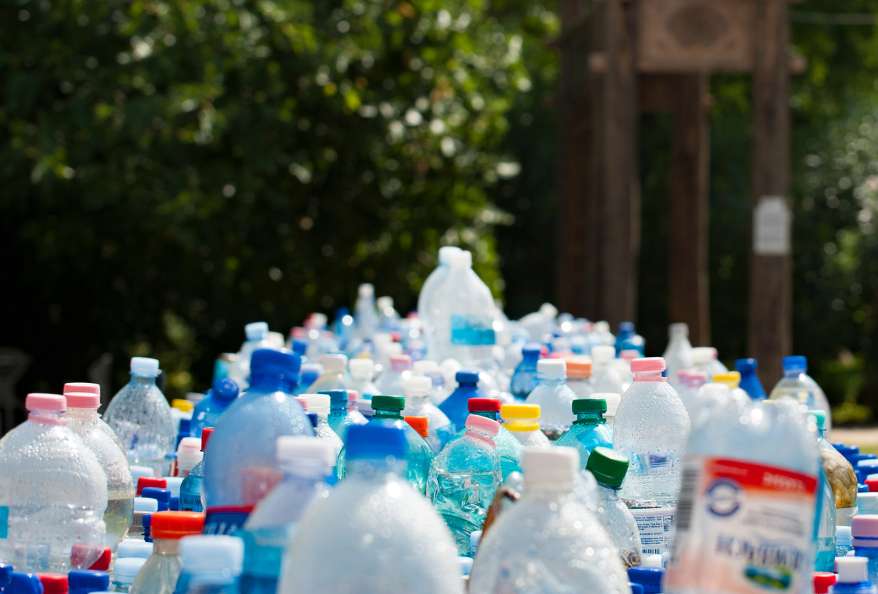
In public areas and hospitals, singleuse plastics reduced the chance of contamination and guaranteed hygiene. The epidemic brought to light the indispensable nature of plastics, but it also emphasized the necessity of recycling and sustainable disposal methods to properly handle plastic waste (Figure 1).

The Challenges of Using Plastic
In addition to endangering the environment, plastic pollution also poses a threat to human health and the health of future generations. The “Age of Plastics” has a number of drawbacks despite its advantages:
1. Environmental Impact:
Majority of plastics can linger in the environment for generations and are not biodegradable. Every year, large quantity plastic debris pours into the ocean. It endangers marine life by entanglement and ingestion.
2. Health Risks:
Scientists have found tiny plastic bits in human blood, lungs, and placentas. These particles form when plastic items wear away.
The occurrence of micro and nano-plastics in the human body may be unfavorable to health. Humans chiefly get microplastics into their body by food. Inhalation and skin contact come close second. We still do not know how much plastic each person eats. Its consumption range from 0.1 to 5 g per week by any individual according to an estimate. It is also revealed that Inhalation of about 26 and 170 airborne (Micronutrient Powder) MNPs each day. Over a year, this adds up to 22 million tiny plastic pieces. Animal studies show that these plastics pass through their gut and travel around the body.
Even though this area of research is an innovative one, identifying these risks is essential for redefining the role of Plastics in Future Technology. Understanding how current polymers interact with the human body allows scientists to engineer safer, more biocompatible materials for the next generation of industrial and medical applications.
New research links breathing problems to microplastics found in the human body. We still need to investigate other issues like inflammatory bowel disease and the conditions that affect the health. On top of that, plastics enhance the risk of illness. It serves as a means for human pathogens that have a predominantly strong affinity for plastic debris. Chemical additives like phthalates and BPA interfere with our hormones. They can cause obesity, infertility, and lead to some cancers.
Plastic Recycling
Adopting sustainable methods is crucial to reducing the harmful effects of plastic use. This entails creating biodegradable substitutes, enhancing recycling techniques, and lowering dependency on single-use plastics.
We must weigh the key benefits of plastic medical tools against their impact on nature. Sustainable practices include advancements in waste management techniques and biodegradable medical polymers.
- Plastic recycling is crucial. If we wait too long, plastic gets hard to reuse. It mixes with other things and dirties the earth.
- The microbial action does not break them down since they are not biodegradable.
- Using biopolymers or biodegradable polymers is crucial to preventing this.
Some plastics fall apart after use. We generally call them biodegradable plastics. The most common type of it is polylactic acid (PLAs). PLAs come from renewable, non-petrochemical sources. Manufacturers and researchers most widely use PLAs among these materials.
PLAs have had very little commercial success. These plastics breakdown when they touch water, sun, germs, light, bugs, or wind. Most plastics come from oil based sources. But bioplastics use renewable plant based sources like starch and cellulose instead. We are making more and more bioplastics, because of the limited supply of fossil fuels and the increasing amounts of greenhouse gases. Every year, the world can make about 327,000 tons of bio-based plastics from plants. On the other hand, experts predict that the world produced over 150 million tonnes of petrochemicalderived polyolefins, polyethylene (PE) and polypropylene (PP), in 2015 alone.
Global Collaboration on Plastics and Health
In May 2023, countries met in Geneva for the 76th World Health Assembly. A group of nations, including Peru, Canada, and others, suggested a new plan. This plan aims to stop chemicals, waste, and pollution from hurting people. The assembly agreed to this plan.
The WHA76 portal shows the resolution. It lists decisions from the UN Environment Assembly and Human Rights Council. It also includes notes and links to recent talks. The Intergovernmental Negotiating Committee, which is responsible for creating a legally enforceable document on plastic pollution, is one of these.
The resolution calls for increasing the amount of work done on plastics and health. In addition to being an environmental issue, combating plastic pollution also involves safeguarding human health from contaminants. The process to create a new treaty on the subject began in 2022 after the UN Environment Assembly passed a historic resolution to stop plastic pollution in March of that year. The accord may present a chance to better safeguard human health from the dangers of Plastics. These tools list programs in Geneva and other places. They aim to show how plastics affect health and stop the plastic crisis to keep people safe. Ultimately, these global standards will redefine the role of Plastics in Future Technology, ensuring that the next generation of materials is designed with human safety and ecological health as foundational requirements.
Prospects of Plastics in Future Technology
We must start recycling plastic everywhere. If we recycle well across the world, we clean the air and ground. On the other hand, recycling also makes many new job opportunities. The technique entails making the necessary arrangements, such as setting up research centers for plastic recycling and hiring qualified individuals to carry out this task. This circular approach is central to the role of Plastics in Future Technology, as it ensures that the high-performance polymers required for tomorrow’s innovations are sourced sustainably. This method helps fix joblessness and pollution across the globe without conflict.
The industry must switch from a linear “make-use waste” strategy to a circular one if plastic is to survive.
Advanced Recycling:
Technologies like chemical recycling, which breaks down waste into its constituent elements to create new products, enable a number of recycling cycles.
Sustainable design:
It is the process of producing materials that are not only recyclable but also biodegradable and supplied responsibly.
Reduction Efforts:
New rules encourage people to refill containers. They also help everyone stop using plastic items meant for one use only.
Additionally, to stay updated with the latest developments in STEM research, visit ENTECH Online. Basically, this is our digital magazine for science, technology, engineering, and mathematics. Further, at ENTECH Online, you’ll find a wealth of information.
References:
- 76th World Health Assembly. (n.d.). https://www.genevaenvironmentnetwork.org/events/76th-world-health-assembly/
- Kalali, E. N., Lotfian, S., Shabestari, M. E., Khayatzadeh, S., Zhao, C., & Nezhad, H. Y. (2023). A critical review of the current progress of plastic waste recycling technology in structural materials. Current Opinion in Green and Sustainable Chemistry, 40, 100763. https://doi.org/10.1016/j.cogsc.2023.100763
- Author
- Latest Posts

He has been pursuing Ph.D under the mentorship of Dr. Pankaj Kumar Chaurasia, Assistant Professor, P.G. department of chemistry, Langat Singh College, B.R.A. Bihar University, Muzaffarpur, He has written four research papers and articles that are based on organic pollutants. These research papers are published in reputed Journal.
- Author
- Latest Posts

He has been pursuing Ph.D under the mentorship of Dr. Pankaj Kumar Chaurasia, Assistant Professor, P.G. department of chemistry, Langat Singh College, B.R.A. Bihar University, Muzaffarpur, He has written 10 research papers and five articles that are based on degradation of unused dyes and its effect on biological environment. These research papers and articles are published in reputed journals and magazine.