Muscle growth occurs through hypertrophy, stimulated by strength training and proper recovery...
Muscular System: Understanding Muscle Structure and Function
Estimated reading time: 6 minutes
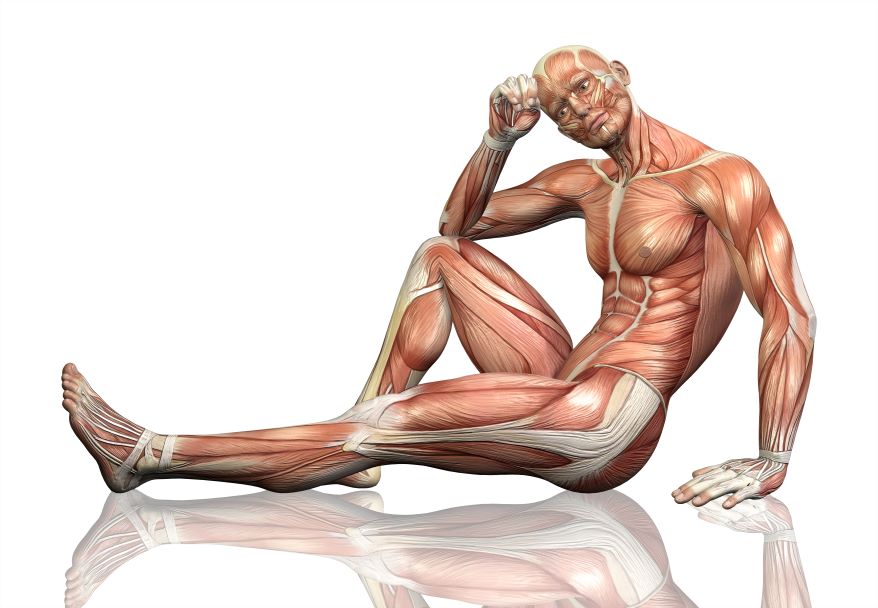
Your body contains a living machine. This machine converts chemical energy into motion. Every step you take depends on it. Your heartbeat runs on it too. Food moves through your gut with its help. Around 600 muscles power this system. The Muscular System is responsible for nearly half your body weight. Muscles pull on bones to create movement. Posture stays steady because of them. Heat radiates from their constant activity. Nearly 85 per cent of body heat comes from muscles. Studying how muscles work helps biology students learn. It also helps anyone build strength safely. This guide covers muscle types, contraction, and care. Learn the science behind every move you make.
Key Takeaways: Muscular System
- First, skeletal muscle is voluntary, meaning you consciously control it. In contrast, cardiac and smooth muscles work involuntarily, allowing them to function automatically.
- During muscle contraction, actin and myosin filaments slide past each other. As a result, the muscle fibres shorten and produce movement.
- Furthermore, acetylcholine acts as a chemical signal at the neuromuscular junction. Consequently, it triggers skeletal muscle fibres to contract.
- In addition, muscle fibres have different functional characteristics. For example, Type I fibres are well suited for endurance activities, whereas Type II fibres generally produce greater power and support rapid movements.
- Finally, maintaining healthy muscles requires several supportive habits. For instance, adequate protein and water support muscle function, while warm-ups prepare muscles for activity. Moreover, sufficient rest and recovery help maintain muscle health and performance.
The Muscular System: An Overview
Scientists call these cells muscle fibres. Their dominant function is contractibility. Muscles attach to bones and internal organs. Blood vessels carry muscle in their walls too. Movement is the main result of contraction. Almost all body motion relies on this process. A few exceptions stand out. Cilia beat in a rhythmic wave. The sperm flagellum whips to propel the cell. Some white blood cells crawl using amoeboid movement. These actions do not involve muscles. About 600 muscles populate the human body. Each one performs a defined job. Muscles also keep your posture upright. They stabilise joints like the knee and shoulder. Heat production ranks as another vital role.
Three Muscle Types in the Muscular System
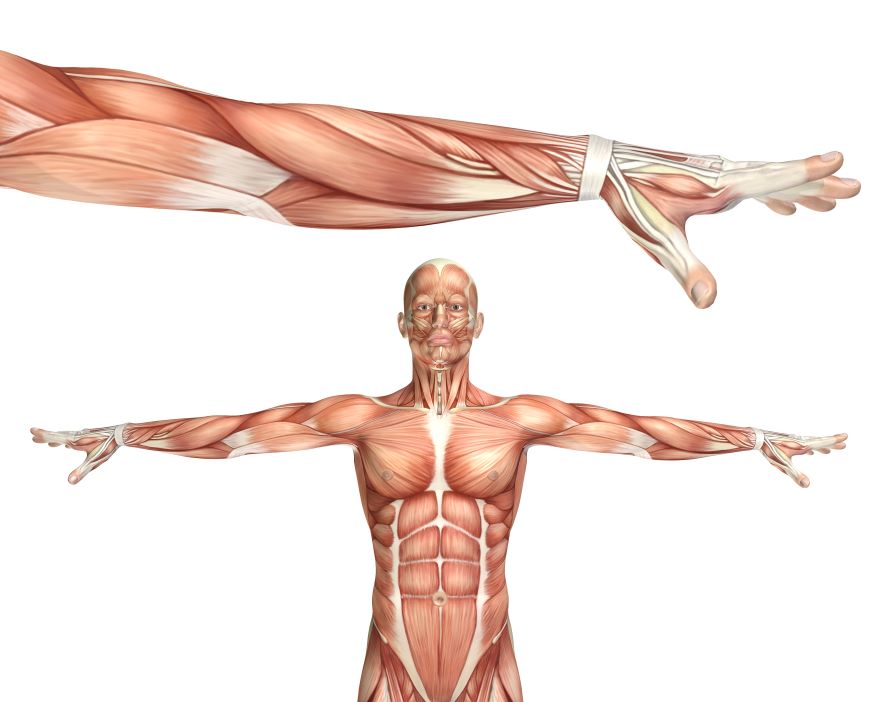
Muscle tissue occurs in three distinct forms: skeletal, cardiac, and smooth muscle. First, skeletal muscle produces movement by moving the skeleton, while cardiac muscle, in contrast, powers the heart and maintains continuous blood circulation. Meanwhile, smooth muscle lines hollow organs and helps control their functions. Although these muscle types perform different roles, they share four important properties. Specifically, excitability enables muscle cells to respond to stimuli, whereas contractility allows them to shorten and generate force. In addition, extensibility allows muscle cells to stretch, particularly when opposing muscles contract, while elasticity enables them to return to their original resting length. Together, these properties make muscle tissue highly specialised and adaptable.
Skeletal Muscle in the Muscular System
Skeletal muscle is the type of muscle that you can control voluntarily. First, it attaches to bones through strong connective tissues called tendons. When skeletal muscles contract, they pull on bones and, as a result, produce movement. Typically, most skeletal muscles span two bones. In this arrangement, the less movable attachment is called the origin, whereas the more movable attachment is known as the insertion.
Smooth Muscle in the Muscular System
Smooth muscle functions involuntarily, meaning you do not consciously control its activity. Primarily, it lines the walls of hollow organs, including blood vessels, the gastrointestinal tract, the gallbladder, and the urinary bladder. Structurally, each smooth muscle cell is relatively small and typically contains a single nucleus. Furthermore, smooth muscle cells can divide and regenerate, which helps the tissue repair itself when necessary.
In addition, smooth muscle contains thick and thin filaments that generate contraction. Unlike skeletal muscle, however, these filaments do not organize into myofibrils. Instead, they attach to structures called dense bodies, which help transmit the force produced during contraction. Consequently, smooth muscle can contract without the highly organized sarcomere arrangement found in skeletal muscle.
Cardiac Muscle in the Muscular System
Cardiac muscle forms the thick muscular wall of the heart and plays a vital role in continuously pumping blood throughout the body. Structurally, its fibres branch into distinctive Y-shaped patterns, allowing neighbouring cells to connect efficiently. Furthermore, specialised structures called intercalated discs join adjacent cardiac muscle cells. Through these connections, the discs transmit mechanical force from one cell to another and, at the same time, allow electrical signals to spread rapidly across the tissue.
How Muscles Contract
Muscle contraction follows a specific and coordinated sequence of events. First, a nerve impulse initiates the entire process and travels toward the muscle fibre. Next, the impulse reaches the muscle cell membrane, known as the sarcolemma. As a result, electrical activity spreads across the sarcolemma and triggers further changes within the muscle cell. Then, calcium ions are released from their storage site, primarily the sarcoplasmic reticulum. Consequently, the increase in calcium concentration initiates the molecular interactions responsible for muscle contraction.
The Sliding Filament Theory
Two types of filaments lie within each sarcomere and work together to produce muscle contraction. First, the thin filaments consist primarily of actin, whereas the thick filaments consist primarily of myosin. In addition, two regulatory proteins, tropomyosin and troponin, control the interaction between these filaments. Normally, tropomyosin covers the myosin-binding sites on actin, while troponin helps hold tropomyosin in position.
When contraction begins, calcium ions bind to troponin. As a result, troponin changes shape and shifts tropomyosin away from the myosin-binding sites on actin. Consequently, myosin heads can attach to actin and form cross-bridges. Next, each myosin head pivots and pulls the actin filament toward the center of the sarcomere. Therefore, the sarcomere shortens, producing muscle contraction
Frequently Asked Questions: Muscular System
What is the human muscular system?
The human muscular system is a complex network of muscles that work together to enable movement, maintain posture, and support bodily functions. It includes three types of muscles: skeletal, smooth, and cardiac.
How many muscles are in the human body?
There are over 600 muscles in the human body, each with specific functions ranging from voluntary movements like walking to involuntary actions such as digestion.
What are the different types of muscles?
The three main types of muscles are skeletal muscles (attached to bones and responsible for voluntary movement), smooth muscles (found in organs and responsible for involuntary movements), and cardiac muscle (found only in the heart).
How do muscles grow and get stronger?
Muscles grow and strengthen through a process called hypertrophy, which occurs when muscle fibres repair themselves after being stressed or damaged during exercise, leading to increased muscle size and strength.
Why is muscle health important for beginners?
Healthy muscles improve overall strength, endurance, and flexibility, reduce the risk of injury, and enhance metabolic function, making it essential for beginners to understand and care for their muscular system.
Can muscles get tired or fatigued?
Yes, muscles can experience fatigue when they are overused or deprived of oxygen and nutrients, leading to a temporary decrease in strength and performance.
How does the muscular system interact with other body systems?
The muscular system works closely with the skeletal system to facilitate movement, with the nervous system to control muscle contractions, and with the circulatory system to supply muscles with oxygen and nutrients.
References
- Kaura, V., & Hopkins, P. M. (2024). Recent advances in skeletal muscle physiology. BJA education, 24(3), 84–90. https://doi.org/10.1016/j.bjae.2023.12.003
- Herzog, W. Skeletal muscle mechanics: questions, problems and possible solutions. J NeuroEngineering Rehabil 14, 98 (2017). https://doi.org/10.1186/s12984-017-0310-6
- Author
- Latest Posts
I am a Master’s qualified in Science with focus on Zoology and Entomology and am a passionate, curiosity-driven science enthusiast aiming to transform complex scientific ideas in a manner that are easy to understand hence, educate, and inspire.
I have an experience of working on the projects in the field of Entomology which has provided me hands-on experience with various research techniques. Besides, I have also gained experience of lab work as well as developed communication skills during the course of my bachelors and masters.
With a strong foundation in life sciences and a growing interest in Medical and Biological research, I have cultivated a writing style that merges scientific facts with creativity.
My experience in teaching has also taught me to develop an understanding of what are the interests of people and how to communicate them effectively.
I am committed to lifelong learning, actively engaging in Interdisciplinary learning, so as to broaden my perspective.
- Author
- Latest Posts

I completed my Master of Science from the University of Allahabad in 2017 with a strong academic background in life sciences and chemistry. My specialization included Molecular Biology, Microbiology, Genetics, Plant Breeding, Phycology, Paleobotany, and Bioinformatics, along with Organic Chemistry, Inorganic Chemistry, and Physical Chemistry. This multidisciplinary training provided me with a comprehensive understanding of biological systems and analytical scientific approaches.
After completing my postgraduate studies, I gained valuable professional experience in both the education and social development sectors. I worked at A.M. Oxford Public School, where I was actively involved in guiding students toward academic excellence. In this role, I focused on creating an engaging learning environment, encouraging critical thinking, and nurturing students’ curiosity for scientific learning. My experience as an educator strengthened my communication, mentoring, and classroom management skills.
In addition to my teaching experience, I worked with Jeevan Jagriti Foundation, where I contributed to community-based initiatives aimed at improving educational access and awareness among underprivileged sections of society. Through this work, I participated in programs designed to support social development and promote the value of education in marginalized communities.
These professional experiences helped me develop strong interpersonal, leadership, and organizational skills while reinforcing my commitment to education and community service.