Why does time slow down during fear is a common question?
Why Does Time Slow Down When You Are Scared? The Science of Memory Encoding
Estimated reading time: 6 minutes
Why does time slow down during fear is a common question?
Your brain is not lying to you. During fear, your memory works at full speed – and that changes everything about how you experience time.
Picture this. You slip on a wet floor. For a split second, everything slows to a crawl. You see the ground rushing toward you in detail. Then – thud. It is over. But why did it feel so long?
At first, this seems like a trick. As a matter of fact, your brain is doing something very real. It is not bending time. It is bending your perception of it. The science behind this is called memory encoding density – and it is fascinating.
What is memory encoding density?
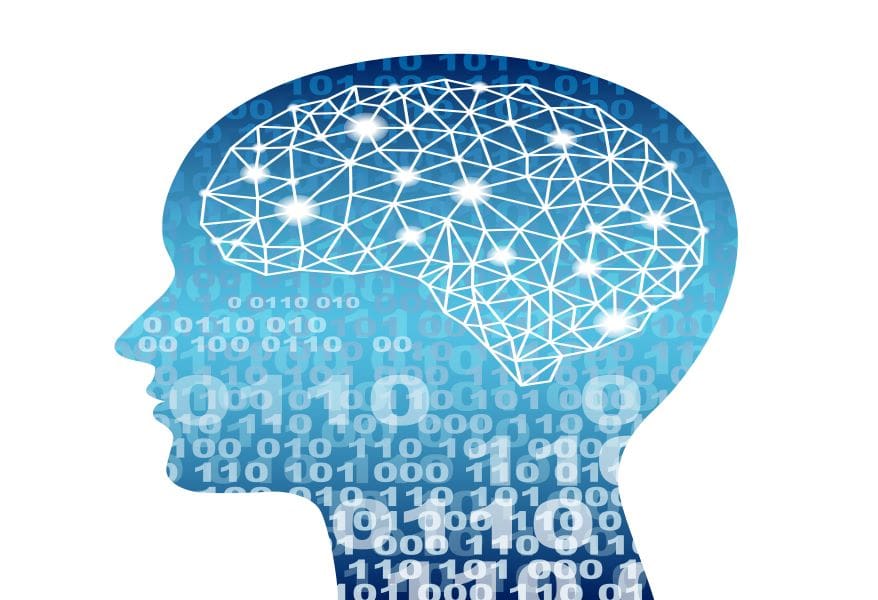
Your brain records memories like a video camera. At any rate, not all moments are recorded at the same rate. Some moments pack in far more detail than others. To explain: when you are calm, your brain records loosely. When you are scared, it records intensely.
To put it differently, think of two one-minute videos. One is recorded at 30 frames per second. The other at 120 frames per second. They both last one minute. But the second video feels far longer when you play it back slowly.
That second video is your brain on fear.
What your brain records during a fear response
- Exact visual details of the environment around you
- The sounds, smells, and textures of the moment
- Your body’s position, heartbeat, and muscle tension
- The sequence of micro-events happening around you
- Emotional intensity markers tied to each sensory detail
Also read: Chemistry of Drug Addiction
Why Does Time Slow Down During Fear in Dangerous Moments?
All of these details get packed into a very short time window. Seeing that so much is recorded so fast, your brain later reads that memory as having taken a long time. After all, dense memories feel longer than sparse ones.
The amygdala’s role Prior to understanding time perception, you need to meet one brain region: the amygdala. It is a small, almond-shaped structure. It sits deep inside your brain. And it is your fear alarm system.
The moment you sense danger, the amygdala fires. With this in mind, it sends signals to nearly every other brain region. It tells your body to release adrenaline. Your heart races. Your muscles tense. Your senses sharpen.
Your amygdala does not just react to fear — it upgrades your brain’s recording quality, all in under a second.
What’s more, the amygdala activates a secondary memory system called the basolateral complex. This system tags emotional experiences. It labels them: “This is important. Record everything.” So your brain starts encoding at a much higher rate.
The retrospective memory illusion
Here is the key insight. The slowdown you feel during fear is not happening in real time. To illustrate: a team of researchers tested this at Southern Methodist University. They dropped people from a 150-foot platform. Participants wore watches showing fast-flashing numbers. If time truly slowed, they would read those numbers easily. They could not.
So, while it may be true that the event felt slow, time was not actually running differently. What changed was the memory formed afterward. More detail in the memory meant a longer-feeling event on playback.
Three factors that increase memory encoding density
- Emotional intensity: Fear, surprise, and excitement all trigger denser recording
- Novelty: New experiences are encoded with more detail than familiar ones
- Attention: The more focused you are, the more your brain stores
This is also why your first day at a new job feels long and rich. Your brain is encoding every small detail. After that, routine days blur together because fewer novel things are recorded.
The norepinephrine connection: Why does time slow down during fear
At this point, you might wonder: what is the chemical doing the heavy lifting? The answer is norepinephrine. It is a stress hormone and neurotransmitter released during fear. To enumerate its effects: it sharpens attention, speeds up neural processing, and strengthens synaptic connections in the hippocampus — the memory storage center.
Provided that norepinephrine levels stay high during the event, the brain keeps encoding details at full throttle. As a result, the memory formed is rich, layered, and long-feeling. This explains why time slows down during fear in real situations.
Everyday situations where time seems to slow down
- A car accident or near-miss while driving
- The moment before a sports injury occurs
- Watching something drop and knowing it will break
- Your first roller coaster drop
- Slipping on wet stairs or a wet floor
Analogous to a camera upgrading its resolution mid-shot, your brain upgrades its memory encoding precisely when you need it most. Seeing that survival once depended on remembering dangerous moments clearly, evolution built this in.
Also Read: The Black Smoke Crisis: How Burning Waste Tyres Is Choking Our Planet
Why this matters in daily life
All things considered, this system is brilliant. It ensures you remember dangerous situations in full detail. You can learn from them. You can avoid them next time. Your brain is not glitching when time seems to slow. It is working exactly as designed.
Sooner or later, most people experience this. To sum up: it is not magic, not a trick of the mind. It is memory encoding density — your brain capturing life at its highest possible quality, right when it matters most.
All in all, the slow-motion feeling of fear is not about time at all. It is about attention, adrenaline, and the astonishing speed at which your brain can write a memory.
FAQs
Why does time slow down during fear?
Time feels slower during fear because the brain increases memory encoding and attention. More details get stored per second, making the moment feel longer.
Does fear actually slow down time in real life?
No, time does not change physically. The brain only alters perception due to heightened awareness and emotional intensity.
Why does time feel slower in dangerous situations?
Danger increases focus and sensory processing speed. The brain captures more information, which creates the illusion of extended time.
What the role does Amygdala play in this?
The amygdala is a small, almond-shaped structure deep in the brain. It is your fear detection center. The moment it senses danger, it fires signals to almost every other brain region. It triggers adrenaline release, sharpens your senses.
What is exactly memory coding density?
Memory encoding density refers to how much detail your brain packs into a single moment’s memory.
Is slow time perception useful for survival?
Yes, it helps improve reaction speed and decision-making. The brain prioritizes important details during risky situations.
References
- Eagleman, D. M., Tse, P. U., Buonomano, D., Janssen, P., Nobre, A. C., & Holcombe, A. O. (2005). Time and the brain: How subjective time relates to neural time. Journal of Neuroscience, 25(45), 10369–10371. https://doi.org/10.1523/JNEUROSCI.3487-05.2005
- Stetson, C., Fiesta, M. P., & Eagleman, D. M. (2007). Does time really slow down during a frightening event? PLOS ONE, 2(12), e1295. https://doi.org/10.1371/journal.pone.0001295
- McGaugh, J. L. (2004). The amygdala modulates the consolidation of memories of emotionally arousing experiences. Annual Review of Neuroscience, 27, 1–28. https://doi.org/10.1146/annurev.neuro.27.070203.144157
- Author
- Latest Posts

I am an inspirational writer and emerging science blogger with a deep-rooted passion for understanding and sharing the wonders of the world around us. My journey began with a Bachelor of Science in Chemistry from AKI’s Poona College of Arts, Commerce and Science, where I developed not only a strong foundation in scientific principles but also a mindset that values curiosity, observation, and critical thinking. Studying chemistry has taught me to approach problems with logic, to look beyond the obvious, and to see patterns where others might only see complexity. These experiences have shaped the way I perceive life and influence the way I express my thoughts, both scientifically and creatively.
I have always believed that knowledge is only as powerful as the way it is shared. This belief has guided me to create content that bridges the gap between science and everyday life. I aim to simplify complex scientific ideas so they become approachable, relatable, and engaging for everyone—whether someone has a formal background in science or is simply curious about the world. Science, in my view, is not confined to textbooks and laboratories; it is a way of thinking, understanding, and connecting with the world around us. By making science accessible, I hope to inspire curiosity, ignite learning, and encourage people to see the beauty and relevance of scientific discovery in their daily lives.
Alongside my love for science, I am deeply passionate about motivational writing. I believe words carry the power to transform perspectives, encourage self-reflection, and inspire action. By combining analytical thinking with creativity, I create content that is intellectually stimulating yet emotionally resonant. Whether I am breaking down a chemical concept, exploring a scientific phenomenon, or crafting motivational narratives, my goal is to communicate ideas in a way that is clear, meaningful, and impactful.
Through my work, I strive to empower my readers – not just by helping them understand the science around them, but by inspiring them to grow, learn, and realize their full potential. Every article, post, or story I write reflects my commitment to turning knowledge into inspiration. I want to spark curiosity, encourage self-improvement, and show that learning and personal growth are deeply connected. For me, writing is not just a craft; it is a way to touch minds, connect hearts, and make ideas come alive in a way that truly resonates.